The History of Dragon Quest VII
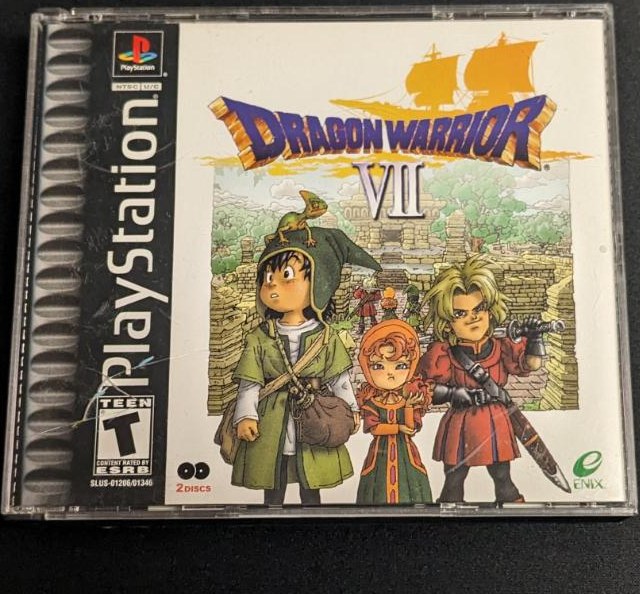
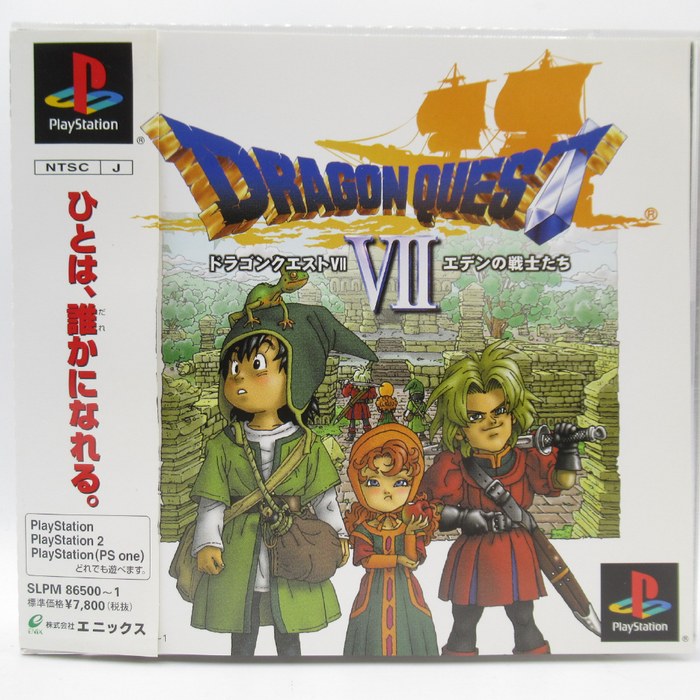
Dragon Quest VII, known in Japan as Dragon Quest VII: Warriors of Eden, reached the PlayStation on August 26, 2000, developed by Heartbeat with ArtePiazza and published by Enix. It was the series' only main entry on the original PlayStation, the first main Dragon Quest released outside Japan since Dragon Warrior IV in 1992, and the last game anywhere to carry the Dragon Warrior name. It is also, by common account, enormous: a single playthrough runs past one hundred hours before any side content is touched.
THE MAKING
Announced for the 64DD, finished on the PlayStationThe game was designed by Yuji Horii and directed by Manabu Yamana, with art direction by Shintaro Majima, character designs by Akira Toriyama, and music by Koichi Sugiyama. It was officially announced in 1996 and originally planned for Nintendo's 64DD. On January 15, 1997, Enix announced the move to the PlayStation, citing the larger potential market and the lower cost of manufacturing CDs. Both Sony and Enix stock rose the next day, and the move was described in the Japanese press as a semi-crisis for Nintendo.
Then the delays began, and kept beginning. The development team numbered only about 35 people, and the record states the work was extended because the staff wanted to perfect the game under high fan expectations. Horii said in interview that the team focused more on puzzle solving than on story. The game was also the series' first with 3D graphics, and the team was initially reluctant to include CG movies at all, because fans had written to Enix fearing cinematics would change the feeling of the series.
THE DESIGN
A world rebuilt one island at a timeEstard is the only island left in the world, and the game is the story of finding the rest. The party places stone shards into pedestals in the Shrine of Mysteries and is carried into a lost island's past; solve that island's trouble and it reappears in the present, ready to be revisited by boat, magic carpet, or skystone. The structure turns one quest into dozens of self contained ones, which is where the hundred hours live.
The class system inherited from Dragon Quest VI deepens here: basic, intermediate, and advanced vocations mastered across set numbers of battles, plus monster classes unlocked with monster hearts. Party members can talk to the hero in and out of battle, a first for the series, commenting on strategy and on how they feel. Around the edges sit the series furniture, a casino, a monster park, and an immigrant town the player recruits into being.
THE EDITIONS
The versions, documentedTHE RECEPTION
Scores, sales, and the dissentBoth halves are true, and the gap between them is the series' whole Western story in miniature. Japan in 2000 bought the game as a national event, four years in the making. America in late 2001 received a deliberately old fashioned PlayStation game a year into the PlayStation 2 era, from a series it had not seen in nine years, and mostly shrugged.
THE LEGACY
What it left behindThe American manual's back page advertised a PlayStation remake of Dragon Quest IV. It was cancelled: developer Heartbeat, having finished VII and the IV remake, went on hiatus and then closed, and the remake America was promised stayed in Japan. The series' Western line went quiet again until Dragon Quest VIII rebuilt it in 2005.
At home, VII closed the run that began in 1986 with a sales record no PlayStation game in Japan has taken from it in the record this page draws on, and its island by island structure remains the series' most generous and most demanding design. The game Japan waited four years for is the game the West keeps rediscovering, one remake at a time.
THE GAME ON THE SHELF
Dragon Quest VII · PlayStation