The History of Dragon Quest Monsters
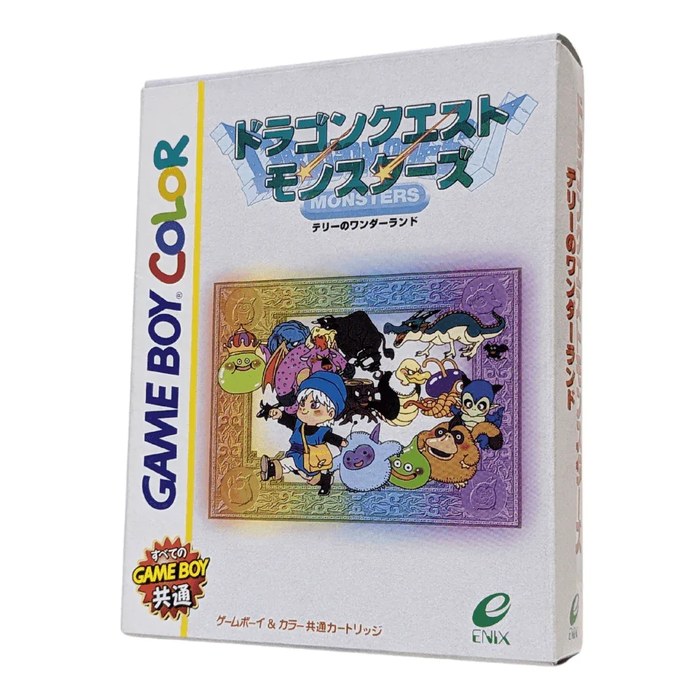
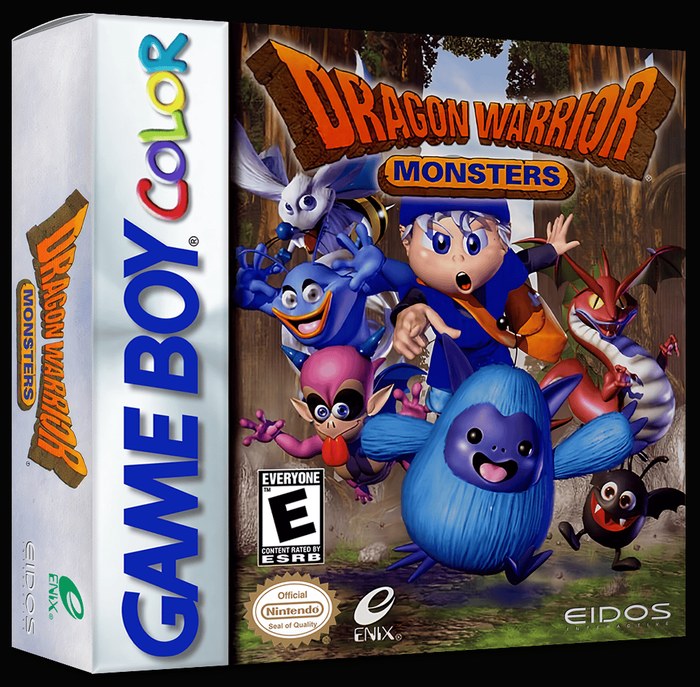
Dragon Quest Monsters, released in Japan as Dragon Quest Monsters: Terry's Wonderland on September 25, 1998 for the Game Boy Color, developed by Tose and published by Enix. Its hero is Terry, the boy who grows up to be Dragon Quest VI's swordsman, sent to the kingdom of GreatTree to win a tournament and rescue his kidnapped sister Milly. He does not fight. His monsters do. In North America it arrived in January 2000 as Dragon Warrior Monsters, co-published by Eidos Interactive, and it was the first Dragon Quest game ever released in Europe.
THE MAKING
A spin-off built from Dragon Quest V's best ideaDragon Quest V had let monsters join the hero's party in 1992, and Dragon Quest VI's Terry was a monster master by trade. Monsters takes that thread and builds a whole game on it: Yuji Horii designed and wrote it, Akira Toriyama drew its monsters, and Koichi Sugiyama composed, the series' founding trio working on a handheld side story. The developer was Tose, the Kyoto studio behind a shelf of licensed handheld games.
The timing was not subtle. Pokemon had made monster collecting the biggest thing in Japanese games, and Enix answered with its own bestiary, two hundred monsters deep in the first game, drawn from a decade of Dragon Quest. What the record shows critics doing, immediately and consistently, is comparing the two, and then separating them on one system Pokemon did not have: breeding.
THE DESIGN
Meat, gates, and two parents for every monsterTerry recruits in the field by offering meat, which may coax a beaten monster into joining. The campaign runs through warp gates under the throne room of GreatTree, each gate a world ending in a boss, and through arena ranks from G up to S that gate progress. Caught monsters level, learn up to eight skills, and grow tame or wild depending on how they are kept at the monster farm.
Breeding is the engine. Two monsters of level 10 or higher, one male and one female, produce an egg whose child inherits skills and stats from both parents, marked with a plus number that raises its ceiling. The parents leave the party. Bred monsters are stronger than anything caught, and some monsters exist only as breeding results, so the game's real progression is genealogical: generations of monsters, planned like bloodlines.
THE EDITIONS
The versions, documentedTHE RECEPTION
Scores, sales, and the comparisonThe honest verdict is a split one. As a game, Monsters earned its comparisons and its scores. As a Western product, it arrived late, renamed, and through a borrowed publisher, and sold like it. In Japan it needed none of that help.
THE LEGACY
What it left behindMonsters became a durable second series: sequels on the Game Boy Color, the Joker line on the Nintendo DS, and remakes that keep returning to Terry's Wonderland. The breeding system is its permanent contribution, the mechanic its own reviewers singled out in 2000 and the one the series still builds on.
For this Library's purposes it is also the cleanest Japan and West split in the Dragon Quest family: 2.35 million copies at home against 60,000 in North America for a game Western critics scored at 80 percent and up. The game was never the problem. The pipeline was.
THE GAME ON THE SHELF
Dragon Quest Monsters · Game Boy Color