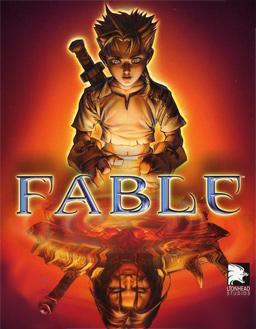
The History of Fable
Fable (Xbox, 2004) began life under two honest names: first Thingy, then Project Ego. It is the most famous case of its generation of a game's promises outrunning its disc, and the record deserves care, because what actually shipped was still a distinctive, warm, and commercially enormous RPG: the fastest selling Xbox game at key retailers in its launch week, from a satellite studio making its first game.
THE MAKING
A Lionhead satellite, a Dreamcast origin, and four yearsFable was the first game from Big Blue Box Studios, a satellite of Peter Molyneux's Lionhead founded by Dene and Simon Carter. The satellite model existed to offset a young studio's costs: Lionhead supplied technology and support while Big Blue Box focused on the game. The Carters' stated ambition, on the record, was a role-playing game like no other, a beautiful world of characters who reacted to what you did, and a hero who would adapt to the way you played, age, scar, and carry tattoos. They called it Thingy; the titles Wishworld and Project Ego followed.
The game was originally in development for the Dreamcast and shifted to the Xbox when the Dreamcast was discontinued. Development took roughly four years, with a team of around 70 and more than 150 people involved across the project. Molyneux promoted it aggressively, at one point stating it was “gonna be the best game ever,” and the hype became part of the game's permanent record. The music was composed by Russell Shaw, with the opening theme by Danny Elfman.
THE DESIGN
Alignment you can see in the mirrorFable's lasting design idea is legibility. Good and evil are not only numbers: a strongly good hero gains a halo, lighter features, and butterflies; an evil hero grows horns, glows red eyed, and draws flies. Eating, drinking, clothing, hairstyles, tattoos, scars, and muscle all write themselves onto the Hero of Oakvale's body, and townspeople react with applause, mockery, fear, or flirtation. Quests are taken at the Heroes' Guild, gold quests advancing the story of Jack of Blades and the Sword of Aeons, silver quests optional, with boasts letting players wager reward gold on conditions like finishing untouched.
What did not ship is also documented: features discussed during the long promotion, from a hero who could have children to a fully reactive growing world, were absent or reduced at launch, and critics noted the gap in 2004. The fair summary, then and since, is that Fable was praised for the quality of its gameplay and execution while the missing promises were charged against it in the same reviews.
THE EDITIONS
The versions that existTHE RECEPTION
The scores, with the dissent keptTHE LEGACY
Morality made visible, and a cautionary tale with a happy ledgerFable's influence runs in two directions. In design, it popularized morality you can read at a glance, the hero's body and reputation as a public record, an idea RPGs have reused ever since. In industry culture, it became the standing example of promotion outrunning production, a lesson Molyneux himself addressed in later interviews while noting the first game still sold in the millions.
On this shelf it is the era's British entry: smaller in map than Morrowind, warmer in tone than anything else here, and proof that an Xbox RPG could top the all formats conversation for a month.
THE GAME ON THE SHELF
Fable · Xbox