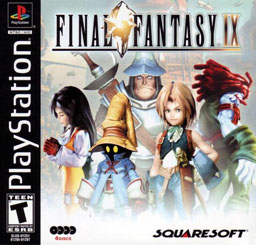
The History of Final Fantasy IX
Final Fantasy IX (PlayStation, 2000) closed the series' PlayStation run by reversing direction: after two games of science fiction, it returned to crystals, kingdoms, and black mages. Producer and scenario writer Hironobu Sakaguchi called it his favorite Final Fantasy before it even launched, the closest to his ideal view of what the series should be. Critics agreed in numbers: its 94 on Metacritic remains the highest score in the series. Its sales, unusually, ran behind its reviews.
THE MAKING
Square, Hawaii and Japan, 1998 to 2000Early planning began in July 1998, before Final Fantasy VIII was finished. Sakaguchi envisioned the game as a "reflection" on the older games of the series, and as its last PlayStation entry it was designed as one. Development was split between Japan and Hawaii, where the studio was placed as a compromise for developers living in the United States, so overseas staff could build a Final Fantasy without relocating to Japan.
Hiroyuki Ito directed, Sakaguchi and Shinji Hashimoto produced, and Sakaguchi wrote the scenario with contributions from Kazuhiko Aoki and Nobuaki Komoto. Ito gave protagonist Zidane his defining trait, a flirtatious streak, as a deliberate break from the series' brooding leads. Nobuo Uematsu composed the score, his last as sole composer of a mainline game.
THE DESIGN
Active Time Events and a lived-in worldThe team wanted a coherent story with deep character development, and built a device for it: Active Time Events, optional scenes that cut away from the protagonist to show what the rest of the cast is doing elsewhere in town. The ensemble, a thief, a princess, a knight, and the black mage Vivi, gets its depth from scenes the player can simply miss.
Sakaguchi asked for a world with a lived-in feel, down to the textures of clothing and how the pieces characters wear were sewn together. The fairy tale surface, influenced in part by the film The Dark Crystal, carries the series' darkest machinery underneath: a war between nations, manufactured mages, and a hero and villain who are both artificial people asking what a life is for. The theme Sakaguchi named for the game was "living."
THE EDITIONS
Four discs at the end of an eraTHE RECEPTION
The series' highest scoreTHE DISSENT
Kept, as printedThe dissent was commercial, not critical. Final Fantasy IX was a top seller in Japan and America, 2.65 million copies in Japan by the end of 2000, the second highest selling game of that year at home, and still it did not sell as well as Final Fantasy VII or VIII in either Japan or the United States. It arrived in the PlayStation's last year, unveiled at the same Square Millennium event as the PlayStation 2 sequels Final Fantasy X and XI, and its deliberate old fashioned look asked VII's huge new audience to go backward on purpose. The lifetime PlayStation total, more than 5.5 million copies by March 2016, is a major game's number. It is simply not its two predecessors' number, and the comparison has shadowed it since.
THE LEGACY
Sakaguchi's favorite, the fans' slow coronationThe reputation inverted over time. The game the market received coolly became the connoisseur's PlayStation Final Fantasy: the highest Metacritic score in the series, a permanent place in greatest games arguments, and a remaster that keeps finding new players on every platform. An animated series adaptation was announced in 2021, a quarter century of afterlife for the reflection Sakaguchi built as a farewell to the console that made the series a phenomenon.
THE GAME ON THE SHELF
Final Fantasy IX · PlayStation