The History of Kirby Air Ride
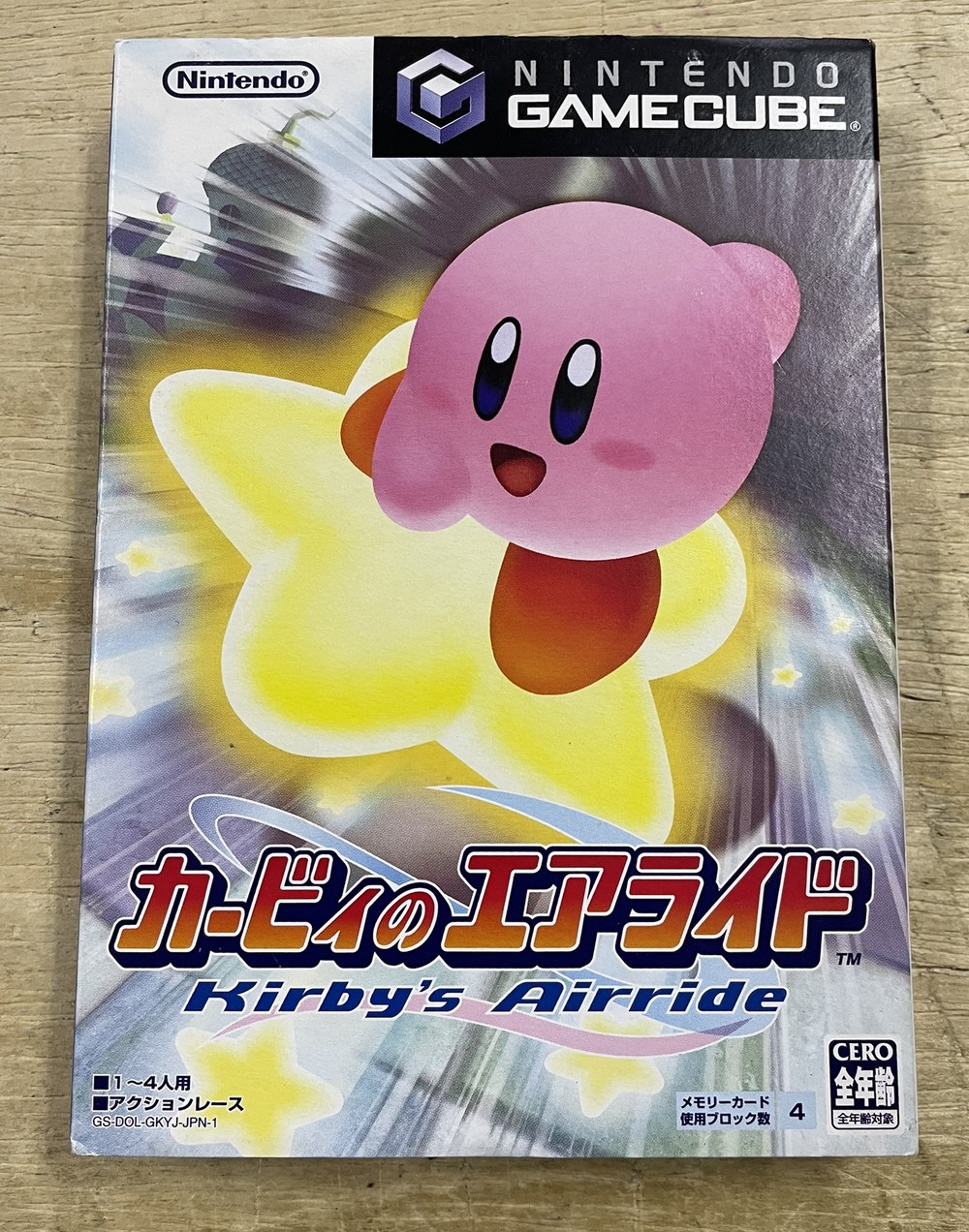
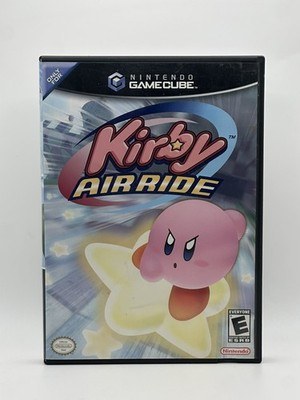
Kirby Air Ride (GameCube, 2003) is a racing game played almost entirely with one button: the machines move forward on their own, and the A button brakes, charges boosts, inhales enemies, and fires their copied powers. Across three modes, standard races in Air Ride, overhead races in Top Ride, and the open city scavenger hunt of City Trial, it sold 1.35 million copies and built a cult following that outlasted its reviews.
THE MAKING
Kirby Bowl 64, cancelled, then rebuilt in a hurryThe game began as Kirby Bowl 64, shown as one of only two playable demos at the Nintendo 64's unveiling at the 1995 Shoshinkai show, the other being Super Mario 64. That version paired a ball rolling obstacle game with a snowboarding star race. It changed shape repeatedly, appeared at E3 1996 resembling a skateboarding game, and was cancelled; Miyamoto said in early 1998 that the project had been halted while Nintendo finished 1080 Snowboarding and rethought the concept.
It resurfaced as a short GameCube video at the DICE summit in March 2003, to a mainly negative reaction for its slow speed and poor graphics, then as a five track playable demo at E3 that May, which landed far better. The production schedule to the July Japanese launch was tight. It was the first GameCube game to support LAN play, across up to four systems with broadband adapters.
Shortly after release, Sakurai resigned from HAL Laboratory, saying he had tired of the constant pressure to keep creating sequels. Air Ride is the last Kirby game he directed at the company he had joined at nineteen. The soundtrack was shared by Shogo Sakai, Jun Ishikawa, Hirokazu Ando, and Tadashi Ikegami, with songs from the Kirby anime by Akira Miyagawa woven in.
THE DESIGN
One button, three games, 360 hidden goalsSakurai's answer to the racing genre was subtraction: no accelerator, steering on the stick, everything else on one button, and gliding as a skill, since a machine that leaves a ramp can be pitched in the air. City Trial is the mode players kept: roam a city for a few minutes, grab stat patches and machine parts, assemble the legendary Dragoon or Hydra from scattered pieces, survive random events from meteors to Dyna Blade, then face a final contest your patched machine was secretly built for.
Each mode carries a checklist of 120 hidden goals whose squares reveal their neighbors as they fall, a discovery system Sakurai's later games, and much of the industry, would adopt. Meta Knight and King Dedede are unlockable riders, each attacking automatically, with no charging, a trade for their speed.
THE RECEPTION
Panned as simple, kept as a favoriteTHE LEGACY
The sequel took twenty-two yearsAir Ride's afterlife ran through City Trial sessions, checklist imitations across the genre, and a reputation that rose as its contemporaries dated. In 2025 Sakurai returned to direct the sequel, Kirby Air Riders, developed with Bandai Namco Studios and released for the Nintendo Switch 2 on November 20, 2025, closing the longest gap between a Kirby game and its direct sequel.
THE GAME ON THE SHELF
Kirby Air Ride · GameCube