The History of Kirby's Dream Land
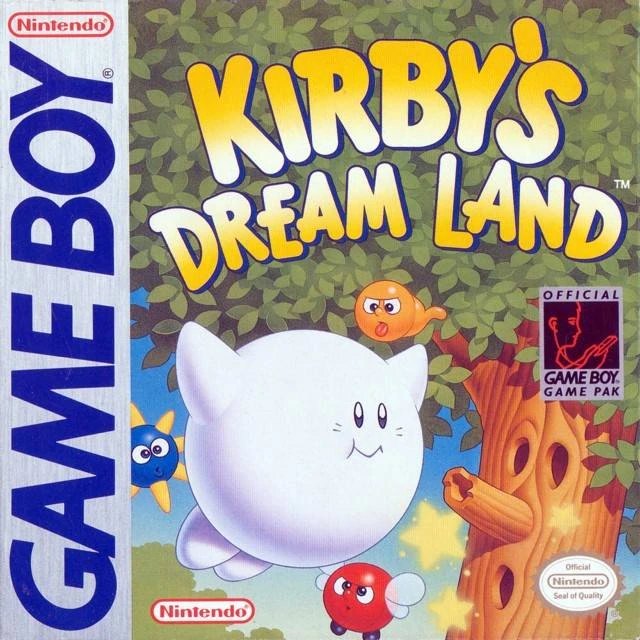
Kirby's Dream Land (Game Boy, 1992) is a five level platform game about a small hero who inhales enemies and spits them back as stars. King Dedede has stolen Dream Land's food and its Sparkling Stars, and Kirby flies in on the spring breeze to take them back. It was the first game designed by Masahiro Sakurai, it sold 5.13 million copies, and for thirty years it was the best selling game in its own series. Almost everything famous about it, the hero included, was a stand-in that stayed.
THE MAKING
HAL Laboratory, 1990 to 1992Sakurai conceived the game around May 1990, at nineteen years old, working at HAL Laboratory. The brief he set himself was a game for beginners: simple enough that someone who had never played an action game could finish it. Much of the programming was done on a Twin Famicom, Sharp's combined Famicom and Disk System unit, which had no keyboard. Values went in through a trackball and an on-screen keyboard, a process Sakurai later compared to using a lunchbox to make lunch, because he assumed that was simply how games were made.
The hero began as a dummy character, a round blob sprite the team used while a more sophisticated design was prepared. The designers grew to like the blob so much that they kept him. For most of development he was named Popopo, and the game was called first Popopo of the Spring Breeze and then Twinkle Popo, a title that survived late enough for box art and advertising to be produced under it.
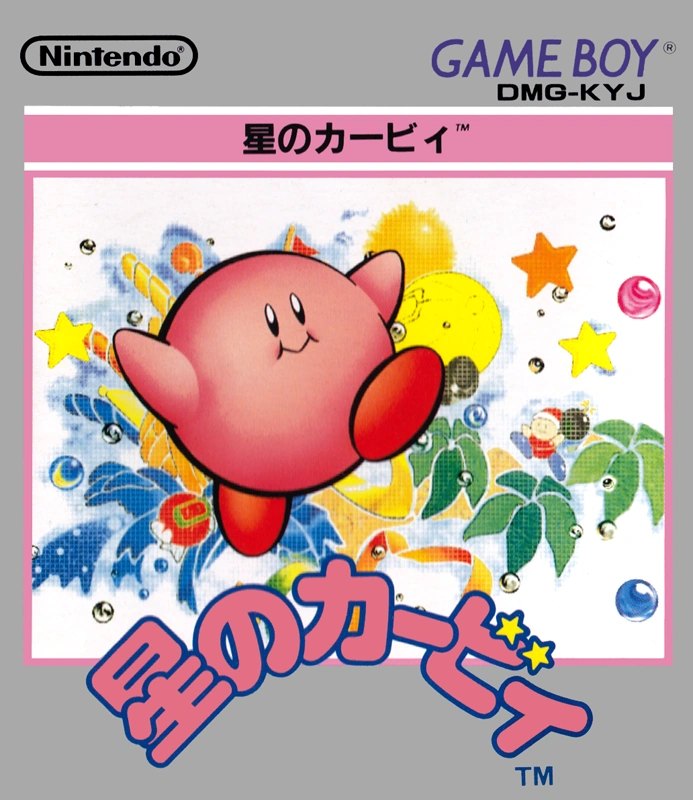
HAL first planned to publish the game itself. Advance orders came in low, the release slipped, and HAL asked Nintendo to publish instead. Under Nintendo the game got an extensive marketing campaign and a new identity: HAL polled Nintendo of America for name suggestions for the character, and the final Japanese title became Hoshi no Kirby, Kirby of the Stars, the name the whole franchise still carries in Japan.
THE DESIGN
Flight as forgiveness, and a placeholder's revengeEvery core move answers the beginner brief. Kirby flies by inflating himself, indefinitely, because Sakurai thought it unfair for a player to lose a life over one missed jump. He inhales enemies and objects and either swallows them or fires them out as star shaped projectiles. Sakurai has said he first imagined Kirby grabbing enemies with his tongue, in the manner of Yoshi, and chose inhaling instead. Levels are built as chains of large rooms joined by doors, which double as checkpoints, instead of the single punishing corridors of the era.
What the game does not have is the copy ability. Kirby's only power-ups are food items with temporary effects, Spicy Curry for fire breath and a Mint Leaf (a Sweet Potato in Japan) for rapid air puffs. The absence was the design, not an omission, and the sequel's answer to it has its own page in this shelf.
The music is by Jun Ishikawa, the series' founding composer. Given the job on the strength of his NES work, he decided complex chords sounded poor on the Game Boy's limited sound hardware and wrote with simple chords and melodies on purpose. That restraint set the sound of the series for decades.
THE EDITIONS
One cartridge, a long afterlifeTHE RECEPTION
Loved, and called easy, in the same reviewsTHE LEGACY
Five million beginners cannot be wrongThe game topped the Japanese Famitsu sales chart through May and June 1992 and the American Babbage's Game Boy chart that October, passed a million copies by March 1993, and reached 5.13 million in total. It remained the series' best seller until Kirby and the Forgotten Land passed it thirty years later, in 2022.
Its stage Green Greens became a fixture of the Super Smash Bros. series, and its monochrome look survives as an alternate costume treatment for Kirby and Dedede. But the durable legacy is the template: a hero anyone can draw, a game anyone can finish, and a sequel close behind that would complicate both, deliberately.
THE GAME ON THE SHELF
Kirby's Dream Land · Game Boy