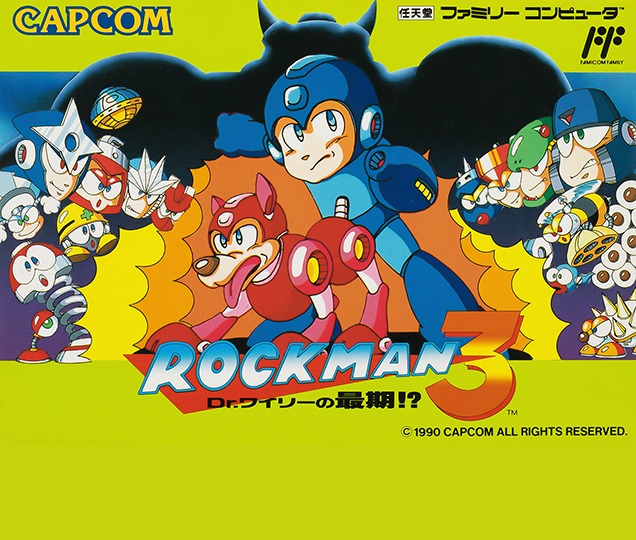
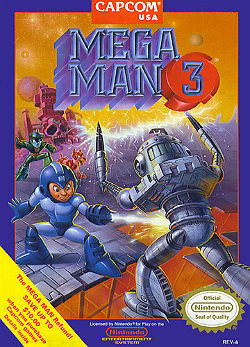
The History of Mega Man 3
Dr. Wily claims to have reformed and joins Dr. Light in building Gamma, a giant peacekeeping robot, until the Robot Masters on the mining worlds go berserk and steal Gamma's power crystals. Mega Man 3, Rockman 3: The End of Dr. Wily!? in Japan, launched on the Famicom on September 28, 1990. It introduced Rush the dog, the slide, and a mysterious masked brother, and its makers have said on record that Capcom shipped it before it was ready.
THE MAKING
A lost planner, a lost seasonDevelopment began over a year after Mega Man 2, but the ground had shifted: Akira Kitamura had quit Capcom, and Keiji Inafune considered his new superior a man who did not understand Mega Man the way his predecessor had. Midway through production the team lost its main planner, and Inafune had to take over the job; the final two months were, in his account, turbulent, spent dividing tasks among team members who were missing deadlines. Capcom moved the release from the series' usual December slot to September, and Inafune's verdict is on record: if they had more time to polish it, they could have made it a better game, but the company said it needed to release. He ranks it among his least favorite entries, for the environment behind it rather than the game.
The fan design contest, begun with Mega Man 2, now drew around 50,000 submissions. The soundtrack survived a handover too: Harumi Fujita composed a few songs, including the Needle Man and Gemini Man themes, before leaving the project when she gave birth, and Yasuaki Fujita completed the majority of the score.
THE DESIGN
Rush, the slide, and a brother in a maskThree permanent additions arrive at once. The slide lets Mega Man slip under fire and through low gaps. Rush folds the first game's loose support items into one character, a robot dog who becomes a spring, a jet, and a submarine; a planned drill mode, for tunneling underground, was cut. And Proto Man, called Break Man in his masked appearances, duels Mega Man through the game as an unannounced test, designed with a scarf and shield to look tougher than his younger brother and introduced so the player could not tell whether he was ally or enemy.
His Japanese name is Blues, and Capcom's North American division renamed him over Inafune's protests: not only for consistency with Mega Man, but because, in their judgment, the name Blues made no sense. Inafune defended it on the musical logic of the whole cast, and lost. After the eight Robot Masters fall, the game also lengthens itself with the Doc Robots, four revisited stages whose bosses carry the weapons and patterns of all eight Mega Man 2 Robot Masters.
THE RECEPTION
Top of the NES classThe difficulty argument followed it as faithfully as it had the first game. GamePro's McKinley Noble joked that pulling teeth, lifting a car over your head, or performing open heart surgery were all significantly easier than beating Mega Man 3, and reviewers noted sprite flicker when the screen crowded. GameSpot's historians called it a top notch game and Capcom's pinnacle of NES effort; GamePro ranked it the third greatest 8-bit game of all time.
THE LEGACY
The longest classicMega Man 3 is the fullest form of the NES formula: two sets of Robot Masters, a fortress, a giant robot, and a family revelation at the end, when the masked stranger who saved Mega Man from the rubble is named as his brother. Wily, in the same rubble, is left for dead, a thread the next game picks up. Twenty years later, when Mega Man 9's producer Hironobu Takeshita wanted a name for what his team was aiming at, he called Mega Man 9 the new Mega Man 3.
THE GAME ON THE SHELF
Mega Man 3 · 1990