The History of Mega Man 5
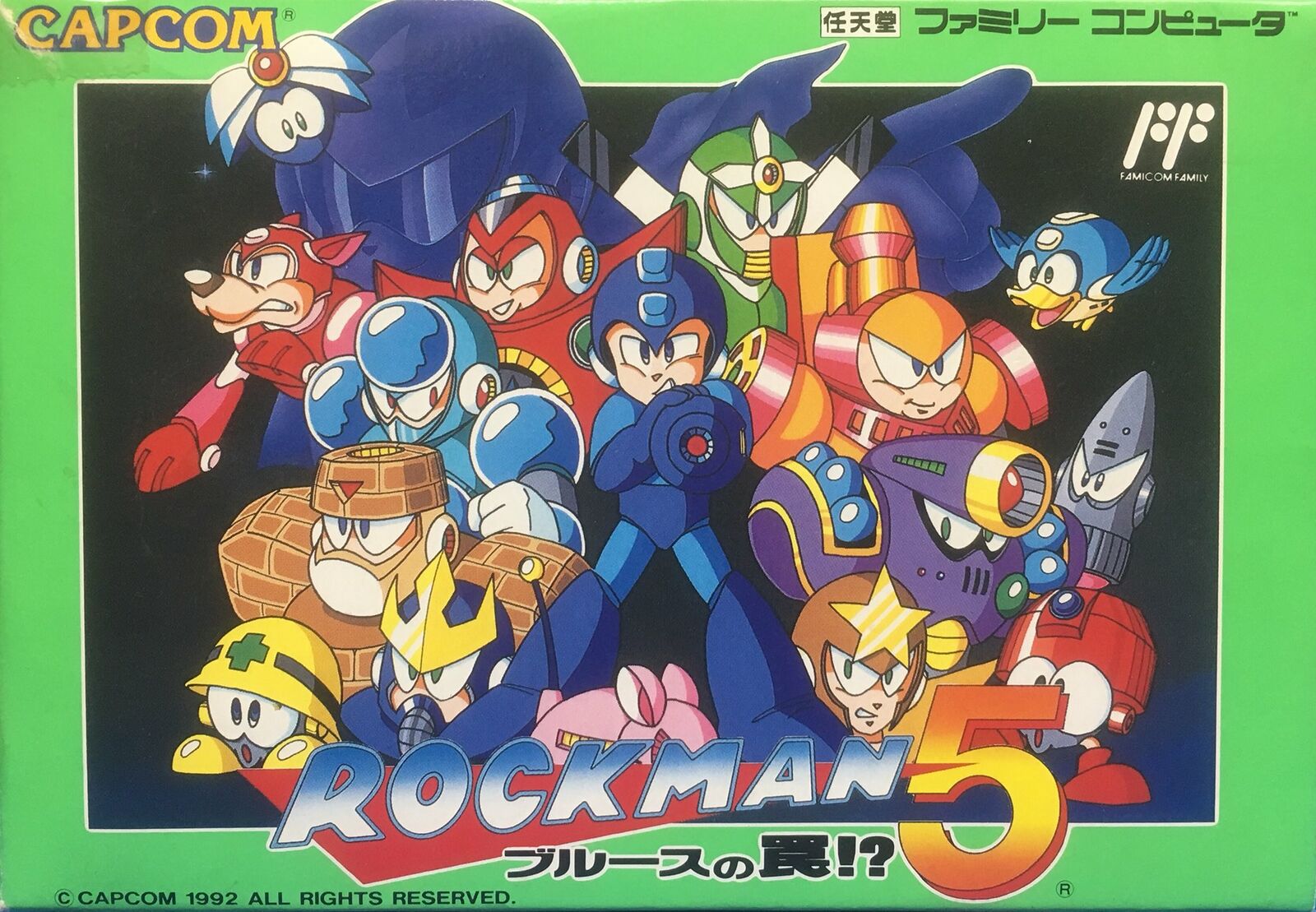
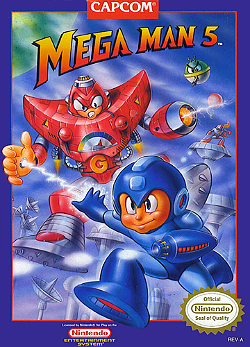
Two months after Mega Man 4, Proto Man appears to lead a robot uprising and kidnaps Dr. Light himself. Mega Man 5, Rockman 5: Blues's Trap!? in Japan, launched on the Famicom on December 4, 1992, in North America the same month. The Japanese title gives the plot its honest framing, a question mark: Blues no Wana, the trap laid for Blues, framed for crimes committed by an impostor.
THE MAKING
130,000 drawings, and a bird held since 1990Keiji Inafune worked under a new project leader and used his seniority deliberately, guiding the team to avoid what he called an unreasonable game, an affront to the players; he felt the result was a Mega Man with a lower difficulty than its predecessors, on purpose. Hayato Kaji was called in midway when the game was, in his words, taking a while to come together. Inafune summarized his own work as fun, with trouble in the designs, the balance, and the colors.
The design contest crossed the Pacific for the first time: run with Nintendo Power, it drew over 130,000 character submissions, and Inafune had to re-illustrate the chosen bosses several times before approval. The new helper, Beat the robot bird, had been waiting since Mega Man 3, whose support robot concepts included a dog and a bird; the team kept the dog as Rush and shelved the bird, and Beat's first draft here was accepted without argument. Mari Yamaguchi composed the score.
THE DESIGN
Letters, gravity, and a powered up everythingThe team felt they had accomplished all the gameplay they could with Mega Man 4, so Mega Man 5, in Inafune's summary, simply introduced powered up versions of everything: the charge shot now spreads wider, and loses its charge if Mega Man is hit while holding it. The stages hide eight circuit boards spelling ROCKMAN 5 in Japan and MEGAMAN V in the West; collecting all of them unlocks Beat, who hunts enemies on his own. Gravity Man's stage runs on the ceiling as much as the floor, and Wave Man's stage gives the second half to a jet ski run.
The impostor plot resolves in the series' most cinematic NES moment: the fake Proto Man has Mega Man at his mercy when the real one arrives, announces himself with his whistle, and unmasks the fourth Dark Man. At the end, Wily's fortress collapses on Mega Man and Dr. Light, and the same whistle clears their escape from off screen.
THE RECEPTION
The gentlest NES entryTHE GAME ON THE SHELF
Mega Man 5 · 1992