The History of Mega Man & Bass
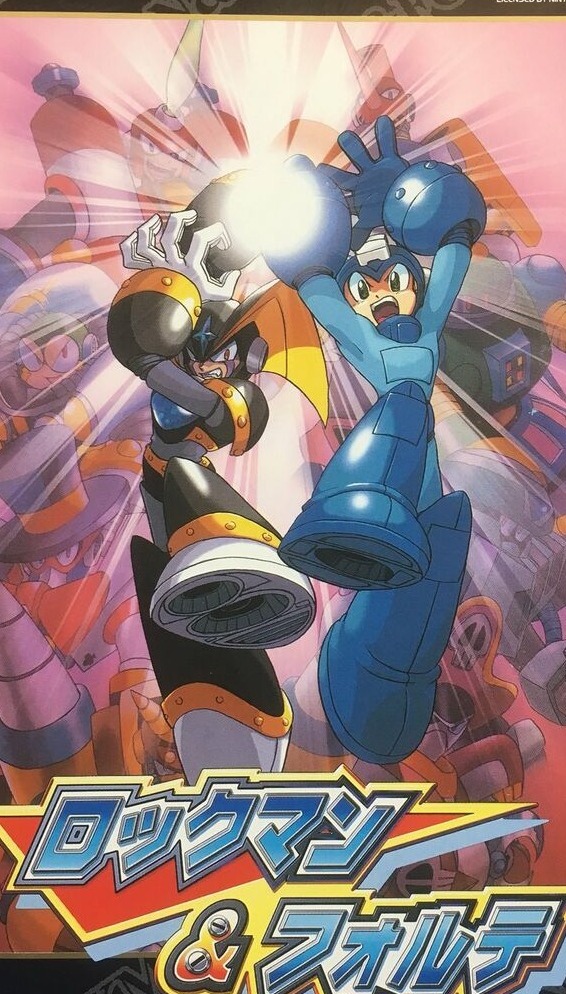
A robot named King storms Wily's own castle, declares that robots are superior to humans and should rule them, and steals the combat data of a hundred robots to build his army. Mega Man & Bass, Rockman & Forte in Japan, launched on the Super Famicom in 1998, Japan only. It was made so that players who never bought a PlayStation or a Saturn could still play a new Mega Man, and for a decade fans treated it as the unofficial Mega Man 9.
THE MAKING
A second version of Mega Man 8The Mega Man Wiki's classification is the honest one: the game is a second version of Mega Man 8, reusing its art, its engine feel, and three of its bosses, the Green Devil, Tengu Man, and Astro Man, and the code itself contains a reference to it as Mega Man 8.5. It plays at the zoomed in field of Mega Man 7, with Mega Man 7's sound effects. Capcom's reasoning was demographic, not artistic: the 32-bit consoles had taken the series, and the large Super Famicom audience was owed a game.
King was a genuinely new kind of villain for the classic series, not a Wily front but a robot supremacist whose rebellion Wily himself wants stopped, which produces the series' strangest alliance: Light and Wily in a truce, sending Mega Man and Bass in together. The reveal, that Wily built King as a test of whether any robot could be stronger than Bass, lands on Bass hardest.
THE DESIGN
Two heroes, two different gamesYou choose your character, and the choice is the difficulty setting. Bass fires in seven directions, dashes, and double jumps, but his rapid shots are weak against bosses and trigger long invulnerability windows. Mega Man charges and slides as always, without most of Rush's functions, in stages plainly built with a double jump in mind. There are no Energy Tanks, a inheritance from Mega Man 8, and no checkpoints mercy of the kind later games allow. The game is known among fans for a very high difficulty spike, especially played as Mega Man.
Hidden through the stages are 100 collectible CDs, a database of the classic series' characters, each with data in the series' comic style: good point, bad point, likes, dislikes. The English translation of the database in the Game Boy Advance version is famously scrambled, giving Dr. Light's bad point as Douchie and Bright Man a dislike of unmoral districts. The stage select is also the series' oddest: a web, where beating one boss unlocks the paths to others, and all eight weapons are needed as keys to King's gate.
THE ROAD WEST
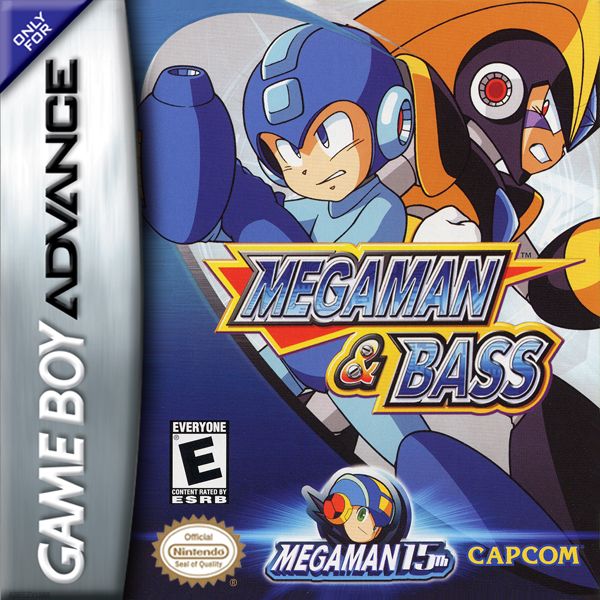
Five years, and a smaller screenThe Super Famicom original stayed in Japan; fans translated it themselves through emulation before any official version existed. The West received the game on the Game Boy Advance, in 2002 in Japan and 2003 in North America and Europe, reframed for the smaller screen, whose tighter view makes some hazards harder to see coming and an already hard game harder. It remains the only classic Mega Man game released for the Game Boy Advance.
Its canonicity was settled by Mega Man 9 itself: the ending sequence of Wily's past defeats includes King, the only non numbered console game acknowledged in that roll call.
THE GAME ON THE SHELF
Mega Man & Bass · 1998