
The History of Mega Man X2
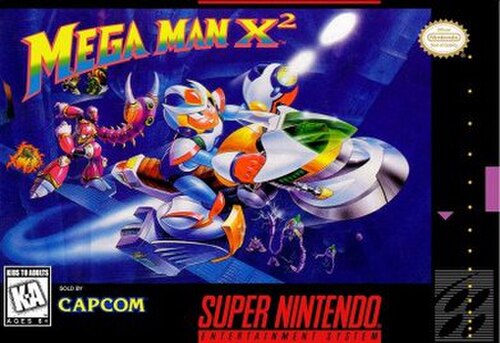
Mega Man X2 (Super NES, 1994; Rockman X2 in Japan) opens six months after Sigma's defeat. Three Mavericks calling themselves the X-Hunters, Serges, Agile, and Violen, have collected the body parts of the dead Zero and taunt the Maverick Hunters with them: beat us, and win back a piece of your friend. What follows is the same eight stage structure as the first game, now carrying a second plot that the player's own thoroughness decides.
THE MAKING
Inafune steps back, Zero comes backMuch of the first game's team returned, joined by newcomers; Keiji Inafune went hands off on art and moved into planning, producing, and story. His largest decision was the resurrection itself. According to designer Yoshihisa Tsuda, it was Inafune's call to bring Zero back in X2 simply because he thought it would be "a shame" to keep him dead. Inafune, who had designed Zero and originally meant him to headline the series, stayed possessive: he refused to allow any drastic changes to Zero's illustration even as he gave up his other design duties.
The X-Hunters had a long prehistory: they existed as illustrations in Inafune's sketchbook before the first game was finished, and their features were combined to form the basis of Sigma's design; for the sequel the three designs were fleshed out as separate characters. A planned fourth hunter, a female denoted with the others as the "Four Guardians", was cut for lack of resources, as was Violen's second form.
The team also decided against holding public fan submissions for the eight Maverick bosses, as the classic series had done. Sho Tsuge explained the reasoning: the X series was meant to have "a world with a more hardcore feel to it", whose bosses could not be "cute products of kids' imaginations" but "solid characters refined by professionals."
The cartridge carried Capcom's Cx4 chip, a digital signal processor allowing wireframe 3D effects such as rotation and scaling. The team was instructed to use it as much as possible and held weekly meetings on it; Tsuge called the chip their "greatest adversary to date." Yuki Iwai composed the score, with Ippo Yamada involved in sound production. Two production notes survive: Tsuge wanted the Flame Stag theme cut, but the staff loved it and kept it; and the ending theme began life as the final boss track before the team moved it.
THE STORY TWIST
Two ways to reach SigmaCollect all three of Zero's parts and Dr. Cain reassembles him around his original control chip. Miss any, and the X-Hunters steal the parts and the chip from Hunter headquarters, and the Zero who waits beside Sigma is real, rebuilt by the enemy, and must be fought. Collect them, and a grey armored clone takes that place instead, until the real Zero arrives and destroys it himself. After the final battle Sigma reveals his true form is a computer virus, and taunts X that Zero is "the last of the Doctor's creations."