
The History of Mega Man Zero
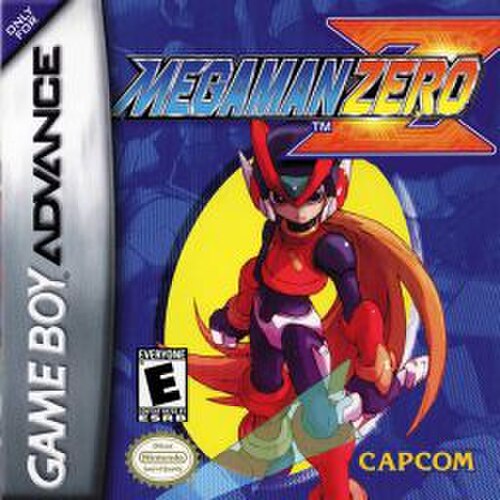
Mega Man Zero (Game Boy Advance, 2002; Rockman Zero in Japan) is set 100 years after the X series. The scientist Ciel and her Resistance are fleeing through a ruined laboratory, hunted by the forces of Neo Arcadia, a utopia that brands innocent Reploids as Mavericks and retires them. In a sealed chamber lies Zero, in stasis for a century, amnesic when Ciel's Cyber-elf Passy sacrifices itself to wake him. The tyrant ruling Neo Arcadia wears a famous face: a copy of X, built by Ciel herself at age six after the original vanished.
THE MAKING
A commission with free reinInti Creates, founded in 1996 by former Capcom staff, had not yet been a successful venture when its vice president Yoshihisa Tsuda began attending game conventions to tell Keiji Inafune he wanted to make a Mega Man game. Inafune eventually called and asked for a proposal. The result was a commission product: Capcom gave Inti Creates free rein on the design and premise, with Inti president Takuya Aizu producing, Ryota Ito and Capcom's Yoshinori Kawano directing, and Inafune as co-producer.
One goal was set early: make Zero among the most challenging games in the franchise. The draft did not star Zero at all. Inafune had originally intended 2000's Mega Man X5 to end the X series with Zero's death; instead he requested that Inti make Zero the central character, and the company inserted him into their draft. The designers then blurred the good and evil line on purpose: Zero and Ciel's Resistance are feared by humans as terrorists, while Neo Arcadia's Four Guardians and Pantheon troops protect the human race.
The antagonist was the production's hardest question, and the team kept asking Capcom. Tsuda jokingly suggested making the original X the final boss; the idea was at first accepted. Director Ito later explained the reversal: the team realized it "wouldn't sit so well with the young boys and girls that really do see X as a hero", so one month before release the villain became Copy X, and the writers designated the child Ciel as his creator, with complex explanations added to keep her age consistent.
THE DESIGN
Between mechanical and humanCharacter designer Toru Nakayama worked from Tsuda's brief to bridge the timeline gap in feel: between the "mechanical feel" of the X series and the "more human direction" of the Legends series. Inafune asked that as much of the original Zero be retained as possible, while the design still had to change enough that players would not confuse the two series. Nakayama found the Cyber-elves the hardest element to design, and they shipped as simple balls of light and incomplete portraits. The Four Guardians began as four near identical bodies all colored blue like X; Nakayama recolored each so the small GBA sprites could be told apart.
THE GAME AND THE MUSIC
One connected world, a filmic scoreZero abandons the stage select menu for a single interconnected overworld radiating from the Resistance base, with missions that can be attempted, failed, and permanently lost. Zero's four weapons level up with use, defeated bosses yield elemental chips instead of copied weapons, and the Cyber-elves act as single use aids, some requiring feeding with energy crystals before they work. Every mission ends with a graded performance score.
Ippo Yamada composed all but one track; the exception is the returning Theme of Zero from Mega Man X, by Setsuo Yamamoto. Yamada set out to differentiate the series' music from its predecessor by treating it "more like a television or film like presentation than the stage system like before". Capcom published no game soundtrack at launch; Yamada instead directed the arrange album Remastered Tracks Rockman Zero (January 23, 2004), and the in game music arrived on the Rockman Zero 1 to 3 complete works in July 2004.