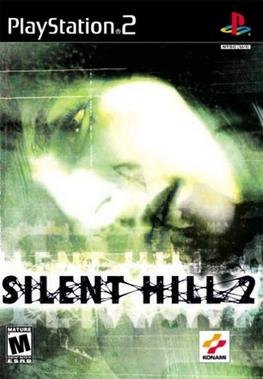
The History of Silent Hill 2
The first Silent Hill sent a father through a cult's nightmare. Silent Hill 2 (PlayStation 2, 2001) told a stand-alone story instead: James Sunderland, a widower, drives to the town because a letter from his dead wife says she is waiting there. No cult, no returning cast, and a town that shapes itself out of each visitor's own guilt. It sold over 1.3 million copies across North America, Japan, and Europe, and it is now routinely placed among the greatest games ever made.
THE MAKING
Team Silent, 1999 to 2001Development began in June 1999, directly after the first game was finished, and ran a little over two years inside Team Silent, a production group within Konami Computer Entertainment Tokyo. Around fifty people worked on it: the first game's creative team, plus some thirty staff brought in from the wider studio. Masashi Tsuboyama directed; Akihiro Imamura produced.
The story was conceived by CGI director Takayoshi Sato, who based it on Dostoevsky's Crime and Punishment; the main writing was done by Hiroyuki Owaku, with Sato providing dialogue for the female characters. Where the first game built its world first, this team worked plot-first, and set out to make a protagonist who would, in their words, "reflect the evil" the first game's hero had fought.
The platform was settled fast. Unable to gather information on the then-unannounced GameCube and Xbox, the team started on the PlayStation 2; Imamura later said the choice was also driven by the business side's wish to move rapidly on the PS2, "currently the market focus." Sato estimated the era's average game budget at US$7 to 10 million.
THE DESIGN
Ito's monsters, Yamaoka's soundThe art team drew on film directors David Lynch, David Cronenberg, David Fincher, and Alfred Hitchcock, the film Jacob's Ladder, painters Francis Bacon, Rembrandt, and Andrew Wyeth, and the horror manga of Junji Ito. Characters were built as 6,000-polygon wire-frame models, animated with motion capture.
Masahiro Ito designed the monsters around a single concept: "soured flesh," with an element of humanity left in. For the most part they are reflections of James's subconscious. Pyramid Head was based on the executioners of the town's fictional history and built to be a punisher for James; Ito shaped the helmet's sharp triangular edges to, in his words, "suggest the possibility of pain."
Composer Akira Yamaoka wrote the main theme, "Theme of Laura," in three days at home, pairing a sad melody with a strong beat. In charge of the game's fifty sound effects, he treated silence itself as an instrument: "selecting moments of silence is another way of producing sound." The soundtrack album followed in Japan on October 3, 2001.
THE EDITIONS
One game, a shelf of versionsTHE RECEPTION
Acclaim, with the dissent keptReviewers praised the atmosphere, the graphics, the monster designs, and the sound, and argued about the rest in print: the voice acting split them, the camera still fought players in ceiling fights, and the combat was widely called too easy, with monsters simple to avoid and ammunition plentiful. Next Generation's Jeff Lundrigan summed up the defense: it is "not for the faint of heart, nor anyone looking for fast action, but those who enjoy a good shiver won't be disappointed."
THE LEGACY
Six endings, no official answerThe game has six endings, two of them jokes (a dog did it; aliens did it), and Konami has kept which of the serious ones is canonical deliberately ambiguous. That openness is part of why the analysis never stopped: the game is a standard exhibit in the "games as art" argument, and the most acclaimed entry in its series.
The original keeps being tended. A fan-made project, the Enhanced Edition, has patched the PC version with widescreen, 60-frames-per-second, and audio and bug fixes since 2018. And in October 2024, Bloober Team's full remake returned Ito and Yamaoka to the material, the surest sign of which 2001 game the industry considers untouchable and indispensable at the same time.
THE GAME ON THE SHELF
Silent Hill 2 · PS2