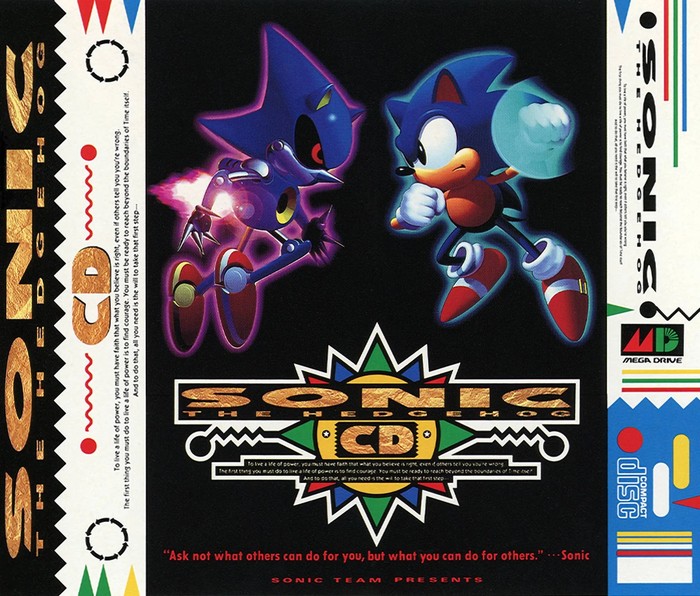
The History of Sonic CD
While Sega Technical Institute built Sonic 2 in California, Sonic's co creator Naoto Ohshima directed a different sequel in Japan. Sonic CD, released for the Mega CD and Sega CD in September 1993, began as an enhanced port of the first game and became the most experimental of the classic Sonics: time travel through four versions of every stage, the debuts of Amy Rose and Metal Sonic, and animated sequences by Toei Animation. It sold over 1.5 million copies, the best selling game the Sega CD ever had.
THE MAKING
Ohshima's CD version of SonicOhshima has said on record what the game was meant to be: not Sonic 2, but, in his words, more of a CD version of the original Sonic, made by a team that did not carry the pressure of the numbered sequel. The time travel came from him too. In his 2009 Gamasutra interview he explained that he wanted levels that changed on you, where Sonic would run really fast, like in Back to the Future, and wind up in a different place; his first wish was an instant change with a sonic boom and a flash, and the signpost transitions in the finished game are the hardware compromise he laughed about losing to his programmers.
Every zone exists four times: past, present, a good future earned by destroying Eggman's machines in the past, and a ruined bad future if you do not. The Time Stones replace the Chaos Emeralds, the only main Sonic of the decade without them. The CD format bought the presentation: CD quality audio, a larger colour palette at work in the stages, and hand drawn opening and ending animation from Toei, the first animated Sonic in a game.
THE MUSIC
Two scores, one existing pageSonic CD is the game with two soundtracks, Hataya and Ogata's house and techno original in Japan and Europe, and Spencer Nilsen's replacement in America. That story, the two month American delay, the backlash, and the 2011 settlement that shipped both scores, is told in full on this Library's existing page, linked below, and is not repeated here.
THE RECEPTION
The add on's one essential gameTHE LEGACY
The cult classic that outlived its hardwareFor years Sonic CD was the classic Sonic that many fans had never played, locked to a failed add on and split into regional versions that even sounded different. Christian Whitehead's 2011 remake, built on his Retro Engine with both soundtracks selectable, is the version that canonised it, and the one Sonic Origins carried forward in 2022. Metal Sonic, introduced here as Eggman's racing double, became the series' most durable villain after Eggman himself.