
The History of SoulCalibur II
SoulCalibur II is a 2002 fighting game developed by Namco's Project Soul team, the third entry in the Soul series after Soul Edge and Soulcalibur. It refined the Dreamcast game's eight way movement with arena walls, a three step Soul Charge, and a rebuilt Guard Impact system, and it added four new fighters of its own: Cassandra, Raphael, Talim, and Yunsung.
The home release in 2003 was the event. Namco shipped the game simultaneously for PlayStation 2, GameCube, and Xbox, and gave each console its own exclusive guest character, a marketing structure no major fighter had tried at that scale. On this shelf the PlayStation 2 version leads, because it is the version the later HD remaster was built from.
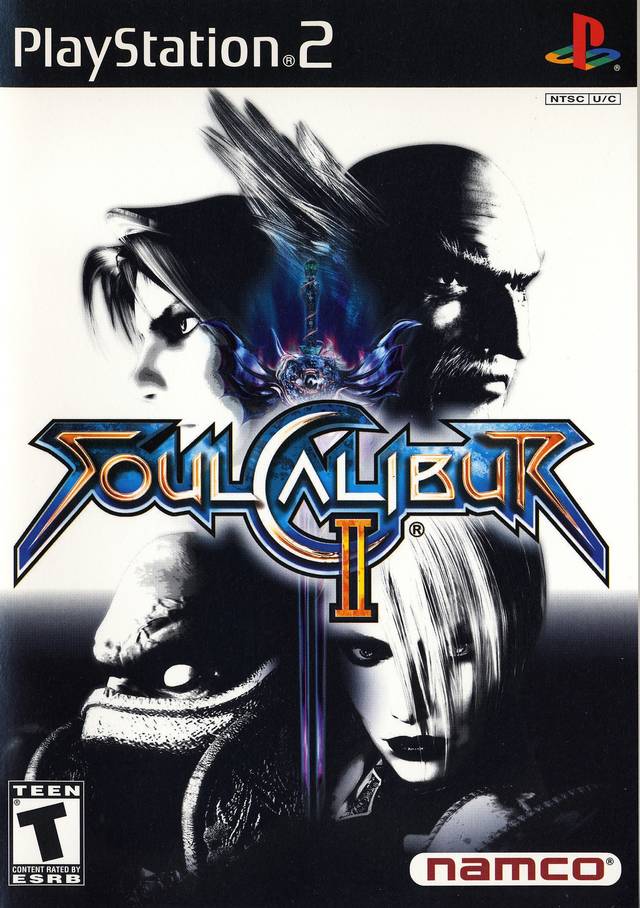
THE TWO COVERS
Japan and America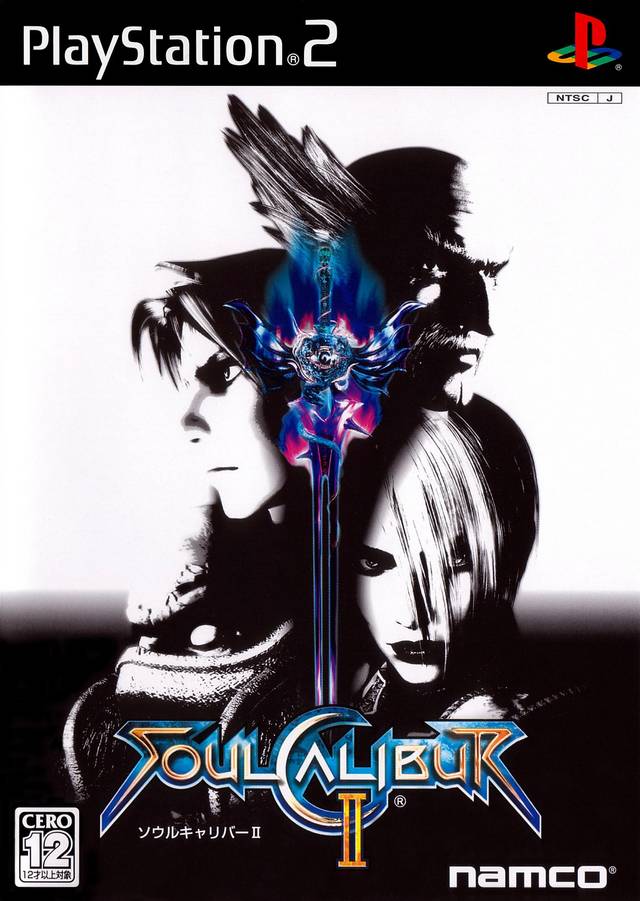
HOW IT WAS MADE
Project Soul, System 246The arcade original ran on Namco's System 246 board, hardware built around the PlayStation 2 architecture, which made the home conversions unusually faithful. The game launched in Japanese arcades on 10 July 2002. Around the returning cast, Project Soul built a faster, more aggressive game: stages gained walls and wall specific moves, a clash system flashed white when two attacks met at the same instant, and Guard Impact was unified so high and mid attacks were turned aside with Repels and mid and low attacks with Parries.
The console versions added two characters no arcade player had. Necrid, a hulking original fighter designed by Spawn creator Todd McFarlane, appeared in every home version. Then came the guests, one per console, covered in full on their own page in this wing. The home game also restored the extra weapons system from Soul Edge, absent in Soulcalibur: twelve weapons per character, each with attack, defense, and special properties, and each with a written backstory in the Weapon Gallery.
THE RELEASE
Arcade 2002, consoles 2003The three console versions launched in Japan on 27 March 2003, in North America on 26 August 2003, and in Europe on 26 September 2003. North American and European buyers also got three bonus fighters, Assassin, Berserker, and Lizardman, that Japanese players did not.
A decade later, SoulCalibur II HD Online (2013) remastered the PlayStation 2 version for PlayStation 3 and Xbox 360, and managed a small reunion: it included both Heihachi and Spawn together for the first time. Link, owned by Nintendo, stayed home.
HOW IT WAS RECEIVED
The scoresWHAT IT LEFT BEHIND
The guest templateSoulCalibur II proved a guest character could sell a specific console version of the same game, and the series never went back: later entries built their marketing around guests as a matter of course. Its single player structure mattered just as much. Weapon Master mode, part campaign, part shop, part unlock engine, is covered on its own page, and its shape shows up in fighting games for the next two decades.