
What are Lunar Legend and Lunar: Dragon Song?
One faithful miniature, one infamous experiment: the two Nintendo handheld Lunars.
After Working Designs passed on the Game Boy Advance (Ireland disliked cartridge economics, and said so), the handheld Lunars went to Ubisoft in the West. Lunar Legend (2002) retells The Silver Star on GBA; Lunar: Dragon Song (2005, Lunar Genesis in Japan) is the series' only wholly new story, a prequel set a thousand years before Alex. They are the family's two most argued-about objects, for opposite reasons.
LUNAR LEGEND (2002)
The Silver Star, compressed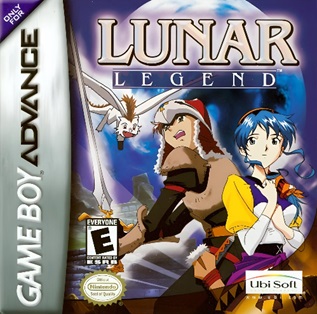
A cartridge retelling
Released in Japan in April 2002 and North America that December, Legend redraws Silver Star Story for the GBA: the animation is gone and the script is re-trimmed, but the beats survive, and a collectible trading-card system (cards won in battle, traded between players) gives it an identity of its own.
The Ubisoft translation
Legend's English script is its own, neither Working Designs' nor a fresh literal pass, which makes the GBA version a third English Silver Star. For a series whose Western identity is a translation argument, that is a genuinely interesting artifact.
LUNAR: DRAGON SONG (2005)
The prequel problemWhat it attempted
One of the Nintendo DS's first RPGs (Japan August 25, 2005; North America September 27), set in the age before the Dragonmasters, with a new cast led by Jian and a story of beastmen and faith. On paper, the Lunar 3 the fan base had begged for, in miniature.
Why it is argued about
Its systems baffled players: battles split rewards between two modes (experience or items, never both), staple conveniences were missing, and the writing carried none of the warmth the series is defined by. Fan rankings place it last with near-unanimity, and Game Arts never made another original Lunar. The Library documents it whole: a beloved series' one false step is part of its record.