
What rules does Disney set for Kingdom Hearts?
The collaboration’s most consequential rule is documented in Nomura’s own words, from the first game’s Ultimania guide. “Actually, due to contractual issues, we were only able to use him in one scene,” he said of Mickey Mouse, explaining that another company’s Mickey game was in the market at the time. Disney’s fallback offer was telling: Mickey could appear “from far away, as a silhouette, with him waving his hand or something,” in the back of a crowd. Nomura spent his single scene at the story’s climax instead, the King’s silhouette behind the Door to Darkness, and built the whole plot around an absent king whose letter launches the quest.
The hero himself is a rule made visible. Square wanted Mickey as the protagonist; Disney wanted Donald; Nomura insisted on an original human lead. His earliest Sora was a lion-human hybrid carrying a chainsaw-like blade, which Disney found too violent, so the weapon became a key that frees hearts rather than cutting enemies. The finished Sora’s outfit deliberately quotes the mouse he replaced: white gloves, red shorts, and oversized yellow shoes. The name is structural too: Sora means sky, set against Riku (land) and Kairi (sea).
The standing rules are visible across the series. The original characters and the Kingdom Hearts property itself belong to Disney; Square Enix develops under that ownership, which is why Sora’s appearances elsewhere (including his arrival as the final Super Smash Bros. Ultimate fighter in 2021, a process Nomura has said he supervised very pickily) are Disney’s to grant. Inside the games, the fiction enforces a “world order”: visitors disguise themselves and keep other worlds secret, which is the story’s justification for the transformation designs. And for Kingdom Hearts III, Pixar worked directly with the team on the Toy Box world, approving a chapter set between its own films. Final Fantasy characters, Nomura has said, were included partly as familiar anchors to help establish the brand-new original cast.
ONE SCENE, SPENT WELL
The King in Kingdom Hearts (2002)The boxes the rule produced
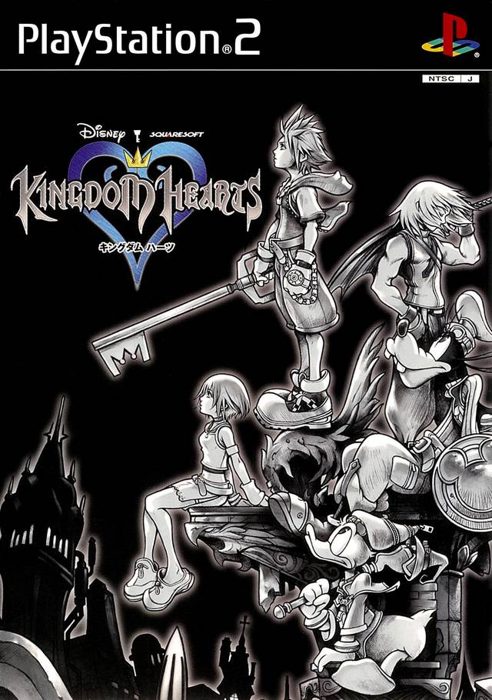
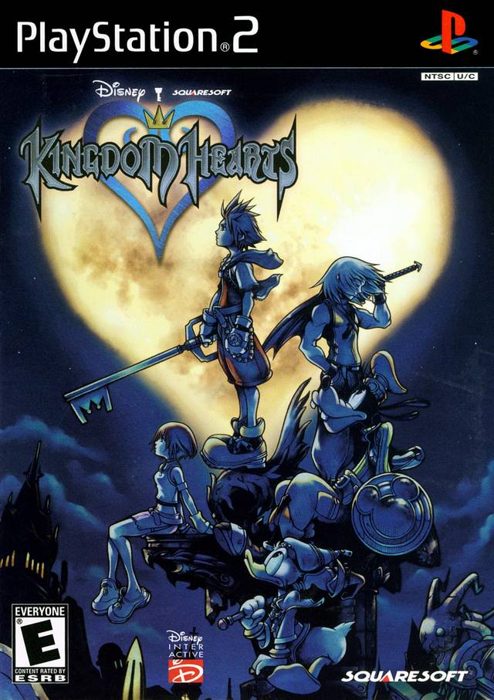
The gloves, shorts, and shoes are not a style choice that happens to resemble Mickey Mouse. They are the licensing negotiation, drawn.