From the Library: covers, censuses, and editions, documented. Browse the Library →
SOJ Marvel Heroes · The Design Changes
← Back to the Library

What did Diablo's creator change when he made a Marvel game?

He kept the loot, the random levels, and the click. He changed who you play, how many play at once, and what the game costs.

Every change on this page is traced to David Brevik's own words in interviews given while he was building the game, between 2012 and 2013. Where a claim about his design rests only on later summaries, this page says so and leaves it out of the verdict.

The deepest change was identity. Diablo asked you to build a character from a handful of classes. Marvel Heroes handed you Marvel's catalogue instead. Brevik, in March 2013: you can think of each hero as "its own character class, very similar to how I've made games in the past." Diablo II had started with five classes, then seven. "This is the same thing, only this time we are starting with over 20." Customisation moved inside the hero: power trees, builds, and costumes decided which Wolverine yours was, a point he made at New York Comic Con in 2012, where choosing a costume could also choose a specialisation, his example being an X-Force Wolverine built around bleeds.

The second change was scale. "Diablo games have been very insular," Brevik said in 2012. "There's been a strong hub and spoke model." Marvel Heroes replaced the small private game with shared public zones, central hubs, and public events built to pull crowds of heroes together. As he put it in the same period: "We're taking Diablo 2 to the next level. We're taking an action RPG and we're turning it into an MMO."

The third change was the business model itself, and it shaped the design. Diablo was a box you bought. Marvel Heroes was free, funded by a shop. At New York Comic Con in 2012 Brevik was blunt: "It's totally free," with microtransaction shops selling things that have "very little impact on gameplay," and no option to buy power. Preview interviews from the same period record the same rule in his words, "we're not going to sell power," and his stated model was League of Legends: be generous, let players unlock heroes by playing, and let costumes carry the revenue.

WHAT STAYED, AND WHAT GREW

In his own words, 2012 to 2013
Kept: random levels and loot
At Comic-Con in 2012, Brevik described the retention engine in one breath: "It's very Diablo-like: random levels and lots of items that drop. It's very addictive gameplay, as well as lots of endgame content that we haven't talked about yet."
Kept, relearned: procedural generation
Brevik told PCGamesN that random generation had been a major part of the first two Diablo games and was much less common by 2013, so his team had to be trained in it: "I had to train a lot of people on how to do random content."
Changed: a story told in motion comics
Diablo's story was atmosphere and a few famous voices. Marvel Heroes commissioned an original campaign from Brian Michael Bendis, its key scenes told in over an hour of motion comics, with chapters themed around groups such as the X-Men out of the X-Mansion.
Changed: the duplicate hero problem, answered
Letting everyone be Spider-Man means twenty Spider-Men in one plaza. Interview coverage of Brevik's Comic-Con remarks records his answer: the system was more compelling than creating your own hero, and players could switch heroes or costumes to stand apart.
Changed: a game designed to keep growing
"One of the things that's attractive to me about this project is the ability to add on to a fantastic base and that's something I've never really been able to do before, to continually upgrade a particular game." Brevik contrasted that with the first two Diablo games, designed primarily for a single player.
A note on evidence
Later summaries often credit Brevik with the 2017 Omega redesign of the PC game. He had left Gazillion in January 2016, so this page does not. The changes above are the ones he described himself, before and at launch.

THE MARVEL GAME

Marvel Heroes
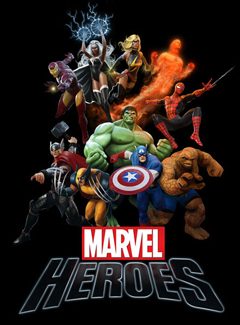
Marvel Heroes key art showing the playable hero roster
Marvel Heroes · Key art
The key art for Marvel Heroes, the Diablo shaped Marvel game its creator built next, and the subject of the changes listed here.
What is Marvel Heroes?Why did it shut down in 2017?
MORE FROM THE MARVEL HEROES ARCHIVE →
One shelf of eighty-two in the Library. Browse them all →

THE FIRST WORD

New pages and new pieces, first.