What did Shouzou Kaga do after Fire Emblem?
Shouzou Kaga created Fire Emblem and led its first five games, from Shadow Dragon and the Blade of Light in 1990 to Thracia 776 in 1999. On completing the fifth, he left Intelligent Systems to work on games of his own, and in 2000 he founded a new studio, Tirnanog. The sources opened for this page document the move itself; none of them records a reason given by Kaga, so this page does not invent one.
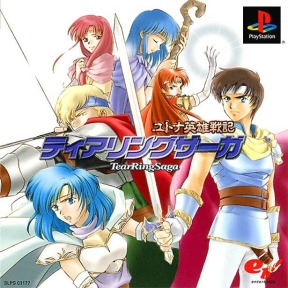
Tirnanog's first game was announced as Emblem Saga, for Sony's PlayStation, Nintendo's direct market rival, with art by Mayumi Hirota, the Thracia 776 artist. Nintendo applied legal pressure before the game even shipped, stating that the original title "was used deliberately for promotional purposes" and was "bringing false recognition to users." A month and a half before release, the direct Fire Emblem ties were dropped and the game was renamed Tear Ring Saga: Chronicles of War Hero Yutona. It plays as the spiritual sequel it was designed to be: the same interface, style, and flow, two protagonists with separate armies, designed and written by Kaga, who no longer owned the rights to the series he had created.
It sold. Released in Japan only on May 24, 2001 by Enterbrain, Tear Ring Saga scored 32 of 40 in Famitsu and sold over 345,000 copies by July 2001. Nintendo then sued Tirnanog and Enterbrain in July 2001, seeking over 258.3 million yen in damages, roughly two million dollars at the time, and an order prohibiting sale and distribution of the game. The first trial ended in November 2002 with the Tokyo District Court turning down Nintendo's claims. Nintendo appealed, and the Tokyo High Court's second trial ended in November 2004: Enterbrain was ordered to pay a fine of 76 million yen, but the game was not ruled a breach of copyright, and copies remained in stores. Nintendo's final appeal was dismissed in April 2005, with the 76 million yen ruling confirmed and the game still on sale.
The split verdict is why the case still gets cited. Kaga's side lost money over the promotion of the game and won the point that mattered for the game itself: a creator could leave, build a strikingly similar work, and keep selling it. Later coverage has treated the outcome as a precedent for spiritual successors generally, with USgamer pointing to it when discussing Bungie's Destiny after Halo and Keiji Inafune's Mighty No. 9 after Mega Man, and Nintendo Life drawing the same line to Koji Igarashi's Bloodstained after Castlevania.
Tirnanog made one more game. Tear Ring Saga: Berwick Saga reached the PlayStation 2 on May 26, 2005, heavily reworked, with hexagonal movement instead of the square grid and mercenaries who could be hired temporarily and recruited permanently. It debuted at number 2 on the Japanese chart but sold far less than its predecessor, 84,000 copies in its first week, and it was the last game for the company and the series.
Then, a decade of quiet, and a free game. Kaga announced a new project in May 2015 and released Vestaria Saga on September 5, 2016, built in the SRPG Studio tool with a team of volunteers. His own statements about it, reported from his blog at the time, are unambiguous about what it was: a free indie game made in the team's free time and for their own self-satisfaction, with donations and commercialization declined. An English edition followed on December 27, 2019 as Vestaria Saga I: War of the Scions, published by Dangen Entertainment at $19.99 in the West to cover the cost of localization, and a sequel, Vestaria Saga II, reached the West in 2022. The man who invented Fire Emblem's rules ended his career making the same kind of game, for free, on his own terms.
THE TIMELINE
Kaga after Intelligent Systems