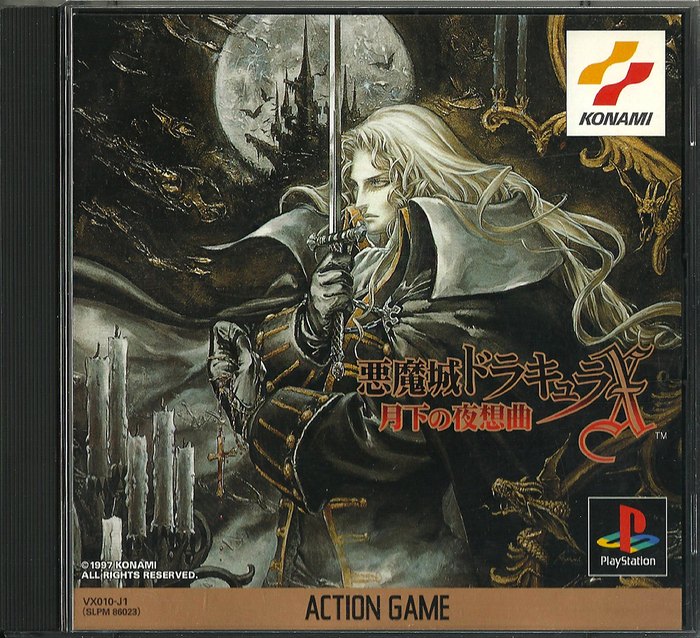
What extra content does the Saturn version of Symphony of the Night have?
The Japan only Sega Saturn port of 1998, ported by Konami Computer Entertainment Nagoya and released June 25, 1998, adds real content the PlayStation original never had: two new areas, Maria Renard as a fully playable character and a boss, Richter available from the start, a third hand for consumables, exclusive items including the Godspeed Boots, and remixes of earlier series music. It also loads longer, and its own producer disowned the additions. Both halves of that sentence are the answer.
THE NEW AREAS
The Cursed Prison and the Underground GardenThe Saturn castle has two areas no PlayStation version contains: the Cursed Prison and the Underground Garden, each with new enemies and new bosses, and each present again in the inverted castle. They are additions of place rather than story: new rooms to explore inside a castle Western players otherwise knew completely, reachable only on a Japanese Saturn disc.
THE PLAYABLE MARIA
And Richter from the startIn the PlayStation original, finishing the game unlocks Richter. The Saturn version offers Richter from the start and adds Maria Renard as a third playable character, with her own moveset drawn from Rondo of Blood, and also places her inside Alucard's game as a boss fight. The Maria later players met in the PSP port is a different implementation, modelled on Rondo with a weaker moveset, unlocked after completion: the Saturn Maria is her own version, and she exists nowhere else.
THE ITEMS AND MUSIC
A third hand, running boots, remixesPlaying as Alucard, the Saturn version adds a third hand, an equipment slot reserved for stat altering items such as food and potions, so consumables no longer compete with weapons for a hand. Its exclusive items include the Godspeed Boots, which let Alucard run at Richter's speed. The soundtrack adds remixes of songs from earlier Castlevania games alongside Yamane's score.
THE COMPROMISES
What the port costAgainst all of that, the documented trade offs: loading is more frequent and longer than on PlayStation; the Saturn's limited transparency support means effects such as the mist and the waterfall were replaced with dithering; and the graphics were stretched to fill the screen rather than drawn at the machine's higher resolution, distorting some sprites. Igarashi's verdict, given in 2007, is part of the record: he understood why fans who had never played the Saturn version were interested in its features, but said he really did not feel good about them and could not put his name on that material for Castlevania fans. Japan's reviewers were kinder than its producer: Famitsu scored the Saturn version 32 of 40, above the PlayStation version's 30.
One boundary matters for collectors. Playable Maria and the two cut familiars are separate stories: the familiars belong to the Japanese PlayStation version, as this Library's Japanese version page documents. The Saturn content is this page's list, and the Saturn port was never released outside Japan, a fact Konami had already confirmed by the time it shipped.
THE GAME ON THE SHELF
Symphony of the Night, the original release