
What inspired Mega Man?
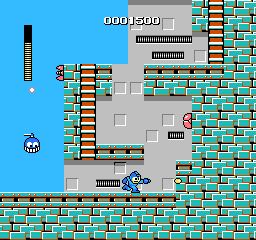
Mega Man's look has two authors and one clear ancestor. Original director Akira Kitamura developed the basic character concept, and young artist Keiji Inafune designed and illustrated the character into his final form, and Inafune has stated on record that he was influenced by the protagonist of Osamu Tezuka's Astro Boy in his Mega Man designs. The round helmet, the big boots, the boy's face under the armor: the lineage is stated by the artist himself, not inferred by fans.
THE RECORD
Who did what, in their own accountingInafune is unusually precise about the division of labor. He insists he only did half of the job in creating Mega Man, because Kitamura's basic concept, and even the basic sprites for Roll and Dr. Light, existed before he joined the project; Cut Man, Ice Man, Fire Man, and Guts Man were already in process. What Inafune added was the finished design language, nearly every character and enemy in the game, the Japanese box art, and, because the team had six people, the pixel work that turned his drawings into sprites.
His first original character shows the other influence stream: Elec Man, whom he has called his favorite of his designs, was inspired by American comic book characters. The world around the hero got the same treatment in miniature: Dr. Light modeled on Santa Claus, Dr. Wily on Albert Einstein, the archetypal mad scientist.
THE BLUE
A palette decision that became an identityThe most famous color in the series is a technical artifact. Mega Man is blue because the Famicom's 56 color palette offered more shades of blue, cyan included, than of any other color, and the team spent that surplus on detail in the hero's sprite. The name the team nearly chose preserves the logic: Rainbow Man, one of the final candidates alongside Mighty Kid and Knuckle Kid, because the character changes into seven colors as he cycles weapons, each stolen weapon repainting him.
The gameplay's inspiration is equally documented and equally unglamorous: rock paper scissors. Kitamura built the weapon weakness cycle on it, each boss strong against one and helpless before another, so that choosing the stage order is itself the game's central puzzle. And the animation took its cue from anime, in Inafune's explanation: the hand transforming into a gun, visibly emerging from the arm, was drawn so the motion would be realistic and make sense, a perfect blending of game character with animation ideas.