The History of Mega Man
In the year 200X, Dr. Light's six industrial Robot Masters run wild under Dr. Wily's control, and Rock, a lab assistant robot with a strong sense of justice, volunteers to be converted into a fighting robot. Mega Man, Rockman in Japan, launched on the Famicom on December 17, 1987, the same month in North America. Capcom, an arcade company, built it specifically for the home console market, and a team of six invented the template the series still uses: choose your order, beat a boss, take his weapon, and use it on the next one.
THE MAKING
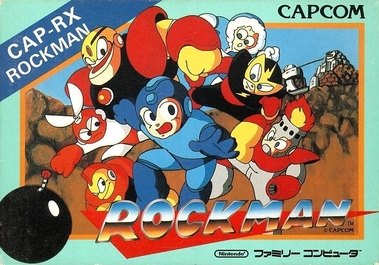
Capcom, 1987The team was six people. Director Akira Kitamura developed the basic character concept before the young artist Keiji Inafune, fresh out of college and just off the Street Fighter team, arrived; the basic sprites for Roll and Dr. Light already existed, and Cut Man, Ice Man, Fire Man, and Guts Man were in progress. Inafune designed and illustrated nearly everything else, drew the Japanese box art and manual, and then, because the team was too small for specialists, dotted the characters into pixels himself. His first original character was Elec Man, inspired by American comic book characters and still his favorite of his designs.
Inafune is careful with the credit: he insists he only did half the job of creating Mega Man, because Kitamura's concept came first. Dr. Light was based on Santa Claus and Dr. Wily on Albert Einstein, the archetypal mad scientist. The names the team weighed before settling included Mighty Kid, Knuckle Kid, and Rainbow Man, the last because the hero changed into seven colors depending on the weapon selected, a quirk of the Famicom's 56 color palette, in which blue simply had the most shades to draw detail with.
Manami Matsumae composed the music, created the sound effects, and programmed the data in three months, translating notes into computer language one by one and working with only three notes sounding at any time. She wrote the score to be rock oriented, to fit the action and the robot, and to set the game apart from Capcom's more classical sounding arcade music.
THE DESIGN
Rock, paper, scissors, weaponizedKitamura has said the weapon system was inspired by rock paper scissors: each Robot Master is badly hurt by one specific weapon and shrugs off the rest, so the order you choose is the strategy. The project supervisor wanted a simple system that offered deep gameplay, and the level select screen, six stages in any order, was, per GamesRadar's later assessment, the first nonlinear structure of its kind in a game like this.
Ideas that did not survive tell you how strange the game nearly was: Mega Man could originally crouch, cut because it made judging projectile height harder; Roll was nearly kidnapped as the plot, and nearly fought as a giant boss near the end. The scoring system, points for enemies and stage clears, survived into this game only; the designers found it gave players nothing and removed it from every sequel.
THE EDITIONS
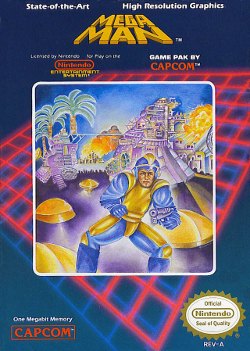
One game, a shelf of versionsTHE RECEPTION
Loved, and called cruelThe dissent aimed at the difficulty and never really left. Total! retrospectively called the game an overhard and unenjoyably frustrating platform nightmare, and it is routinely listed among the hardest games on the NES. Capcom's own sales department originally believed the game would not sell at all; limited Japanese quantities did well enough to commission a rushed American localization, overseas sales then built slowly by word of mouth until the game counted as a sleeper hit, and Capcom reissued it in North America in September 1991 on, in their words, overwhelming demand.
THE LEGACY
The templateAlmost everything the classic series is, starts here: the stage select, the stolen weapon, the fortress at the end, the robot family named like a record shelf. The two questions this Library's older shelves already answer, why he is called Rockman in Japan and why the American box art is so bad, both begin with this one cartridge.
And when the series returned to its roots twenty years later, in Mega Man 9 and 10, it was this game's look, this game's sprite, and this game's rules that Capcom reached for.
THE GAME ON THE SHELF
Mega Man · 1987