
Who wrote Street Fighter II's music?
Yoko Shimomura, nearly all of it, and she wrote each stage twice.
The most played fighting game music ever made is mostly one person's work. Yoko Shimomura, then a young Capcom composer, wrote nearly the entire Street Fighter II soundtrack herself in 1991, themes the series still reuses today. She got the job, by her own account, almost by chance: she was free, she was offered a choice of projects, and she picked this one.
Her method, explained in interviews since, was country first. Rather than scoring a fighter, she scored the place the stage imagines: not real India, but the India of a travel poster, the same cheerfully distorted lens, she noted, through which foreigners see Japan as geisha and kabuki. Match the music to the stage, she reasoned, and it becomes the character's theme on its own.
IN HER OWN WORDS
Three stories Shimomura tells herself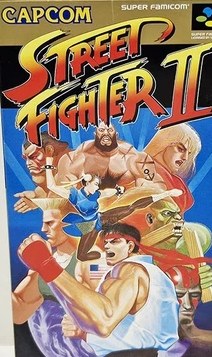
The Home Version · 1992
The console port that carried the themes into millions of homes. The stage music, the sound effects, even the elephant's trumpet on Dhalsim's stage, were Shimomura's brief.
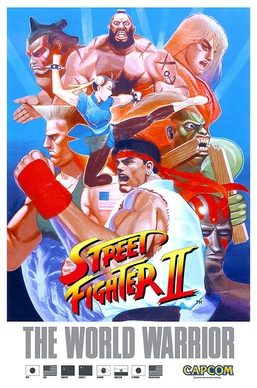
The Arcade Original · 1991
Where the themes were born, on Capcom's CPS hardware, written as data by a composer with a classical piano background who doubted she could write rhythm driven music at all.
Guile's Theme Was Claimed
Shimomura brought demos in, and Guile's programmer, Motohide Eshiro, heard one and took it on the spot: this song is cool, I am taking it for Guile. The most famous theme in the game was assigned by enthusiasm, not by brief.
Written Twice
When a fighter's health runs low, the music speeds up. Shimomura has said that effect was her suggestion, and that it meant composing every stage theme as two separate pieces, double the work, her idea.