
Why did Mega Man 11 take eight years?
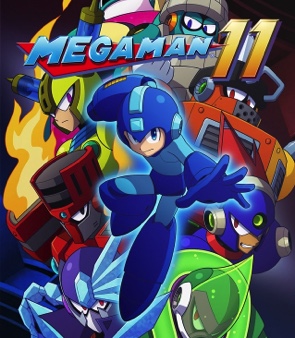
Between Mega Man 10 in March 2010 and Mega Man 11 in October 2018, Capcom released no new classic Mega Man at all, and no new entry in any Mega Man series. The stated reason is not sales and not technology. Producer Kazuhiro Tsuchiya and director Koji Oda, the men who finally made Mega Man 11, said on record that Keiji Inafune's departure from Capcom in 2010 was mainly the reason for the long hiatus: there was a huge hesitation for anyone to step up and become the new Mega Man guy, until Oda himself did.
THE VACUUM
What Inafune's exit actually removedInafune had been involved in nearly the entire franchise, as artist, designer, and producer, from the 1987 original onward: his credit, Inafking, runs through every classic game on this shelf. When he left Capcom months after Mega Man 10 shipped, the series lost not a mascot designer but its internal owner, the person whose job it was to argue for the next one. The fatigue around the brand was real, the record attributes the hiatus partly to the reuse of Mega Man 9's concepts in Mega Man 10 and to the flood of spin off titles through the 2000s, but fatigue alone does not explain eight years. Tsuchiya and Oda's account does: nobody inside the company wanted to be measured against the man who had run the series for twenty three years.
The gap is visible in what did get made: compilations. The Legacy Collections repackaged the classic games in 2015 and 2017 to strong effect, proving the audience had not left. What was missing was not demand. It was a volunteer.
THE RETURN
An anniversary, and a volunteerOda stepped up, Tsuchiya produced, and Capcom announced the game in December 2017 as the centerpiece of the series' 30th anniversary, alongside the re-releases that had kept the shelf warm. The new team changed the surface and kept the skeleton: 2.5D graphics with hand drawn environments, voice acting, the slide and charge shot restored, and one true addition, the Double Gear system, built out of the fiction's own oldest argument between Light and Wily.
The market's verdict completed the story. Mega Man 11 sold 870,000 copies by February 2019 and 1.3 million by that September; in September 2022 Capcom confirmed it had passed 1.6 million and become the highest selling game in the franchise's history, the record Mega Man 2 had held for three decades. By February 2025 it stood at 2 million. The eight year silence ended with the best selling Mega Man ever made, which is the strongest evidence on this page that the hiatus was never about the audience.