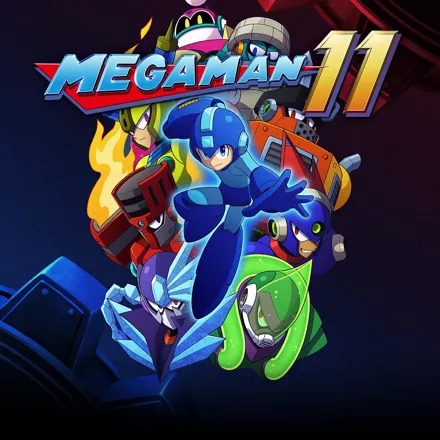
The History of Mega Man 11
A university flashback opens it: young Thomas Light and Albert Wily before a committee, arguing whether robots deserve independent thought or raw power, and Wily's rejected Double Gear research is the wound the whole series grew from. Mega Man 11, Rockman 11: Gears of Fate!! in Japan, launched worldwide on October 2, 2018, two days earlier than Japan. It ended an eight year franchise hiatus, became the best selling game in the series, and was made without Keiji Inafune for the first time.
THE MAKING
The new Mega Man guyThe hiatus had a human cause, stated on record by producer Kazuhiro Tsuchiya and director Koji Oda: Inafune's departure from Capcom in 2010 was mainly the reason for the long gap, because there was a huge hesitation for anyone to step up and become the new Mega Man guy, until Oda himself did. The game was announced in December 2017 as the centerpiece of the series' 30th anniversary, alongside re-releases of the earlier games, and built on Capcom's MT Framework engine with character designs by Yuji Ishihara and music by Marika Suzuki.
The look splits the difference between eras: 3D polygonal characters and hand drawn environments in a 2.5D presentation, voice acting restored, and the slide and charge shot back after their exile in Mega Man 9 and 10. This Library's question page tells the hiatus story in full.
THE DESIGN
The Double Gear, Wily's thesis defendedThe new mechanic is the plot. The Double Gear system gives Mega Man a Speed Gear that slows time and a Power Gear that doubles his firepower, both on an overheat meter, with a last stand mode at critical health that fires both gears at once and leaves him with a single point of life. It is Wily's university research, installed in Mega Man by a reluctant Dr. Light from Wily's own preserved prototype: the hero wins the game using the villain's rejected idea, which is the argument of the flashback played out as a system.
The eight Robot Masters carry the series' naming habits into the new era, two of them renamed for the West: Impact Man was Pile Man in Japan, and Bounce Man was Rubber Man. The difficulty ladder now runs to four settings, Newcomer through Superhero.
THE RECEPTION
The record, thirty one years onIGN's 7.5 verdict carried the forward looking line: it is not revolutionary, but it feels almost like a classic Mega Man game, and is a good foundation for the next ten games. The foundation held. A sequel, Mega Man: Dual Override, has been announced for 2027, which makes Mega Man 11 the game that restarted the line rather than the one that closed it.
THE GAME ON THE SHELF
Mega Man 11 · 2018