
Why did Mega Man 9 go back to 8-bit?
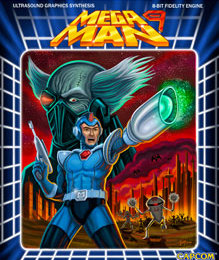
Mega Man 9 looks like 1988 because its makers fought for that, against their own management. Capcom's leadership wanted the revival in 3D, reasoning that 8-bit would appeal only to existing fans; the development team at Inti Creates and Capcom argued for the NES style, and, in the record's plain summary, the idea for solely using 8-bit eventually won out. Producer Hironobu Takeshita framed the ambition precisely: the team was concerned with surpassing Mega Man 2, not Mega Man 8, and he referred to Mega Man 9 as the new Mega Man 3.
WHY IT COULD HAPPEN
The download shops changed the mathKeiji Inafune, who had publicly wanted a throwback Mega Man 9 since 2004, cited the rise of retrogaming services, Nintendo's Virtual Console above all, for making the moment right: a downloadable game no longer needed to justify a retail box, a retail price, or a decade of graphical escalation. Inafune's own reasoning about the industry was blunt: the simple fun of a classic Mega Man does not fit the grandiose and expansive world the consumer gaming industry had become, and a game in the old style risked being criticized as simplistic, outdated, or too expensive. The download model answered all three charges at once.
The technology followed the argument. Mega Man 9 does not run on NES hardware or an emulator of it; it runs on a new proprietary engine that simulates the behavior of 8-bit games, with a Legacy Mode that deliberately reintroduces sprite flicker. The team even considered distributing the game on actual NES cartridges, and dropped the idea on the facts: Takeshita clarified the game is much too large to fit on one.
WHAT THE CHOICE CUT
Back to the basics, enforcedThe 8-bit decision was a design discipline, not a filter. The slide and the charge shot, standard since Mega Man 3 and 4, were removed to restore the Mega Man 2 template, and producer Takeshita has described Inafune repeatedly scolding the team to simplify their graphics and sound and bring it back to the basics when their instincts ran too complex. The music followed the same rule: Ippo Yamada has said the game contains no actual NES music but the spirit of NES music, composed without the hardware limits the originals had, but in their image, including background layers that drop out under certain sound effects exactly as they did in Mega Man 2.
Splash Woman, the series' first female Robot Master, arrived inside this strict frame, designed by Inafune at the planning team's request. The retro surface was never nostalgia for its own sake; it was the budget, the marketing, and the design brief in a single decision, and it worked commercially well enough that Mega Man 10 repeated it within eighteen months.