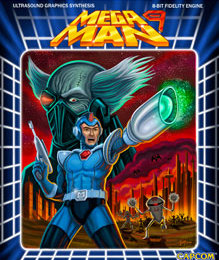
The History of Mega Man 9
Dr. Light is arrested on television for a robot rampage, Wily appears as the whistleblower asking the public for donations, and the hero goes out in 8-bit. Mega Man 9, Rockman 9: The Ambition's Revival!! in Japan, launched as a download on WiiWare in North America on September 22, 2008, two days before Japan. It was the first numbered classic game in a decade, the first in the series with no physical release, and a deliberate reconstruction of how Mega Man 2 felt in 1988.
THE MAKING
Inti Creates, and the scolding to simplifyThe game was co developed by Capcom and Inti Creates, the studio of former Capcom staff behind the Zero and ZX series, with a team of about twenty people and Keiji Inafune producing alongside Hironobu Takeshita. Inafune had wanted a throwback Mega Man 9 since at least 2004, and credited the rise of retro download services, the Virtual Console above all, with making the time right. The technical work was inverted: rather than imitate old hardware, the game runs on a new engine that simulates 8-bit behavior, with a Legacy Mode that throttles sprite rendering to reproduce NES flicker on purpose.
The difficulty was not the programming but the restraint. Takeshita has said the team kept making the graphics and sound too complex, and Inafune would scold them to simplify their work and bring it back to the basics. The slide and the charge shot were removed to match the Mega Man 2 template, which also freed sound channels the charge used to block. Capcom's management, initially, wanted the game in 3D; the 8-bit argument won, and this Library's question page tells that story in full.
THE DESIGN
Expiration dates, and the first sister among mastersThe plot turns on a genuinely modern idea: the rampaging Robot Masters were past their expiration dates and scheduled for scrapping, and Wily recruited them with a promise of survival. Inafune designed Plug Man as the teaching example for the younger designers, simple yet unique, and designed Splash Woman, the first female Robot Master in the classic series, at the planning team's request; a second planned female master, Honey Woman, was converted into Hornet Man once Splash Woman existed.
Around the edges the game is dense with modern structure the NES never had: fifty challenges, a time attack mode, and downloadable content in the series' first use of it, Proto Man as a playable character, harder modes, an endless stage, and a special stage boss named Fake Man.
THE RECEPTION
A success with an argument attachedThe fake box art closed the circle this Library began with the 1987 cover: Capcom commissioned iam8bit to paint deliberately terrible American style key art, a grown man Mega Man with a hand blaster, as the game's storefront face. The worst cover in the medium, embraced as a house style.
THE GAME ON THE SHELF
Mega Man 9 · 2008