
Why do Japanese Pokémon cards have different backs?
The card game was born in Japan as a domestic product with a back of its own. When the game went international more than two years later, the international edition arrived with a second, different back, and that back became the standard for every language except Japanese. Japan then redesigned its back once, in July 2001, and redesigned it its own way. The two backs have run side by side ever since, and a Japanese card printed today still carries a design no other language uses.
One surprise first: no standard Japanese back, old or new, carries any Japanese script. Every word printed on them is in English lettering, which is why the back alone can date a Japanese card for a reader who knows no Japanese at all.
THE THREE BACKS
Two Japanese, one for the rest of the worldRead the back, date the card
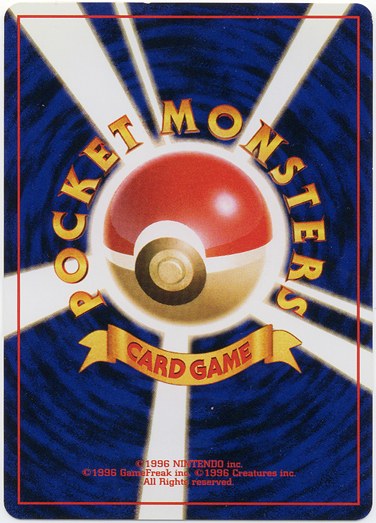
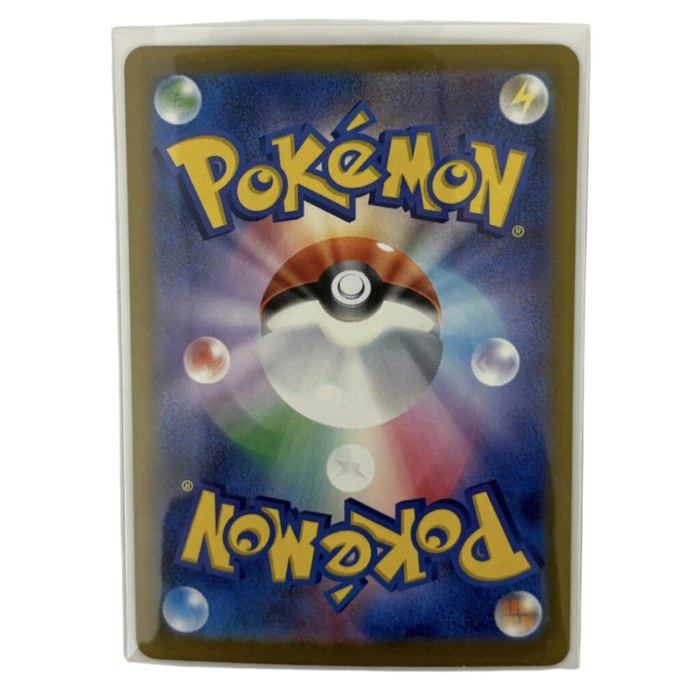
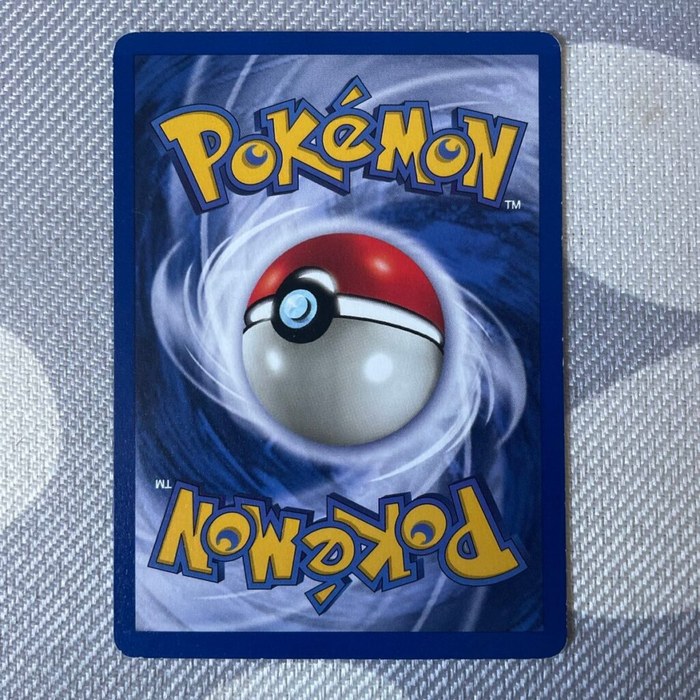
The seven orbs on the current Japanese back are the seven Energy types the game launched with in 1996, clockwise from the top left: Grass, Lightning, Psychic, Fighting, Water and Fire, with Colorless below the ball. Darkness, Metal, Dragon and Fairy arrived later and were never added. The quickest tell across a room is the border: gold is Japanese, dark blue is not.
HOW THE SPLIT HAPPENED
1996, 1999, 2001October 20, 1996. Media Factory releases the first Pocket Monsters Card Game Expansion Pack and Starter Pack in Japan: 102 cards, and on their backs the game's full original name, POCKET MONSTERS CARD GAME, lettered around the ball. The Smithsonian's National Museum of American History, cataloguing a Japanese deck of the era, describes that same back: a Poké Ball with the words "Pocket Monsters Card Game" encircling it. Collectors in Japan call this design kyūura, the old back; The Pokémon Company itself called it the First Design in a 2016 campaign. Every Japanese set of the first era carries it, the Original, Gym and Neo series included, through to Darkness, and to Light, the last old back expansion, on April 20, 2001.
January 9, 1999. Wizards of the Coast releases Base Set in the United States, the same 102 cards, with a new back of its own: the Pokémon logo twice, the ball turning in a white swirl on blue. That back, not Japan's, became the international standard, printed for English and every other language the game appears in, and it has kept the same illustration ever since, its blues drifting only from print run to print run.
July 2001. Japan changes its back for the only time in the game's history. Pokémon Card VS, released July 19, 2001, is the first expansion printed with the current back, and every Japanese expansion since has used it. The redesign looked toward the international layout, two logos instead of the arched wordmark, but kept Japan distinct: the gold border and the seven orbs are Japan's alone. Japanese 1st Edition marks begin with the same release, which is why no old back card carries one.
The split is not a technicality. Play! Pokémon's own tournament handbook, in its section on disallowed cards, states it outright: "Japanese cards are considered 'marked' for the purpose of this section as their card backs are different than the card backs of all other Pokémon trading cards." Two print traditions, two backs, and a rulebook that treats the difference as a marked card.
What the record does not contain is a publisher's explanation of motive. No statement from Media Factory, Wizards of the Coast, or The Pokémon Company saying why the backs were kept apart has been published in the sources for this page. The documented story is the sequence itself: a Japanese game launched alone in 1996, an international edition built separately in 1999, and a 2001 redesign that modernised the Japanese back without merging it into the world's.
DATING A CARD BY ITS BACK
And the reprint tellPOCKET MONSTERS arched over the ball means a Japanese card released from 1996 to 2001. A gold border and seven orbs mean July 2001 or later. The back settles the era before you read a single word of the front.
It also catches reprints. Old artwork on a gold back is a later printing wearing the current design: Pokémon Web reprinted cards from the first four expansions in October 2001, and the Expansion Pack 20th Anniversary set reprinted the 1996 cards in an updated layout in September 2016. A claimed 1996 original with a gold border is not a 1996 printing, whatever the front shows.
What the back cannot tell you is size. Japanese and international cards are the same 63 by 88 millimetres; the difference is purely the printed design. The "Japanese size" on some sleeve packaging is the smaller Yu-Gi-Oh! format, too tight for any Pokémon card of either back.
THE BACKS THAT BREAK THE RULE
Official exceptionsA back matching neither standard design is not automatically a fake. Ancient Mew has a back of its own, gold holofoil crossed by a dark blue maze of glyphs, issued with the pamphlet of the second Pokémon film at Japanese cinemas from July 17, 1999; its first printing famously misspells the copyright as "Nintedo." The World Championships decks, The Pokémon Company's own replica decks, also carry their own backs, with grey borders and a player's signature, and are not legal for tournament play. Check what a card is before writing its back off.