
Why do Persona 3's party members summon with Evokers?
Start with what an Evoker is not. It is not a real gun, a point the games themselves repeat. The Evoker is a gun shaped summoning device made and manufactured by the Kirijo Group, and its stated purpose, reiterated across the series, is provoking a sense of terror and thus inducing extreme stress, because that stress is one of the prerequisites for summoning a Persona. The device contains a Plume of Dusk, which is what allows it to function during the Dark Hour at all.
That is why the shape is a gun and the target is the user's own head. The series record describes the Evoker as a symbol of death, of accepting death and of knowing one's mortality, feelings it ties to the teenage years the cast is living through, and as a standing reminder that SEES members can die fighting Shadows. The fiction plays the mechanism straight: Yukari Takeba struggles to pull the trigger because she is afraid of death, while the protagonist, who does not find death scary, uses his without hesitation. A later game in the series, Persona 4 Arena, puts the research version on the record through a researcher character: a feeling of fear and self preservation are key to summoning a Persona.
One honesty note belongs in the verdict itself. The games reiterate the purpose constantly, but the exact method by which an Evoker summons is, in the record's own words, vague and unclear. What is documented is the intent (terror, stress, confrontation with mortality), not a physics. This page prints the intent, and does not invent the physics.
The Japanese box: the gesture itself
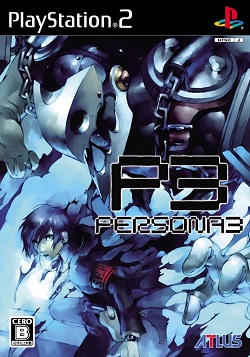
The Evoker holds a Plume of Dusk, the part that lets it work during the Dark Hour. It fires no bullet, and the games say so repeatedly: what it delivers is the shock.
THE FIRST DRAFT
Tarot cards, then a gunThe gun was not the first idea. The concept art record for Persona 3 shows that tarot cards were originally planned as the summoning medium, the same method the Persona 2 duology had used, and the idea was changed to a gun motif to fit the game's themes. The card method did not disappear: Persona 4 picked it up a game later, which is why its party summons by crushing cards while Persona 3's party reaches for a holster. The Evoker's physical model in that record is specific, too: its appearance is based on the Ruger Mk. III semi-automatic pistol.
THE IN-GAME REASON
What Mitsuru tells AkihikoThe fiction gives the gun shape a second, smaller explanation of its own. In The Answer, the epilogue released with Persona 3 FES, a door into Akihiko Sanada's past shows Mitsuru Kirijo recruiting him as a junior high student: she presents an Evoker to him immediately, in an effort to grab his attention, and he accepts. The scene plays the shape as a recruiting tool for one restless fighter, not as the reason the device exists. The stress mechanism above is the documented function; this scene is the documented sales pitch, and the page keeps the two apart because the record does.
NOT EVERYONE NEEDS ONE
Collars, androids, and exceptionsThe device is a tool, not a law. Koromaru, the party's dog, summons through a collar shaped Evoker. Aigis, an android built as an anti-Shadow weapon, has hers built in. The artificial Persona user Takaya summons with no Evoker at all, and the record is explicit that a Persona can be summoned without one by a user trained to concentrate at extreme levels. The Evoker exists for ordinary students who need the terror delivered reliably, in the middle of a fight, on the first try.
THE RECEPTION
Kept in, and no letters arrivedReviewers noticed the gesture immediately and, on the record, approved of its fit. Shane Bettenhausen of 1UP called the Evokers a ballsy and shocking move that created an edgy sensibility fitting the game's dark tone; IGN's Jeff Haynes found the summoning animations intriguing and shocking at the same time; GameSpot's Kevin VanOrd wrote that the repeated use never gets old. Atlus USA kept the Evokers in the worldwide release despite the possible controversy, and Nich Maragos of the localization team said afterward, on the Retronauts podcast, that the company received no criticism for their inclusion: no letters from concerned parents. The image the industry expected to cause trouble became the series' signature instead.