Why do Persona games have sung battle themes?
Meguro joined Atlus in 1996 and had used vocal themes in earlier scores, but Persona 3 (2006) is where the approach took over a whole game. The documented account is disarmingly casual: he created the vocal battle theme Mass Destruction as merely a prototype, and it was so well received by the developers that he decided to pursue that direction across the score. The rest of Persona 3 followed the prototype's lead: Yumi Kawamura's pop vocals on the opening Burn My Dread, and Lotus Juice's rapping woven through the battle music, a voice cast for a soundtrack, years before that was a normal thing to say about an RPG.
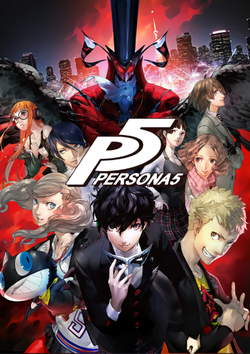
The pattern hardened into casting. For Persona 4 (2008), vocalist Shihoko Hirata became the game's voice, and Meguro wrote some of the vocal themes early in the project specifically to get an understanding of the central characters' psychologies: the calm surface of Pursuing My True Self against the drive of the battle theme Reach Out to the Truth. For Persona 5 (2016), the voice is Lyn Inaizumi, and Meguro's reasoning is in his own words, from the Persona Super Live 2017 pamphlet interviews: the team was looking for someone who could sing authentic soul music, and Lyn's vocals were perfect for the realistic, relaxed songs they wanted for Persona 5.
The sung battles then walked onto real stages. Persona Music Fes 2013 filled the Nippon Budokan on August 13, 2013, with Meguro himself on lead guitar, and the Persona Super Live concerts followed in 2015, 2017, and beyond. The sound proved durable enough to survive a remake's difficult choice: for Persona 3 Reload, Lotus Juice returned, while singer Azumi Takahashi took over Kawamura's parts, Kawamura having stepped back for health reasons. A prototype became an identity, and the identity became a concert series.
A PROTOTYPE THAT TOOK OVER
Meguro and the voices