
Why does Fire Emblem have permadeath, and why did Casual mode arrive?
The rule was deliberate, and its author explained it the year the series began. In a 1990 developer interview published in the APE Encyclopedia Fire Emblem, Shouzou Kaga described the genre he was inventing, a "roleplaying simulation," and what he wanted it to express: "I wanted to make a strategy game that was more dramatic, something where you would really be able to feel the pain and struggle of the characters. That's why characters can't be revived once they're killed, to impart a sense of gravity and seriousness. In turn, I think the result is that the more love you have for your characters, the more rewarding the game is." The same interview gives the design logic underneath: strategy games made units into counters, RPGs allowed only one protagonist, and Kaga wanted every soldier to be a protagonist in their own right, which is why not even Marth counted as the main character except in the sense that his death ends the game.
Kaga also knew what players would do with the rule, and blessed it in advance. Talking with Final Fantasy creator Hironobu Sakaguchi in 1994, Sakaguchi admitted he reset the game whenever a character died, and Kaga answered with the philosophy in one line: "It's not a big problem if some of your characters die in Fire Emblem; I want each player to create their own unique story." Resetting became the series' folk ritual anyway. Director Kouhei Maeda has recalled pressing reset over and over as a schoolboy player, and Nintendo's own Iwata Asks for Fire Emblem Fates would later joke about the play style on a staff T-shirt: "Reset? Bring it on!"
Inside Intelligent Systems, though, the argument about softening the rule ran for decades. The design document for Fire Emblem: Genealogy of the Holy War (1996) proposed "you can die up to five times," and project manager Masahiro Higuchi protested it to the director. Revival systems were built into later games and removed before release. When the question returned for Fire Emblem: New Mystery of the Emblem (2010), producer Tohru Narihiro remembered the debates as heated dialogues happening daily, sometimes lasting late into the night. Nintendo's side argued that fallen allies should return for the next map; Higuchi and Maeda argued to keep the full feature intact. The decision took about four months.
What settled it was the beginner on the other side of the rule. The team concluded that new players could be put off simply by hearing that allies could be killed permanently, and that a beginner might not even know the veteran's answer, resetting the game to undo a death. The first attempt tied revivals to a difficulty setting; then the team realized advanced players might want a hard game and living allies at once, so the choice was untied from difficulty and shipped as two modes: Classic Mode, death permanent, and Casual Mode, the fallen return for the next battle. Positive comments from playtests with the feature included helped the opponents come round. Narihiro's verdict, given to Iwata Asks, kept both halves of the argument: the inability to revive units "creates an enjoyable sense of tension," and with Casual Mode "we have finally managed to act on this problem" of the beginner, adding that even in Casual a lost unit still clearly diminishes your chances within the chapter. "When I think about the future of the series, I believe this was a very good decision."
Awakening carried the choice to the world, and the argument followed it there, now in public and in the developers' own later interviews. Yamagami defended Casual on the player's clock: "Considering how valuable time is to gamers, Casual Mode came about to avoid causing them to lose this time. If we made them waste two hours playing because one of the characters fell in the field of battle, it would not be received well nowadays." Higuchi, in Nintendo's official Awakening developer interview, admitted he "was on the side that said we shouldn't include Casual mode to the end," explained why ("If someone dies, you can't just go and resurrect them like in other games. You need to think more carefully about the value of the lives you're controlling"), and still concluded he was glad it existed, because permadeath "kept a lot of people from trying the game," while he plays Classic himself. Director Genki Yokota's first reaction was "no way"; by the interview he played exclusively in Casual. Art director Toshiyuki Kusakihara had answered the original New Mystery question with "That's not Fire Emblem!" and by Awakening he played in Casual too. The rule Kaga set in 1990 was never removed. It was given an off switch, by the people who had argued longest against one.
Where Casual mode was born, and where the West met it
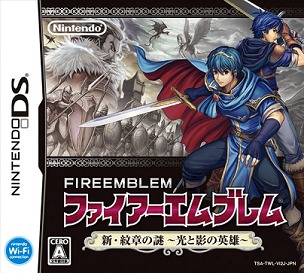
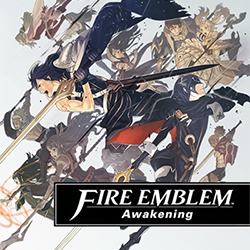
Casual mode is a Japanese invention the West never saw in its first game. New Mystery stayed in Japan, so for Western players the twenty year old rule and its off switch arrived in the same box.