
Why does Persona run on a calendar and Social Links?
The reasoning is on the record, from the creators themselves, in a Famitsu interview for the series' 30th anniversary with director Katsura Hashino, producer Kazuhisa Wada, designer Shigenori Soejima, and composer Shoji Meguro. In that interview's account, the Social Link system came from the concept of self discovery and the face we show others, and from how that persona develops into adulthood through exposure to different values. Hashino saw the Persona series as a coming of age RPG that depicts that process. The links are not a dating mini game bolted onto a dungeon crawler: in the stated design, meeting people with different values is the mechanism by which a teenager's inner self grows up, and the game wires that growth directly into power, granting stronger fusions for stronger bonds.
The calendar is the frame that makes those choices cost something. A school year offers a fixed number of afternoons, and every link advanced is a dungeon visit, a study session, or a job not taken. The histories in this Library describe how the system plays; this page documents why its director says it exists, and how deliberately its second game retuned it.
The second game on the same clock
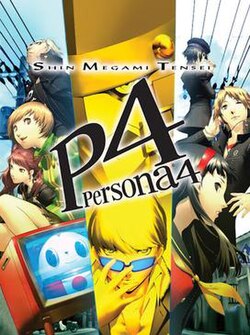
Hashino has said he believed the calendar and Social Link system could be reused for Persona 4, so the freshness budget was spent on theme and atmosphere instead.
THE SECOND GAME
Reused, because it workedPersona 4 kept the structure by decision, not by default. In the same anniversary interview, Hashino states that because Persona 3 was so well received, the team was green lit for a next game without a significantly increased budget or timeline, and that he believed the calendar and Social Link system could be reused in it, so he focused instead on how the story's theme and overall atmosphere could feel fresh. The rural town, the murder mystery, and the fog are that freshness layer, poured into the same year shaped mold.
THE CLOCK AS PRESSURE
Hashino on Persona 4's calendarHashino explained the calendar's tuning in an earlier interview as well, a fan question session reported by Siliconera. The point he said he focused on most in Persona 4 was fitting everything into one cohesive whole, and the calendar was designed such that it would coincide with the pressure the protagonists were feeling. His example is precise: toward the end of the game, after a certain event, the calendar is shown a month at a time instead of just a few days ahead, to convey that the characters need to look ahead and plan their days far in advance, because these would be the last days during which they could freely enjoy their time. The locations and the game system, he said, were all designed with the story in mind. The deadline structure players feel, rescue the victim before the fog lifts, is the same principle at dungeon scale: the calendar is not a schedule, it is the antagonist's clock.
A SMALL PROOF OF CARE
Why they are called Social Links at allEven the name was reasoned out in the open. In the Japanese games the system is shortened from Community, and Atlus project manager Masaru Nanba explained the Western rename: community has a different meaning in English, while Igor in his speeches often refers to society and bonds, so the team chose Social Link. The name on the menu is the thesis of the system, translated until it said what the design means: a link, to society, one person at a time.