
Why is the Japanese version of Spyro the Dragon different?
When the American game was shown in Japan in 1998, ahead of its Japanese release, test audiences reported headaches and 3D sickness. The game was fast, and its camera swung hard behind Spyro as he moved. So Sony Computer Entertainment rebuilt the Japanese edition to be slower, calmer, and easier to follow, and released it on April 1, 1999, about seven months after the American original.
It is not a translation of the American game. It is a different edition of it, changed at the level of how it moves, how it teaches, and even how its hero is drawn.
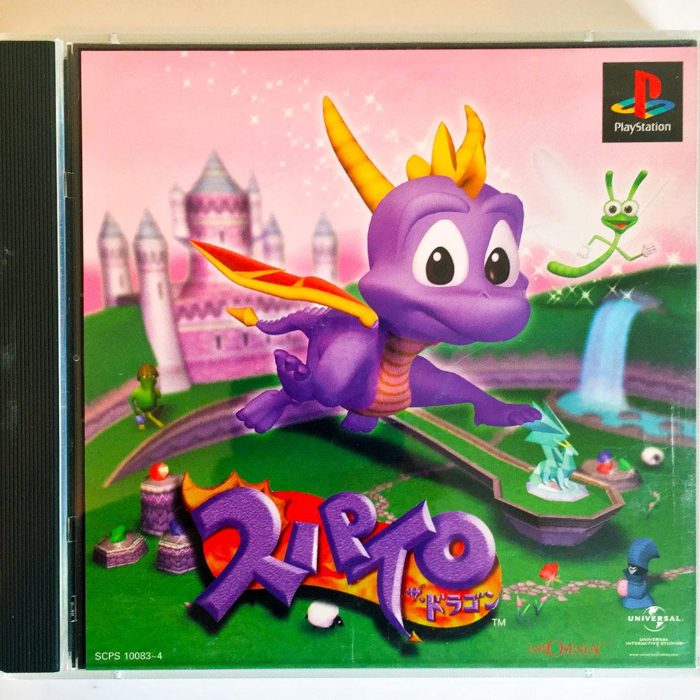
THE TWO COVERS
Same dragon, redrawn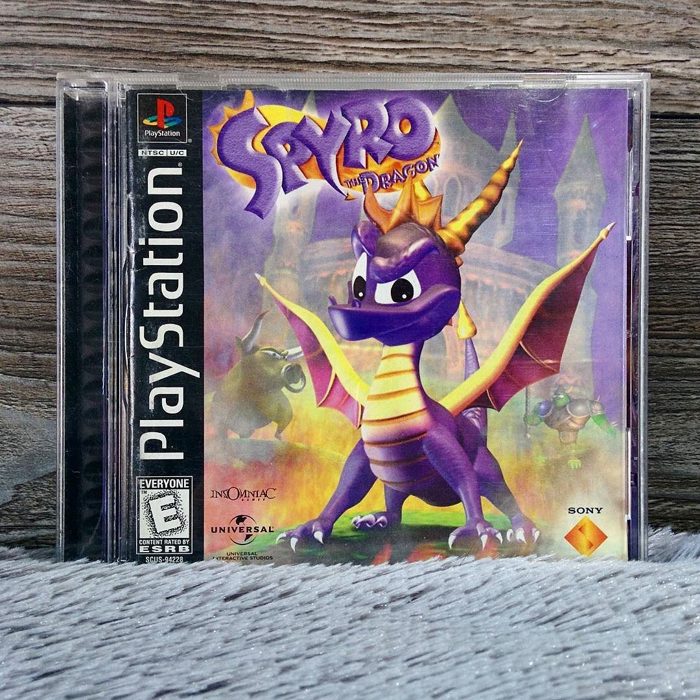
WHAT CHANGED
Six rebuilds for one marketWHAT HAPPENED
The flop that ended the trilogy in JapanJapan bought roughly 18,000 copies in the first week. The American game went on to sell nearly five million copies worldwide; Japan barely registered. A purple American dragon was a hard sell in a market already full of its own mascots, and neither the slower game nor the cuter cover changed that.
The sequel still came. Spyro × Sparx: Tondemo Tours, Japan's Spyro 2, arrived on March 16, 2000 with the same medicine: a gentler fixed camera, a slowed charge, and a smaller promotional push behind it. It underperformed too, and the third game, Spyro: Year of the Dragon, was never released in Japan at all. Japanese players only got the complete trilogy two decades later, with the Reignited remakes.
That short, strange run is exactly why the Japanese edition matters to collectors. It is not the American game in another language. It is a one-market rebuild that most of the world never played, and SOJ holds it the way it left Japan in 1999: sealed, and graded VGA 80.