
Why was Steel Ball Run not called JoJo at first?
Open the first volume and look at the cover, pictured below: Steel Ball Run, volume 1, and no JoJo anywhere on it. For its first 23 chapters, serialized in Weekly Shonen Jump from January to October 2004, Part 7 ran under its own name alone, presented as a brand-new series by the author of a 17-year-old one.
THE EVIDENCE, ON THE COVERS
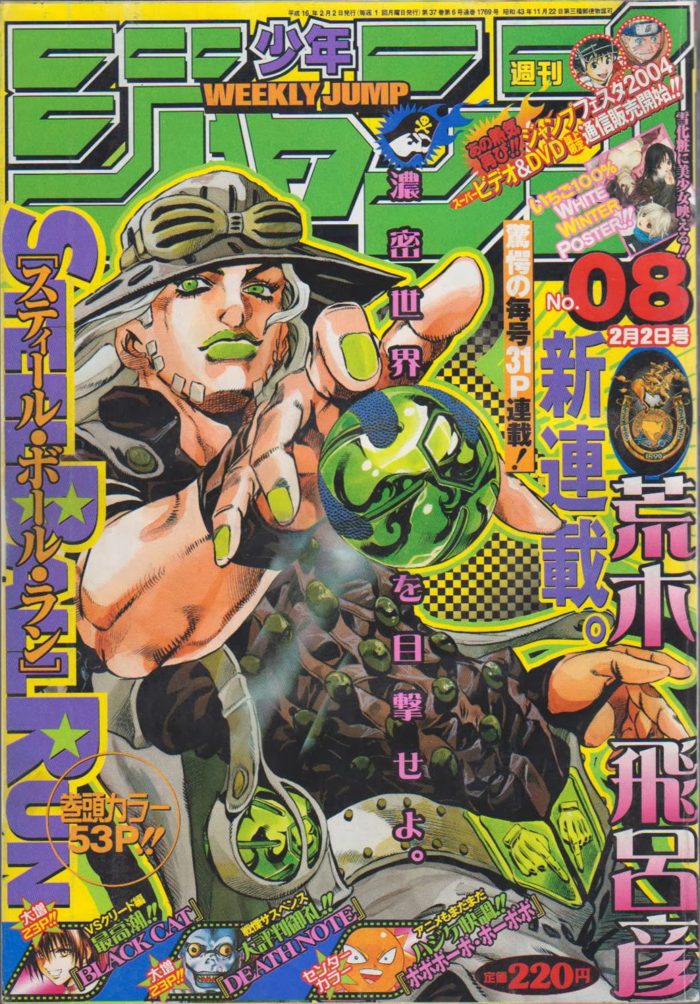
What readers in 2004 actually saw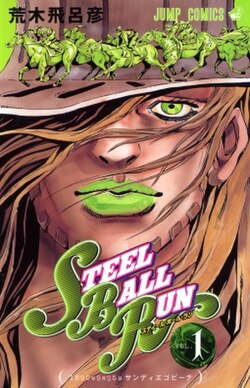
ARAKI'S ACCOUNT
From the collected volumes, labeled as reportedAraki addressed it himself in the collected volumes, in an account carried and summarized by secondary references since: the missing title was an editorial decision, made to attract a new readership to a long-running series, extending the practice begun with Stone Ocean, whose subtitle and separate numbering had already been emphasized. In Araki's own framing, Steel Ball Run was JoJo Part 7 in his mind from the start, and when the series moved magazines, he brought the JoJo title back.
The move supplied the announcement. In March 2005 Steel Ball Run transferred to Ultra Jump, Shueisha's monthly seinen magazine, and was officially designated Part 7 of JoJo's Bizarre Adventure, in the new continuity the later parts still use. Weekly became monthly at the same stroke, and JoJo has been a monthly series ever since.
WHY THE DISGUISE COULD WORK
A fresh start that was oneThe branding matched the book. Steel Ball Run opens in 1890 with a paraplegic ex-jockey, a Neapolitan executioner, and a cross-country horse race: new continent, new century's end, new continuity. A reader meeting it in 2004 with no JoJo history missed almost nothing, which is exactly what the editors were buying with the missing name, and exactly why the reveal, a year in, cost the story nothing.