
The JoJo Manga Gallery
Nine parts, two continuities, one unmistakable line.
This is the manga shelf: Hirohiko Araki's series itself, in its Japanese covers, part by part. The fighting game lives across the hall in the Fighting Games wing and is doored at the bottom of this page. What is here is the paper: the art direction Araki built from sculpture and fashion, the parts structure that restarts its hero and its volume numbers alike, and the music-reference naming system that English editions have to negotiate with lawyers.
PARTS 1 TO 6: THE FIRST CONTINUITY
Shueisha · Weekly Shonen Jump · 1987 to 2003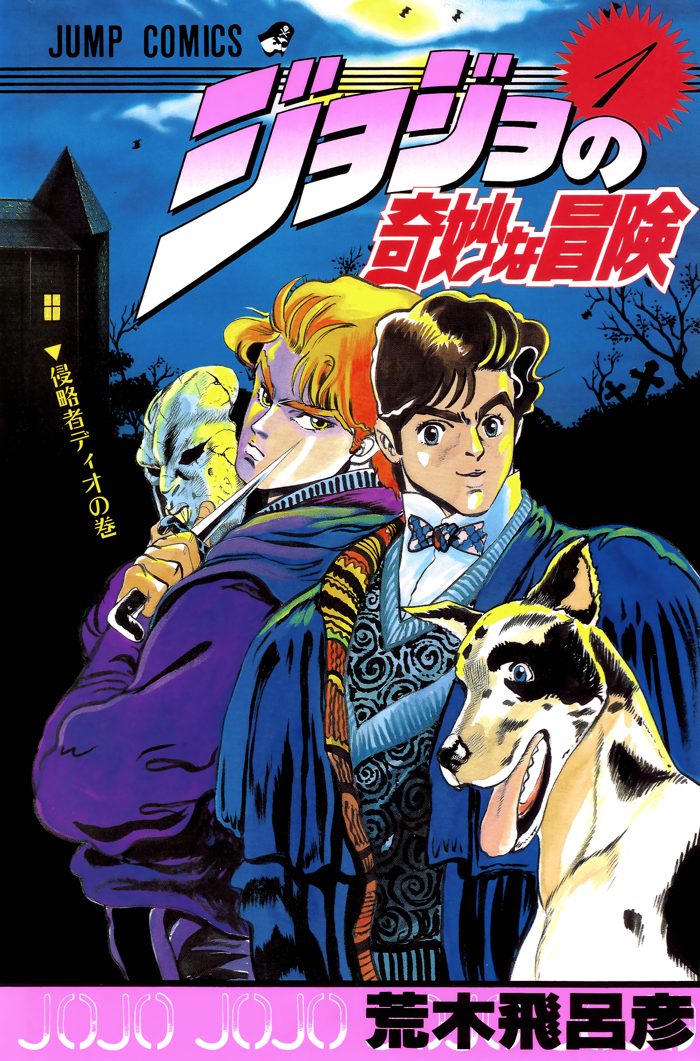
Part 1 · Phantom Blood
Japan · Tankobon Vol 1, 1987. Jonathan, Dio, and Danny under the first JoJo logo: the gothic horror the whole line grows out of.
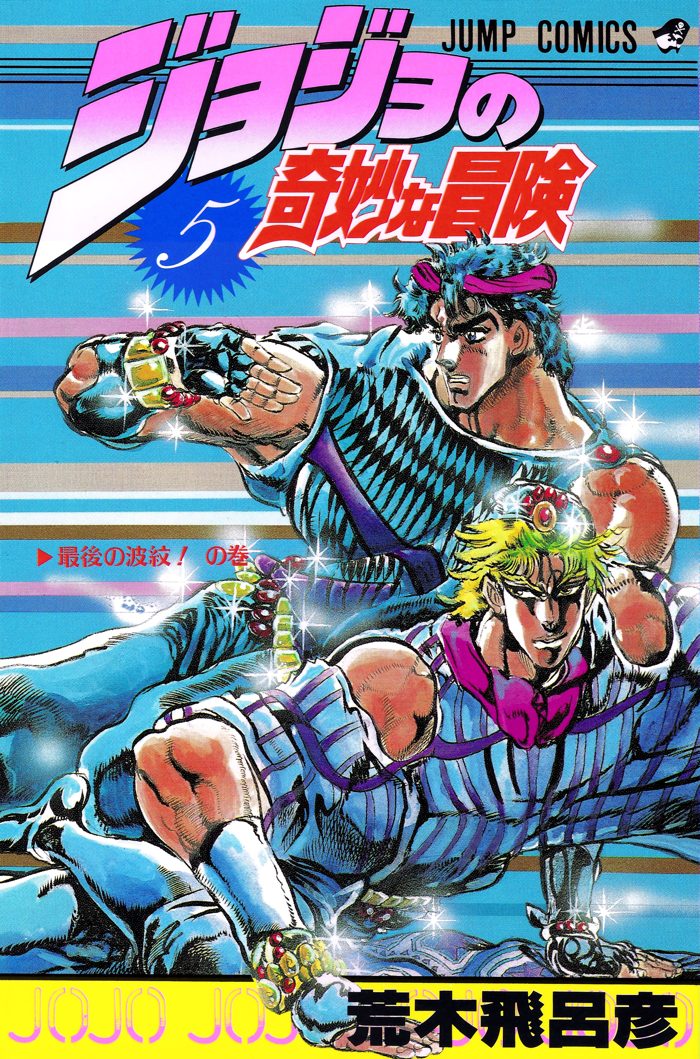
Part 2 · Battle Tendency
Japan · Tankobon Vol 5. Joseph and Caesar in full Hamon sparkle: the muscle era at its most sculptural.
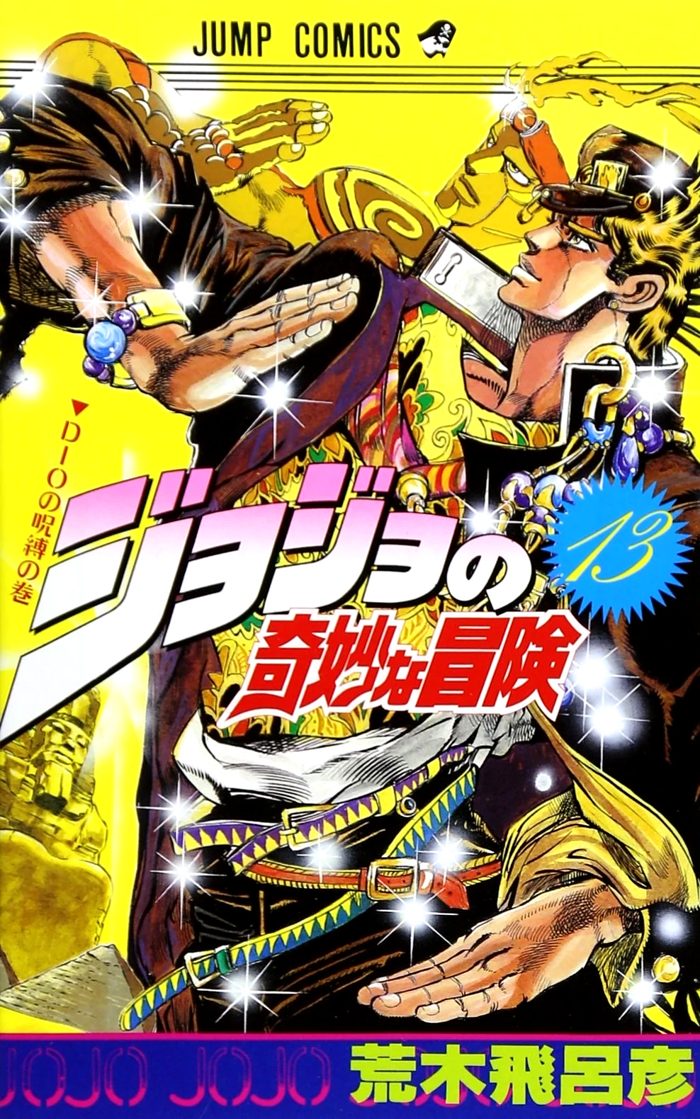
Part 3 · Stardust Crusaders
Japan · Tankobon Vol 13. Jotaro in profile against yellow. Stands arrive with this part, and JoJo becomes a phenomenon.
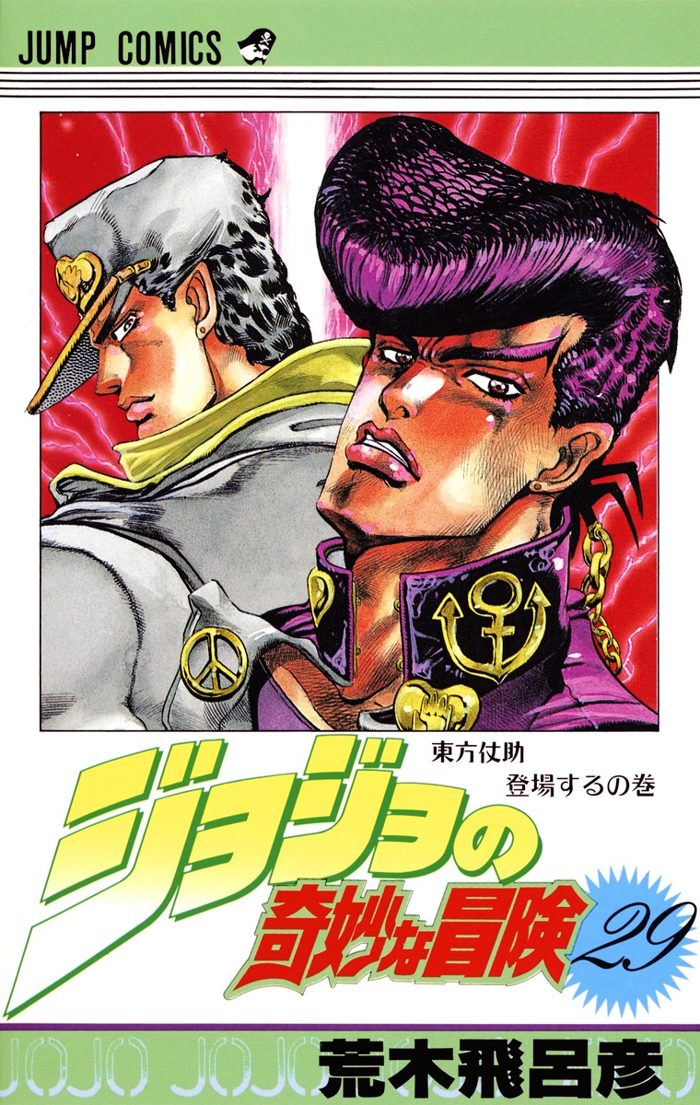
Part 4 · Diamond Is Unbreakable
Japan · Tankobon Vol 29. Josuke's pompadour in front, Jotaro behind: the part where fashion takes over from muscle.
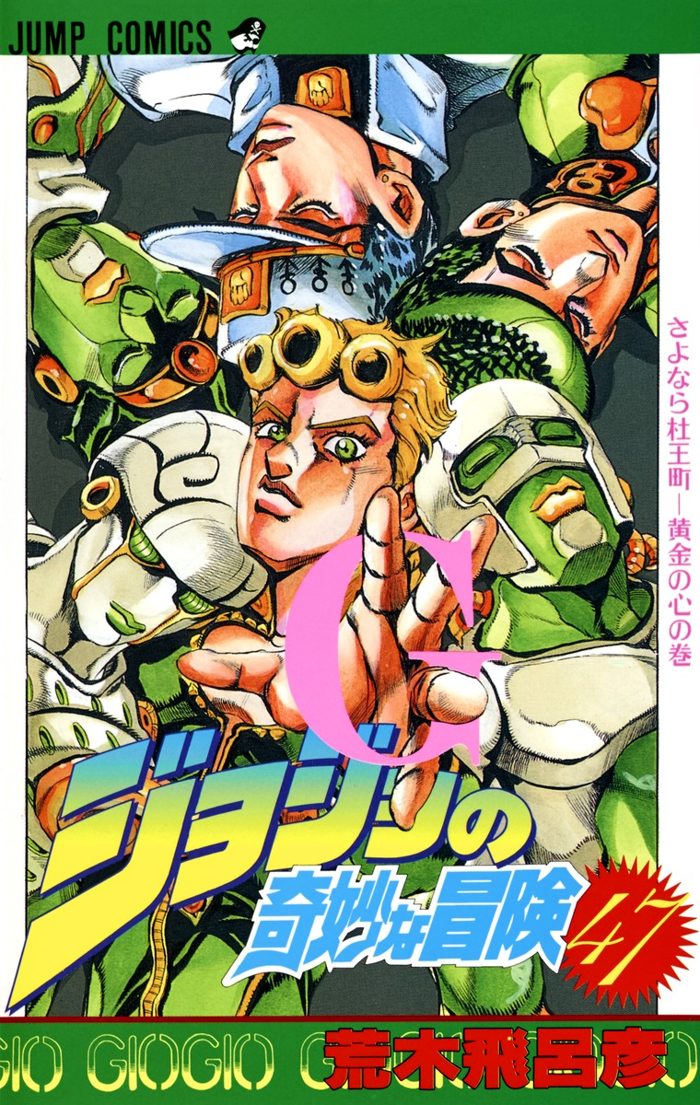
Part 5 · Golden Wind
Japan · Tankobon Vol 47. Giorno and Gold Experience, ringed by the team: the Italy part, posed like sculpture.
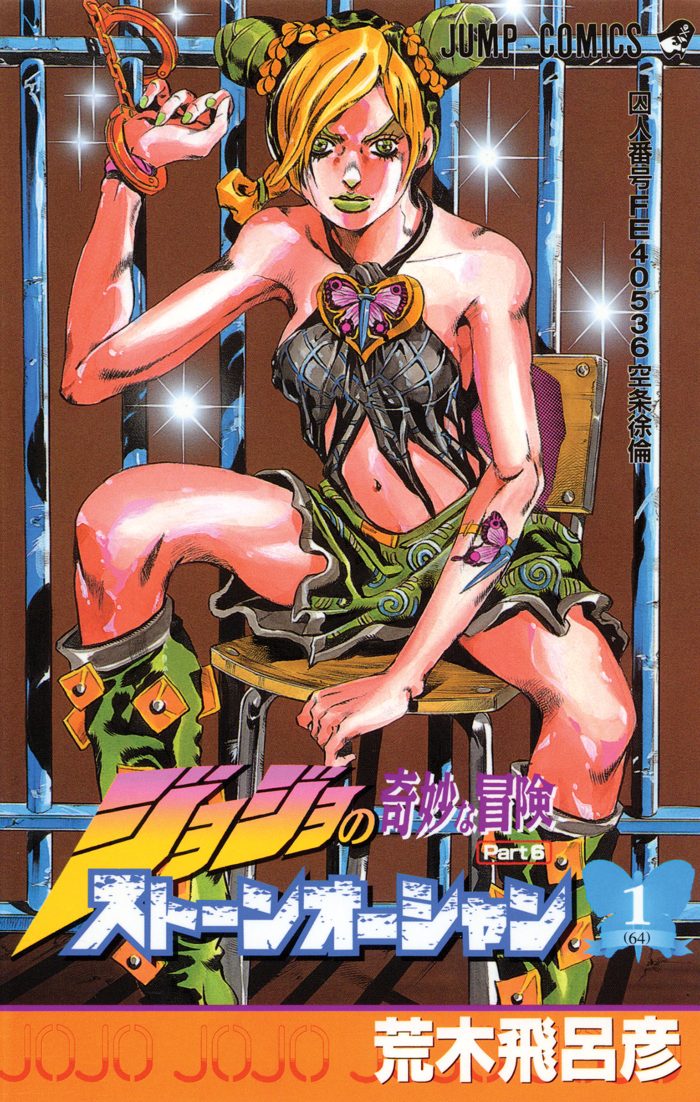
Part 6 · Stone Ocean
Japan · Stone Ocean Vol 1, also numbered 64. Jolyne behind bars. The first continuity ends with her, and the volume numbers restart with her part.
PARTS 7 TO 9: THE SECOND CONTINUITY
Ultra Jump from 2005 · 2004 to present
Part 7 · Steel Ball Run
Japan · Vol 1, 2004. Gyro, the race across his hat brim, and no JoJo title anywhere on the cover. A small 250px scan, shown honestly.
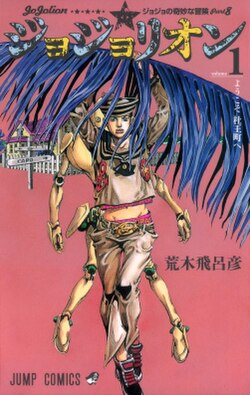
Part 8 · JoJolion
Japan · Vol 1, 2011. The amnesiac Josuke and Soft and Wet, in the second continuity's Morioh. A small 250px scan, shown honestly.
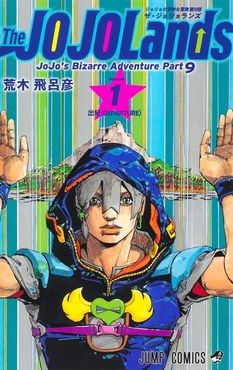
Part 9 · The JoJoLands
Japan · Vol 1, 2023. Jodio Joestar, palms up, in Hawaii. The current part, still running. A small 233px scan, shown honestly.
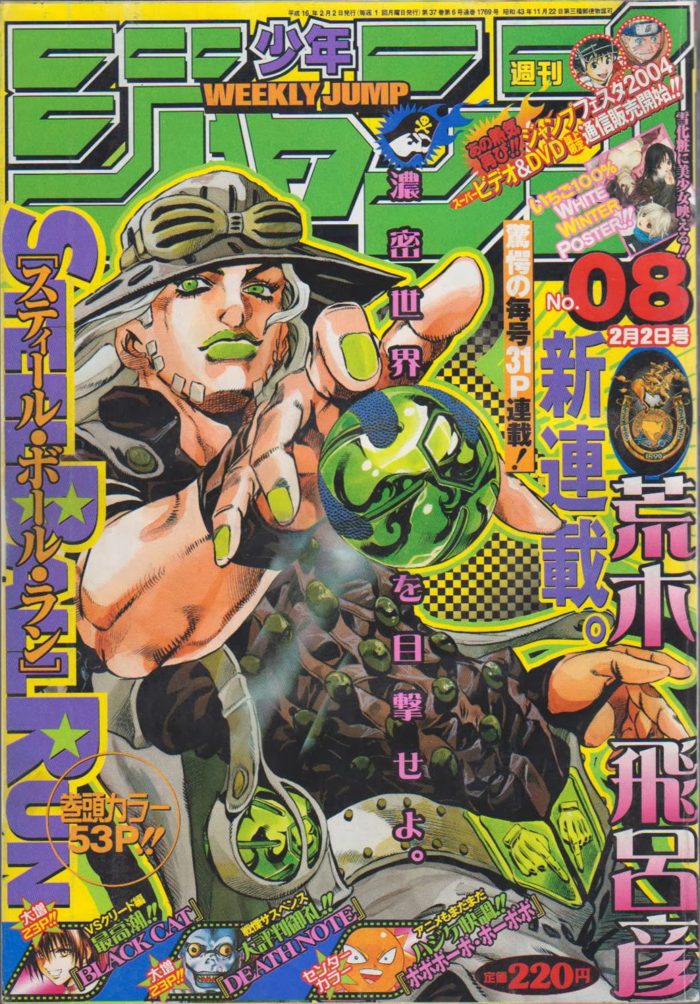
The Debut Issue · WSJ 2004 No.8
The magazine Steel Ball Run launched in: a new serialization banner and no JoJo branding, because in 2004 it was not called JoJo yet.
THE ART
Where the look comes from, and where it ended up hangingThe Inspiration
What inspired JoJo's art? Michelangelo, Gauguin, and the fashion rack, tier by tier.
The Louvre
Why was JoJo exhibited at the Louvre? The 2009 invitation, and the full-color album it produced.
The Hardcover Covers
Why do the English hardcovers have different covers? The JoJonium answer, already on this shelf.
The Jump Covers
What WSJ issues have JoJo on the cover? The 24 cover features, already on this shelf.
THE STRUCTURE AND THE NAMES
Parts, numbers, and the record shelfThe Parts
How many parts does JoJo have? Nine, in two continuities.
The New Hero
Why does JoJo start over with a new protagonist in every part? Death, legacy, and the bloodline.
The Missing Title
Why was Steel Ball Run not called JoJo at first? An editorial disguise, and Araki's account of it.
The Numbers
Why do JoJo volume numbers start over? The cover that prints 1 and 64 at once.
The Music Names
Why are so many JoJo names taken from music? The record shelf Araki names from.
The English Names
Which JoJo names are different in English? The lawyer's nightmare, and the swaps it produced.