
From the Library: covers, censuses, and editions, documented. Browse the Library →
SOJ Virtua Fighter 2 · Vintage Fighting Games
← Back to the Fighting Games Gallery

How Did Sega Fit Virtua Fighter 2 onto the Saturn at 60 Frames Per Second?

By spending the savings where the eye would not audit them.

The arcade Virtua Fighter 2 ran on Model 2 hardware built for it, at 60 frames per second, in high resolution, with no slowdown. The Saturn was a home console at a fraction of the cost. AM2's port kept the number that mattered most, the 60 frames per second, and paid for it in places reviewers were trained to forgive. The methods are documented in the team's own contemporary reporting.

Four trades did the work.

THE FOUR TRADES

Documented in the port's development record
A new operating system
In March 1995 AM2 Research completed the Sega Graphics Library, a Saturn operating system which made it feasible to create a near arcade perfect port. The port was built on it, and the team credited it directly: we owe a lot to the new SGL OS, said programmer Keiji Okayasu.
Compression, for months
The arcade game's move data, 500 new moves and 1,200 motion patterns, did not fit the console's memory as it stood. Months had to be spent developing compression techniques to fit everything in. Reference data from Virtua Fighter Remix was also used for some elements.
Fewer polygons, richer surfaces
To hold 60 frames per second the Saturn version could not use nearly as many polygons as the arcade. The difference was disguised with texture mapping: the Saturn maps 16 colors to each polygon, where the Model 2 arcade hardware mapped only one, so each simpler shape carried more surface detail.
Flat backgrounds
The polygon background objects of the arcade version were replaced with parallax scrolling playfields with selective scaling. This is the trade reviewers noticed: Game Informer praised the port's depth while criticizing its inferior background details.

THE PROOF, SHOWN IN PUBLIC

Tokyo, then JAMMA

AM2 demonstrated the approach before release. At the Tokyo Toy Show in June 1995 it displayed non playable demos of Lion, Shun, Pai and Lau running on Saturn hardware at 60 frames per second, the same speed as the arcade version, specifically to increase confidence in the port's accuracy. Hit detection was enabled by the end of September, and the fully playable conversion was displayed at the JAMMA show; the audience reaction there shaped the final two months of adjustments.

The result reviewed as the ultimate arcade translation by Next Generation and at 98 percent by Sega Saturn Magazine, with the smooth frame rate named first among its virtues. The frame rate was not a lucky outcome of the hardware. It was the port's design target, defended by every trade above.

THE GAME ON THE SHELF

Virtua Fighter 2 · Saturn
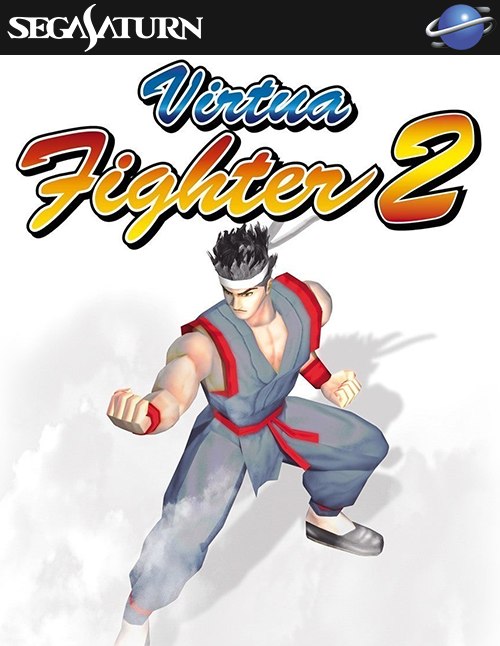
Virtua Fighter 2 American Saturn box art, Akira Yuki
American Saturn box art · 1995
The American Saturn box: the port this page takes apart, polygon by polygon.
The full story: The History of Virtua Fighter 2 on Saturn →
MORE FROM THE FIGHTING GAMES ARCHIVE →
One shelf of eighty-two in the Library. Browse them all →

THE FIRST WORD

New pages and new pieces, first.