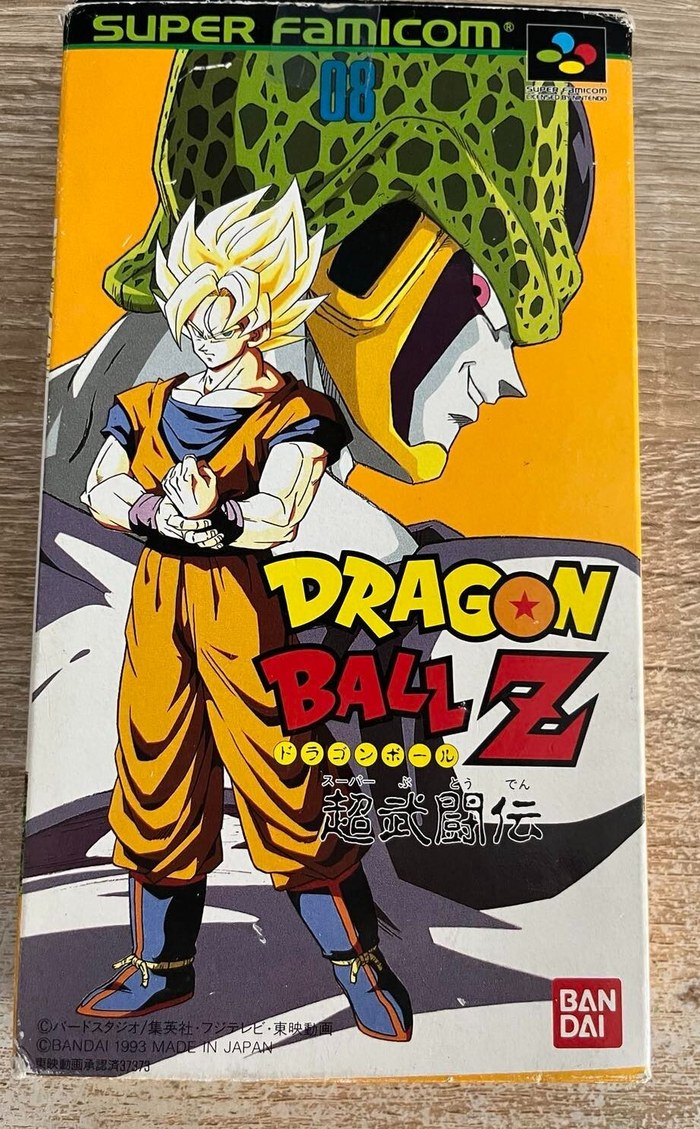
How Does Super Butoden's Split-Screen Flight System Work?
Every other fighting game of 1993 kept both fighters inside a single frame. Super Butoden could not: its characters fly. The system Tose built for it, a roaming split screen with a radar, is the game's claim on history, praised by Famitsu on release and singled out in the official Dragon Ball Super History Book as a system "that had never been seen in the fighting games made so far."
THE PROBLEM IT SOLVES
Dragon Ball fights will not stay in frameTHE SYSTEM
Split, radar, and a coloured borderWHY IT MATTERS
A design answer, not a gimmickThe split screen is best understood as a design solution to a licence problem. Bandai and Tose were not free to make any fighter; they had to make one that felt like the anime, where flight and distance are the grammar of every major battle. Their answer, segment the screen when the characters go far away, is quoted in the franchise's own official history book as a first. Later Dragon Ball games would solve the same problem with 3D arenas and camera work. In 1993, on a Super Famicom cartridge, the split was the solution, and it is the reason this import only game is still studied.
THE GAME ON THE SHELF
Dragon Ball Z: Super Butoden