
From the Library: covers, censuses, and editions, documented. Browse the Library →
SOJ Fighters Destiny · Vintage Fighting Games
← Back to the Fighting Games Gallery

How Does the Points System in Fighters Destiny Work?

You do not win the round. You win the argument, seven points of it.

The verdict first: in Fighters Destiny the health bar is only one way to score. A match is a race to seven points by default, and points, shown as yellow stars under the health gauge, are awarded for how an exchange ends, not merely for emptying a bar. Every takedown stops the action, pays out its points, and resets the fighters. A match is a series of small verdicts that add up to a winner.

The full table is below, exactly as the game pays it.

THE TWO COVERS

A portrait in America, a poster in Japan

Fighters Destiny American Nintendo 64 box art, Ryuji
America · 1998
The American box is a painted close up of Ryuji, red hair and boxing glove, under a script logo, sold by Ocean.
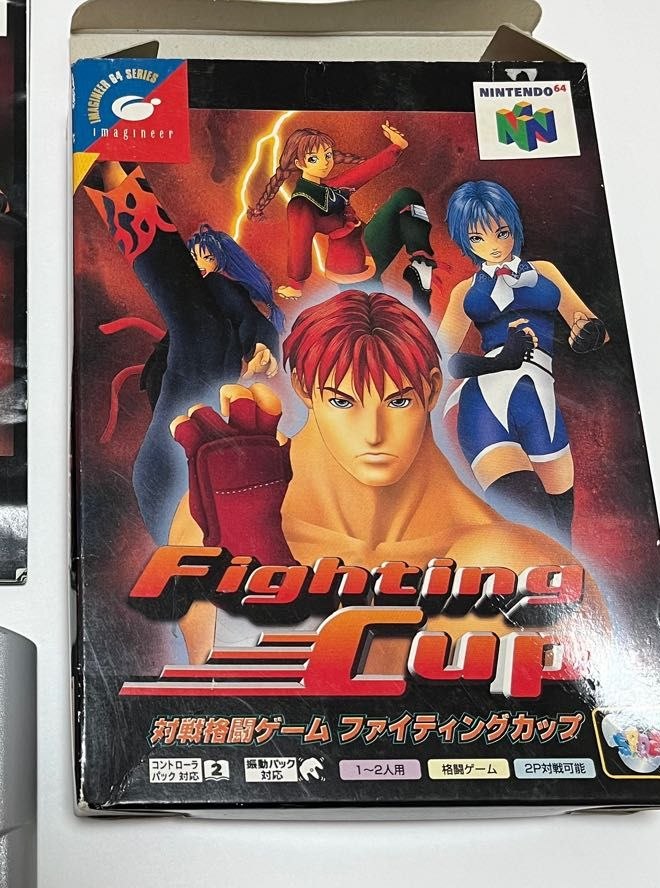
Fighting Cup Japanese Nintendo 64 box art
Japan · 1998
In Japan, as Fighting Cup, the same Ryuji fronts an illustrated cast poster, with Meiling and the Ninja posed behind him. America shipped first; this box arrived eleven months later.

THE TABLE

What each finish pays, by default
Ring Out · 1 point
Knock the opponent off the fighting platform entirely. The cheapest score in the game, and the fastest: one good shove near the edge pays a point, which is why arena size is a setting.
Throw Down · 2 points
Take the opponent down with a throw. Throws sit above ring outs because they must be landed in close, against an opponent who can break them.
Knock Down · 3 points
A typical K.O.: drain the opponent's health with strikes, or land an instant K.O. hit, or finish with a counterattack, which also pays three. The standard three point routes are the game's bread and butter.
Special · 4 points
The highest payout. A special can only be executed while the opponent is in Piyori condition, the brief dizziness that follows a fully drained life bar. Land the finisher inside that window, or the opponent recovers and the chance is gone.
Judge's Decision · 1 point
If the adjustable time counter runs out, the winner of the exchange is awarded one point by the judge. Stalling pays the smallest prize in the game.

THE FINE PRINT

Why the system changes how you fight

Three rules bend the whole game around the table. Health refills. The life bar regenerates slowly throughout the fight, and a fighter who survives Piyori condition refills it completely, so damage dealt and not converted into points evaporates. Everything is adjustable. The point values, the target score and the arena dimensions can all be customized, so a household can weight ring outs or specials as heavily as it likes. Strategy follows the prices. GameSpot's review noted the immediate consequence: since points are awarded for takedowns, throws are a higher priority than in most other games, and the whole cast plays around the edge, the throw range and the Piyori window at once.

Reviewers treated the system as the game's defining achievement. It was commonly cited as both its best feature and the one which most sets it apart from other fighting games, in a genre that had scored its fights the same way for a decade.

The full story: The History of Fighters Destiny →
MORE FROM THE FIGHTING GAMES ARCHIVE →
One shelf of eighty-two in the Library. Browse them all →

THE FIRST WORD

New pages and new pieces, first.