
The History of Def Jam: Fight for NY
Def Jam: Fight for NY is a 2004 fighting game developed by AKI Corporation with EA Canada and published by EA Games under license from Def Jam Recordings. It is the direct sequel to Def Jam Vendetta (2003). Where Vendetta was a wrestling game with rappers in it, Fight for NY is a street fighting game built on the same AKI foundations: the grappling grammar, momentum, and wear down logic of the Nintendo 64 wrestling classics, opened out into five fighting styles, environmental weapons, and crowds that hand you bottles and pool cues.
The story picks up where Vendetta ended. Underworld boss D-Mob, voiced by Chris Judge, is sprung from a police car by an SUV ram, and the created fighter who freed him joins D-Mob's crew in a club by club war for New York against Crow, played by Snoop Dogg. This wing already tells the AKI engine's own story on the wrestling shelf; this page is the bridge, the record of what the engine became when it changed genres. The engine page is linked below, once, on purpose.
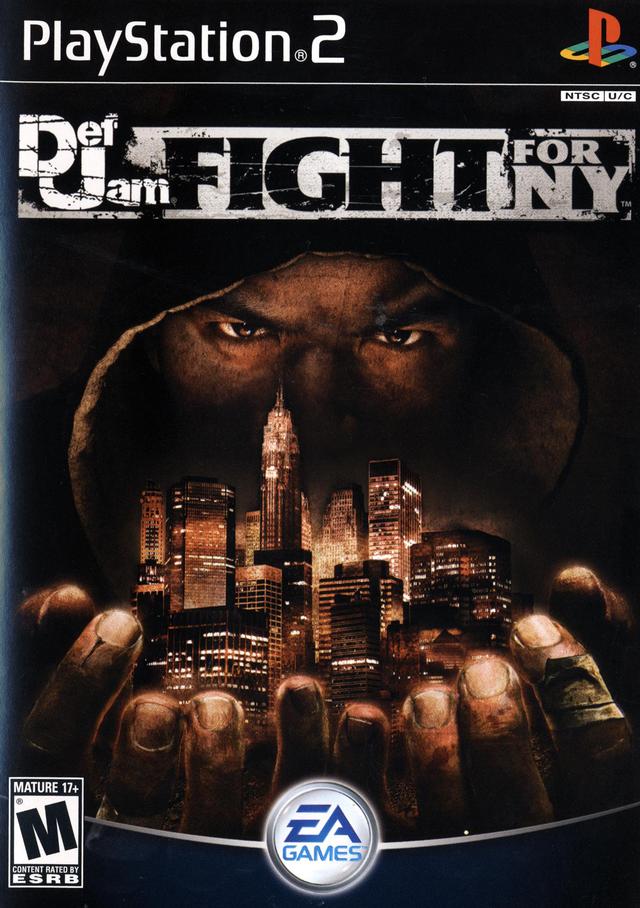
THE TWO COVERS
Japan and America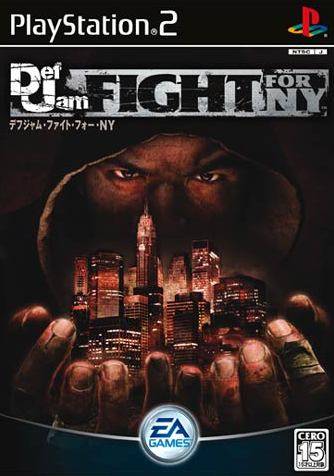
HOW IT WAS MADE
AKI and EA Canada, 2004EA kept AKI, the Osaka studio behind WCW/nWo Revenge and WWF No Mercy, and paired it with EA Canada. Producer Josh Holmes' team made a documented design decision against sequel convention: rather than only adding complexity to Vendetta's wrestling controls, they rebuilt the game around five fighting styles, wrestling, kickboxing, martial arts, street fighting, and submissions, which a created fighter can combine, up to three at once, into hybrid styles. Wins come only by knockout or submission, with damage tracked body part by body part, and a momentum meter that fills faster the higher your fighter's Charisma, a stat bought literally with clothing, tattoos, and jewelry.
The create a fighter mode, the feature Vendetta lacked, became the story mode's spine: your fighter is the protagonist, dressed from licensed brands and jeweled by Jacob the Jeweler, a real New York jeweler to hip hop stars, whose shop is in the game. The roster around him runs to dozens of playable characters, most of them real artists, listed on this wing's license page.
THE RELEASE
September 2004The game launched in North America on 21 September 2004 for PlayStation 2, GameCube, and Xbox, in Europe on 1 October 2004, and in Japan, on PlayStation 2 only, on 24 February 2005. A PlayStation Portable version, The Takeover, followed in 2006, and the series closed with Def Jam: Icon, by a different studio, in 2007. Fight for NY is the AKI line's end as well as its peak: AKI renamed itself Syn Sophia in 2007 and never made another fighting game of this kind.
HOW IT WAS RECEIVED
The scoresWHAT IT LEFT BEHIND
The bridgeFight for NY is the proof that the AKI engine was a fighting system, not a wrestling accessory: transplanted into clubs, given styles instead of movesets and a city instead of a ring, it produced one of the most requested remasters in the genre, a status it holds on reputation alone, since the license that built it is also the license that keeps it off modern stores. That license, and how it shaped every part of the game, is documented on its own page.