
The History of EarthBound
EarthBound, released in Japan as Mother 2 on August 27, 1994 and in North America on June 5, 1995, was developed by Ape Inc. and HAL Laboratory and published by Nintendo, after a development period that spanned five years. Creator Shigesato Itoi returned as designer and writer. Where the 1989 original had been a first attempt by a copywriter with no track record, this was the same idea with a real studio, a bigger console, and five years to get it right.
THE GAME
Eight Sanctuaries, four children, one Sound StoneA boy named Ness and his party, Paula, Jeff, and Poo, travel the world collecting melodies from eight Sanctuaries in order to defeat Giygas, the first game's invader, returned as a force its own mind could not survive. The first game's skeleton is intact and visibly improved: enemies now appear on the map instead of striking at random, weak enemies can be beaten without a battle at all, and health is shown on a rolling meter, so a character hit with a fatal blow stays alive while the numbers tick down, if a heal arrives in time. Critics writing at the 2013 rerelease singled out exactly those two inventions, the rolling meter and the visible enemies, as ideas that still feel smart and unique.
THE TWO LAUNCHES
518,000 against 140,000Japan, which knew the series and knew Itoi, bought 518,000 copies and made Mother 2 the country's tenth best selling game of 1994. America, which knew neither, bought about 140,000. Nintendo of America spent about $2 million marketing the game under the slogan "This game stinks," with scratch and sniff magazine advertising that drew more reader complaints at GamePro than any other advertisement of 1995. Every American copy also arrived in an oversized box carrying its Player's Guide, which raised the package's cost. Localizer Marcus Lindblom remembered the game being hurt by reviews that dismissed its graphics as simplistic at the moment critics prized graphics most. The game never received a European release in its era at all. This Library's EarthBound shelf carries the full failure story on its own page.
THE EDITIONS
The versions, documentedTHE RECEPTION, THEN AND NOW
The dissent kept, the reversal completeTHE LEGACY
What it left behindNess went on as a fighter in the Super Smash Bros. series, which kept the character in front of players who had never been offered his game. The fan community around Starmen.net refused to let the series disappear, and its fingerprints are documented on later games from Costume Quest and South Park: The Stick of Truth to Undertale and Omori. The classic was always in the cartridge. The failure, as this Library's shelf argues, was in the selling.
THE GAME ON THE SHELF
EarthBound · 1995Mother 2 vs EarthBound
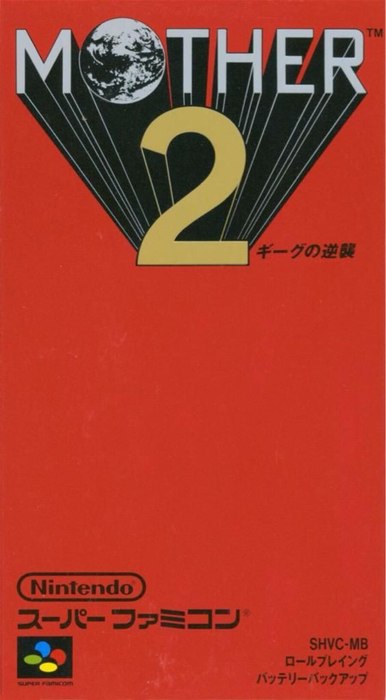
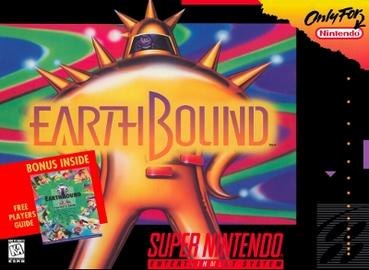
One package assumes you already trust it. The other is shouting at a country that had never heard of it.