
The Mother Gallery
Three games, two countries, one red wordmark.
Japan sold this series with almost nothing: a red field, a planet inside the O, a numeral. America, handed the middle game with no series and no famous creator to lean on, sold a giant robot, a psychedelic swirl, and a box big enough to hold a book. The third game never crossed the ocean at all, so its gallery pair is a Japanese box beside an honest gap.
Every cover below is a door. Behind it sits the game's history, and behind that, the questions its fans still ask. Start anywhere. The doors all open.
MOTHER
Nintendo · Ape Inc. · Famicom · 1989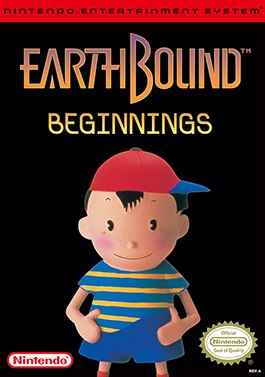
The West · 2015 · EarthBound Beginnings
The Western release art, styled as the NES box the game never got in its era: Ninten under the name America finally gave his game in 2015.
Japan · 1989 · Cover gap
The Japanese Famicom box is not yet verified to this Library's standard, so no image stands here. The facts stand instead: about 400,000 copies sold, and a completed American version, titled Earth Bound, that was shelved for twenty six years.
The History
The History of Mother: a copywriter pitches an RPG about modern America and changes the genre anyway.
The Music
What is the Mother soundtrack album? A Famicom score turned into English pop songs in 1989.
The Long Return
Why did EarthBound take so long to come back? Beginnings is a chapter of that answer.
EARTHBOUND · MOTHER 2
Nintendo · Ape Inc. · HAL Laboratory · 1994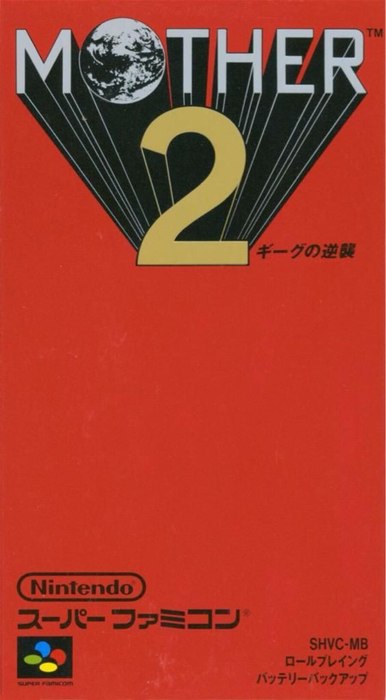
Japan · 1994
Mother 2 in its tall red Super Famicom box: the wordmark, a planet in the O, a gold 2, and nothing else.
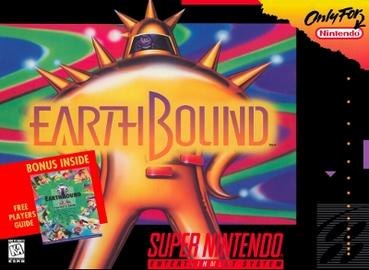
America · 1995
The oversized American box, big because the Player's Guide was packed inside: the Final Starman, with Ness reflected in its visor.
MOTHER 3
Nintendo · Brownie Brown · HAL Laboratory · Game Boy Advance · 2006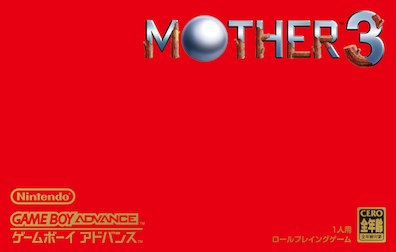
Japan · 2006
The red field and the wordmark again, eleven years on: the third game's only box, in the only country that ever sold it.
The West · No box exists
There is no American or European Mother 3 box to show, because there was never an American or European Mother 3. That absence is the shelf's most famous fact, and this tile is its honest shape.