
The History of Guilty Gear XX
Guilty Gear XX is a 2002 fighting game developed by Arc System Works and published by Sammy, the third entry in the Guilty Gear series and the definitive form of the game Guilty Gear X had sketched in 2000. In North America it was renamed Guilty Gear X2, a title this page uses only where the American box requires it. Its subtitle, on the Japanese box, is The Midnight Carnival.
This page is the XX game's own history. The 1998 original, its one man development story, and its heavy metal references already have pages in this wing, and they are not repeated here. What XX did differently, mechanically and commercially, is the subject.
THE TWO COVERS
Japan and America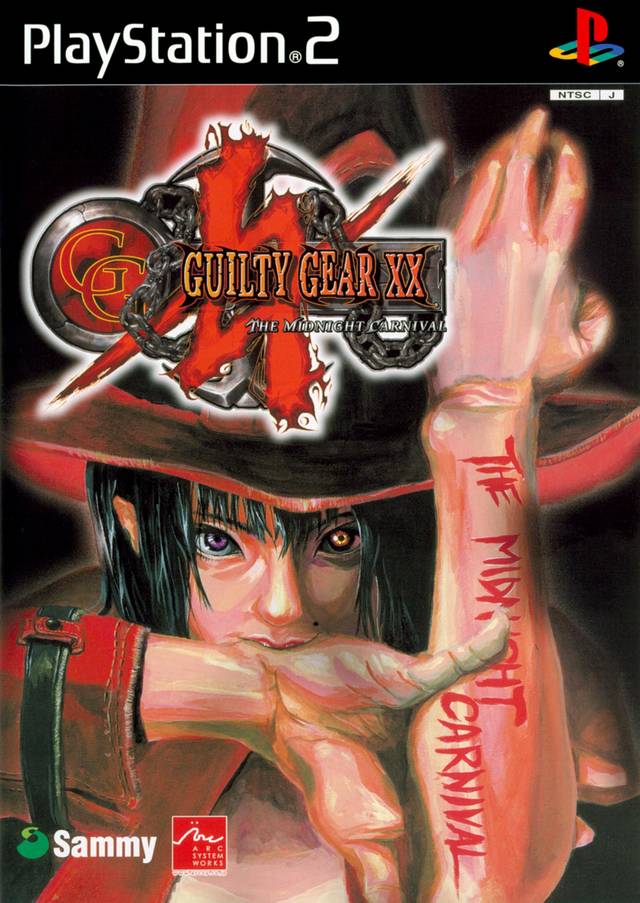
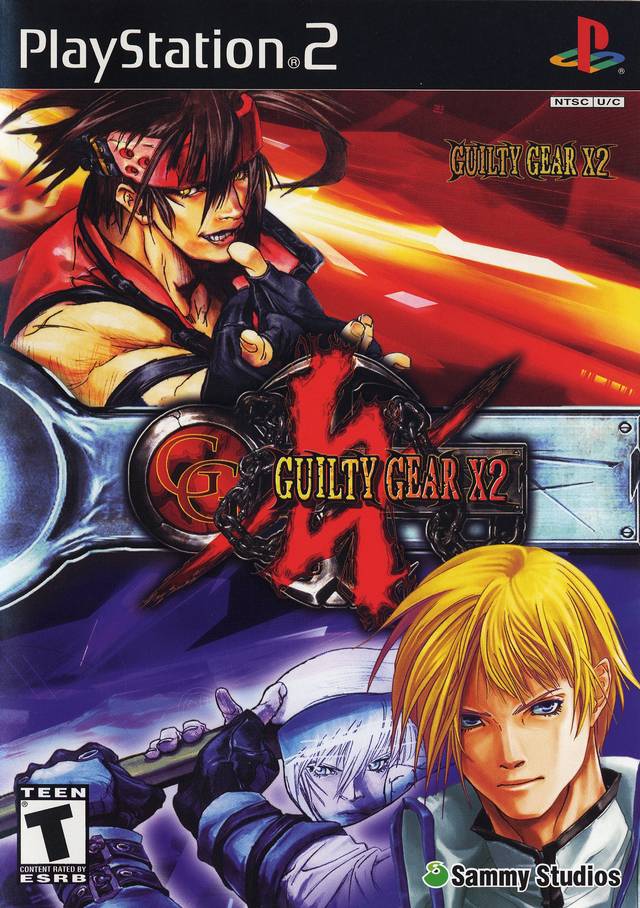
HOW IT WAS MADE
The refinement of XXX ran on Sega's NAOMI arcade hardware, launching in Japanese arcades on 23 May 2002, directed by Kohei Takaoka with Daisuke Ishiwatari composing alongside Koichi Seiyama. The mechanical headline was the Psyche Burst: a new gauge, filled by giving and taking damage, that lets a player blast out of an opponent's combo mid string, and, landed cleanly under the right conditions, refills the Tension gauge outright. Around it, the inherited systems deepened: Roman Cancels, Faultless Defense, Dead Angle Attacks, and Instant Kills all run off a Tension gauge that rewards moving forward and bleeds away when you retreat, a meter that pays for courage.
The PlayStation 2 version, December 2002 in Japan and February 2003 in North America, was built out like a campaign disc: Arcade, Survival to 500 levels, a medal collecting M.O.M. mode, 50 set piece Missions with handicaps like poison and half health, and a Story mode with branching paths and 60 possible endings, set two weeks after X, as the Postwar Administration Bureau and its Robo-Ky copies close in and the servant I-No pulls the strings.
THE UPDATE LINE
Five revisions, one gameXX's real history is its afterlife. Arc System Works treated the arcade as a workshop and shipped five updated versions, each rebalancing and extending the same game: #Reload in 2003, Slash in 2005, Accent Core in 2006, Accent Core Plus in 2008, and Accent Core Plus R in 2012. The full line is documented on its own page in this wing. No other fighter on this shelf was revised so often for so long; XX was less a release than a decade long service, run out of Japanese arcades.
HOW IT WAS RECEIVED
The scoresWHAT IT LEFT BEHIND
The arcade service modelXX proved a fighting game could be maintained like a living product years before that became the industry default, and Accent Core era XX remained a tournament game long after its hardware aged. When the series returned with Xrd in 2014, it returned to a community that XX's updates had never let disperse.