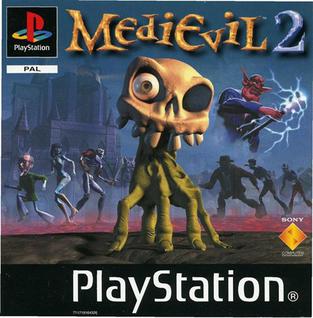
The History of MediEvil 2
MediEvil 2 (PlayStation, 2000), styled MediEvil II in North America, moves Sir Daniel Fortesque from medieval Gallowmere to Victorian London in 1886, where the industrialist sorcerer Lord Palethorn has found Zarok's spellbook and raised the dead again, Dan included, straight off his museum plinth. It was built in a hurry at the end of the PlayStation's life, by a new director, on rebuilt technology, and it won its year's BAFTA for best console game.
THE MAKING
A sequel against the clockAfter the first game's success, Sony commissioned SCEE Cambridge to make a sequel that would ship before the end of the PlayStation's lifespan; work began as early as October 1998. The founding director stepped aside: Chris Sorrell chose to focus on a new PlayStation 2 title, passed some of his ideas on in a few meetings, and handed the project to James Shepherd.
Shepherd's earliest plot had the first game's villain, Zarok, held prisoner in the Tower of London, with Dan setting out to free him. The team dropped it as identical to a B-movie twist ending. What replaced it was the time jump: a sequel set in the Victorian era, the birthplace of the Neo-Gothic revival the first game's art had always flirted with.
The Cambridge team re-coded the majority of its core technology to get there, which Shepherd considered arguably similar to starting from scratch. Features cut from the first game, playable characters among them, were built in this time, and by beta the sequel offered larger levels, improved character logic, and new moves for Dan.
THE DESIGN
Victorian DanThe setting does the design work. Dan trades the medieval arsenal's exclusivity for the century's hardware: alongside the returning swords and shields sit a pistol, a blunderbuss, and a Gatling gun, with a two-weapon toggle so he can swap in real time. The Chalice of Souls system returns, filled by defeating enemies and cashed in for new weapons.
The signature invention is the Dan Hand: midway through the game Dan learns to set his own head on a zombified hand and scout the places his body cannot reach, alternating control between head and body. Around him the cast is new: Winston, a ghostly sidekick who offers hints and saves; Professor Hamilton Kift, his recruiter; and Kiya, an ancient mummy princess. Spiv merchants sell ammunition and services, a very Victorian arrangement for a medieval knight.
THE EDITIONS
Two names, one late budget priceTHE RECEPTION
Better looking, less new, still decoratedReviewers praised the rich, detailed graphics, the improved artificial intelligence, and the harder difficulty over the first game, and GameRevolution's Shawn Sparks called the levels eye candy and a joy to explore. The complaints were consistency itself: bad camera angles, confusing layouts in the larger levels, an easier ride than expected, and a design many called too similar to the original. Then the industry decorated it anyway: at the 2000 BAFTA Interactive Entertainment Awards, MediEvil 2 won best console game.
THE LEGACY
The last ride of the original DanMediEvil 2 is the end of the original line: no third Cambridge sequel followed. Sorrell later explored one, Fate's Arrow, a 2003 concept that picked up Dan's story after this game's time travel ending; it was never made. The series continued sideways instead, with the first game reimagined on PSP in 2005 and remade in 2019.
What the sequel leaves behind is the series at its most confident and its most derivative at once, which is why its record reads the way it does: strong scores, a BAFTA, and a critical shrug about innovation in the same breath. The January 2025 re-release gave that argument a new audience, twenty-five years after Victorian London first raised its dead.
THE GAME ON THE SHELF
MediEvil 2 · PlayStation