The History of Mega Man 2
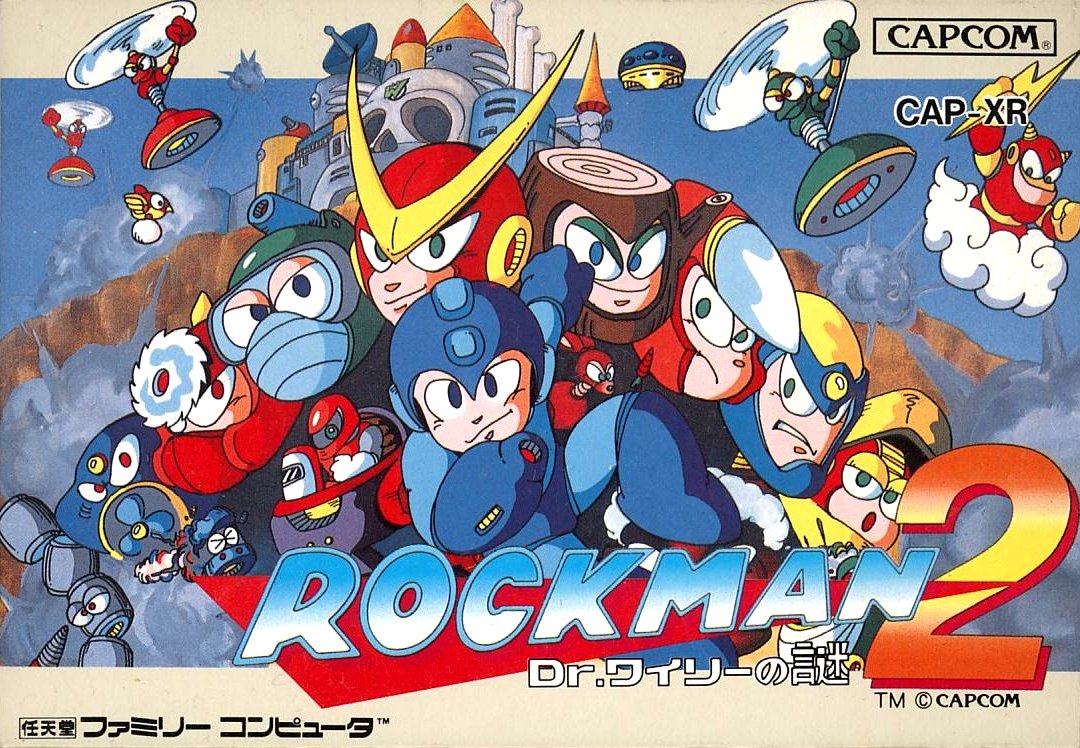
One year after his first defeat, Dr. Wily builds eight Robot Masters of his own, and Mega Man goes out again. Mega Man 2, Rockman 2: The Mystery of Dr. Wily in Japan, launched on the Famicom on December 24, 1988 and reached North America in June 1989. It was made by a team working in their own time, against their producer's wishes, in about three to four months, and it became the best selling game in the series for the next thirty years.
THE MAKING
Twenty hour days, on the sideThe first game had not sold well enough to justify a sequel, and producer Tokuro Fujiwara was against making one. Director Akira Kitamura went over his head to Capcom's vice president and won permission on one condition: the team would develop the sequel concurrently with their other projects, in their own time. Inafune, pulled in from a separate game, has called it the best time of his years at Capcom: twenty hour days, working toward something they wanted to make. The whole game took three to four months.
Content cut from the first game for cartridge space, planned enemies among it, moved across into the sequel. For the first time, the bosses partly came from the audience: Capcom received 8,370 boss submissions from fans, and the final eight Robot Masters were built from them, tweaked by the team. Inafune pushed the art in a more anime direction, and North America and Europe received a second, easier difficulty setting, the original Japanese tuning relabeled Difficult.
THE DESIGN
Eight masters, and the fixesEverything the first game lacked, this one added: eight Robot Masters instead of six, a password system, the Energy Tank, a carried refill you can drink at the worst moment, and three support Items that build platforms in the air. The Items and the softened difficulty were direct answers to complaints from players and from Capcom's own marketing department about how hard the first game was. The score counter vanished, and cleared stages could no longer be revisited.
The ending kept the series' strangest joke: Wily, cornered, appears to transform into an alien, and defeating him reveals a hologram projector with the doctor at the controls, begging for mercy as always.
THE MUSIC
Tateishi, and the eight bars that loopedTakashi Tateishi, hired by Capcom that same year and trained in bands rather than conservatories, composed the soundtrack, deliberately moving away from the classical sound of the era and drawing on Mezzoforte and Yellow Magic Orchestra. Manami Matsumae, moved to the more prestigious arcade division, contributed the title theme, adapted from her first game's credits music, and part of Air Man's stage melody.
The famous Dr. Wily stage theme is a compromise that outlived its constraints: Tateishi was forced by data limits to build the piece from its first eight measures, repeated, and a planned second Wily stage theme was abandoned for the same reason. One fragment of his rejected softer score survives in the game, as Crash Man's stage theme. This Library's music page follows the Wily theme from there.
THE RECEPTION
The pinnacle, scoredThe retrospective verdict hardened into canon: GamesRadar ranked it the third best NES game ever made and the pinnacle of the 8-bit Mega Man games, and publication after publication has named it the best game in the series. Its soundtrack is routinely called one of the greatest of all time; three of its stage themes plus the title song made IGN's list of the series' best, and Game Informer ranked its opening sequence, the camera rising past a skyline to the hero on the roof, the fifth best video game opening ever made.
THE LEGACY
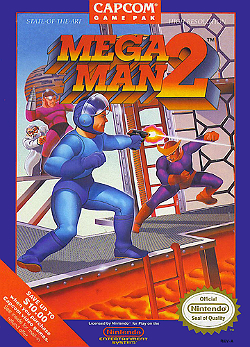
The favorite the series chasesMega Man 2 set the series' center of gravity. When Capcom revived the classic line in 2008, Mega Man 9 was explicitly built as a successor to this game, not to the later, more complicated ones, and its producer called the goal surpassing Mega Man 2 rather than Mega Man 8. The American box, painted by veteran illustrator Marc Ericksen, repeated the first game's pistol mistake; Ericksen explained he was unfamiliar with the game and was directed by Capcom America to give Mega Man a pistol. Even the errors became tradition.
THE GAME ON THE SHELF
Mega Man 2 · 1988