
The History of Mega Man Battle Network
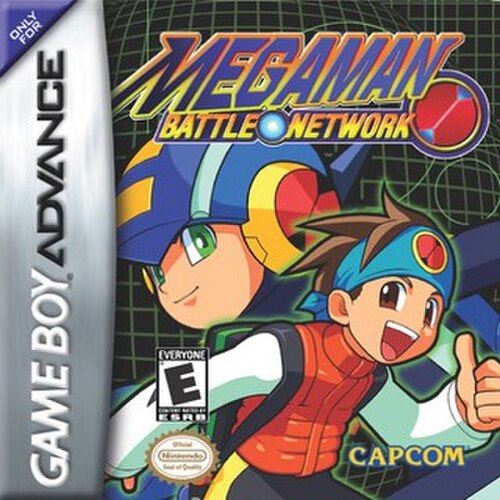
Mega Man Battle Network (Game Boy Advance, 2001; Rockman EXE in Japan) is set in an alternate 20XX where the Net drives daily life and everyone carries a PET terminal housing a NetNavi avatar. Fifth grader Lan Hikari and his Navi MegaMan.EXE investigate crimes by the WWW organization, and the action is not platforming at all: it is a real time tactical RPG fought on a three by six grid with collectible Battle Chips. Why Capcom rebuilt the series this way, horror prototype and all, is told in full on this Library's question page, linked below.
THE MAKING
Studio 2 aims at a new generationCapcom Production Studio 2 developed the game under director Masahiro Yasuma, with Keiji Inafune producing and Masakazu Eguchi co-designing. Development took place amid the success of Pokemon on portable hardware; rather than extend the platform formula again as the 3D Legends games had, Capcom followed the example on Nintendo's new handheld, the Game Boy Advance, where Battle Network launched in Japan on March 21, 2001 as a launch title. Yasuma recalled the difficulty of blending action attributes with "the kind of fun you get from a Pokemon game" into something enjoyable, new, and fresh, with no effective precursor of its type to copy.
Inafune stated the team wanted a real world feel: a protagonist in a world where the internet is prevalent, aimed at modern gamers and specifically children, who grew up using such technology daily. The character work followed the same brief. Hayato Kaji redesigned Mega Man as MegaMan.EXE through a large number of drafts, finalized as a much simpler design so that even very young fans could easily draw him. Kaji and Yuji Ishihara designed the bosses so each body exuded a motif (StoneMan.EXE as a huge castle of stone masonry), mixing forms familiar from the classic series with large departures for surprise. Akari Kaida composed the 22 track score. Capcom marketed the game alongside an afternoon anime adaptation, head to head link battles, and exclusive event content.
THE GAME
Two worlds, one folder of 30 chipsPlay alternates between Lan in the physical world (school, town, email, shops) and MegaMan.EXE inside the Net, each side unlocking progress in the other. Battles are random encounters fought in real time on 18 tiles, nine per side: the Mega Buster is weak alone, so the folder, a deck of exactly 30 Battle Chips, does the heavy lifting. Each Custom Gauge cycle offers five random chips, playable when they share a type or a letter code; elements (fire, water, electric, wood, neutral) double damage against the weak. Two players could link, trade chips, and fight test battles for fun or real battles where the winner took a chip from the loser.
The story's late revelation explains the heroes' bond: MegaMan.EXE is a unique Navi built by Lan's father from the consciousness of Lan's twin brother Hub, who died in infancy of a heart condition. The villain is the other grandfather of this world: Dr. Wily, whose robotics funding the government cut in favor of the Hikari family's network research, and who builds the near indestructible LifeVirus to erase the Net that replaced him.