
The History of Mega Man X4
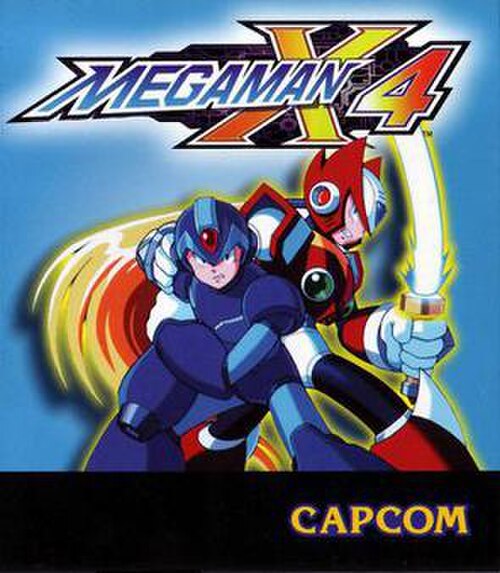
Mega Man X4 (PlayStation and Saturn, 1997; Rockman X4 in Japan) gives the player the choice the series had been approaching for three games: play it as X, the ranged hunter, or as Zero, fully playable at last, with a complete campaign of his own. The enemy is new in kind: the Repliforce, a Reploid army framed for the destruction of the floating city Sky Lagoon, which refuses to disarm out of pride and declares independence, and which the script refuses to paint as simply evil.
THE MAKING
A samurai, built to be approvedThe X3 team had no plans for a sequel until Capcom's superiors aimed the series at new hardware. The central design problem was Zero: to win approval for a fully playable Zero, the developers remade him as a proper samurai like warrior wielding the Z-Saber, and gave him special moves based on the Street Fighter series to compensate for lacking X's copied weapons. The cost was data: twice as many sprite animation patterns as before, a compression routine to store the player characters, and stages divided into two sections to fit.
Keiji Inafune produced rather than designed, and described his storyline role as "only slightly less than it was for X1". The writing staff deliberately left Repliforce "moral leeway": the ideals of Repliforce and the Maverick Hunters were not to be black and white. Since the theme was Reploids fighting each other, Capcom avoided human characters entirely, calling the theme "Robots and the Future". The animated cutscenes were produced by Xebec. Toshihiko Horiyama composed the score, with vocal themes sung by Yukie Nakama: the opening "Makenai Ai ga Kitto Aru" and the closing "One More Chance".
The Japanese Saturn cover carries a documented oddity: Zero stands alone in a dark setting. Inafune called the idea weird, while noting a group of hardcore fans wanted exactly that. A Special Limited Pack edition bundled an Ultimate Armor X action figure.
THE AMERICAN DOOR
Lost in Sony's backlogX4 was developed first as a Saturn exclusive for June 1997, then delayed and made multiplatform; both versions launched in Japan on August 1, 1997. In America the PlayStation version was put on hold after Sony Computer Entertainment America denied Capcom permission to release it, reportedly under a policy against 2D games. After persistent talks Capcom won the release; a Capcom spokesperson explained the delay by saying the game "had just gotten lost in Sony's back log of games waiting for approval". Both versions reached North America in 1997, and Virgin, Capcom's European distributor, declined the Saturn version entirely.
THE STORY
Pride, a double agent, and a sacrificeColonel of Repliforce refuses questioning after Sky Lagoon and takes his army into independence; his sister Iris, rescued by Zero at the crash site, is pulled between her brother's dream and Zero. Eight Repliforce loyalists include Magma Dragoon, who confesses he crashed Sky Lagoon himself for a chance to fight the heroes. In the space station Final Weapon, X fights Double, a rookie Hunter revealed as Sigma's spy, while Zero is forced to fight Iris, and kills her. Sigma reveals he staged the entire conflict; the General of Repliforce, his coup exposed as a puppet show, sacrifices himself to destroy his own Final Weapon. X's closing request hangs over the rest of the series: he begs Zero to promise to kill him if he ever goes Maverick, and Zero does not answer.