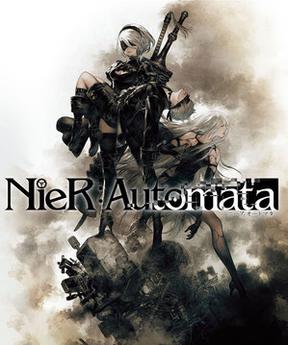
The History of NieR Automata
NieR Automata (2017) paired the most unlikely survivor in modern games, Yoko Taro, whose 2010 original had sold an estimated half million copies, with PlatinumGames, the action specialists of Bayonetta and Metal Gear Rising: Revengeance. The result, a war of androids and machines fought over a humanity already extinct, sold over ten million copies, landed on greatest-games lists, and was credited by PlatinumGames itself with saving the company.
THE MAKING
A collaboration with two conditionsAfter NieR, both Yoko and producer Yosuke Saito wanted a sequel; an assistant producer, Yuki Yokoyama, was unwilling, on the evidence of the original's low sales. The fans changed the arithmetic. After the original's positive fan reception, Square Enix and the returning staff agreed to continue, on a clear brief: keep what NieR did well, and build a better, more action-oriented game.
That brief led to PlatinumGames, and the collaboration was agreed on two conditions: that Yoko would direct, and that he would be present to help with production. The second condition moved him from Tokyo to Osaka, where PlatinumGames is based. Production began in 2014, including six months of pre-production, and even the scheduling had to be engineered: Yoko's freelance hours ran against the studio's, so the team built a system of free time when he would be available. Designer Takahisa Taura, a long-time fan, joined out of a stated desire to create a NieR sequel.
The team studied fan and critical feedback on the original and itemized what had to improve: gameplay, graphics, character designs. What they deliberately carried over was the complexity of the story and the music, with composer Keiichi Okabe returning alongside artist Akihiko Yoshida, engaged after the original's character designer, D.K, broke his elbow and recommended him.
THE DESIGN
Platinum combat, Yoko structureTaura built the combat on NieR's systems blended with elements from PlatinumGames' own titles, with the stated goal of improving on the original while weaving the fighting into the story; Isao Negishi built the role-playing elements. The sidequests were held to a named standard: The Witcher 3: Wild Hunt. The perspective shifts into side-scrolling were inspired by the Castlevania series, of which Taura is a fan. And unlike the 2010 game, which carried two different protagonists for different markets, the team committed to one character design consistent across all regions.
The structure is the signature: 26 endings, five of them main endings lettered A to E, the rest mostly elaborate game overs. The final ending asks the player to fight through the closing credits, and then offers the choice the original pioneered, sacrificing your save data to help a stranger. Yoko has said on record (Tier 1) that the help mechanic was inspired by a Coca-Cola campaign that livestreamed drink machines in India and Pakistan to each other, an impression strong enough that he rebuilt it as messages of encouragement from players across the world. The team's own word for the theme was agaku: to struggle out of a bad situation.
THE EDITIONS
Four names for one growing gameTHE RECEPTION
Acclaim, with the PC port kept in the recordThe music received unanimous acclaim, and the honours followed: Best Score and Music at The Game Awards 2017, Role-Playing Game of the Year at the D.I.C.E. Awards. The dissent is part of the record too: several critics found the combat shallower than PlatinumGames' pure action titles, the visuals drew complaints about pop-in and frame rates, and the PC version's technical problems went officially unpatched until July 2021, four years after launch, after fans had patched it themselves.
THE AFTERMATH
Ten million copies and a saved studioThe sales rewrote everyone's expectations in public. First week in Japan: over 198,500 copies and the number one chart position, significantly beyond anything the 2010 game managed. By May 2017 the PlayStation 4 and PC versions had reached 1.5 million copies, the majority from overseas, a success the coverage of the time flatly called a surprise next to the original's sales. Four million by May 2019. And as of February 2026, over ten million copies worldwide.
Square Enix began treating NieR as a franchise. PlatinumGames went further, citing the game's sales and reception as saving the company after several disappointing releases and a severe financial crisis. The world kept expanding around the hit: stage plays that predate the game itself, novels, the anime series NieR Automata Ver1.1a (2023 to 2024), and 2B's guest appearance in Soulcalibur VI. The original's half million had become, seven years on, the seed of one of the defining games of its decade.
THE GAME ON THE SHELF
NieR: Automata · 2017