The History of NieR
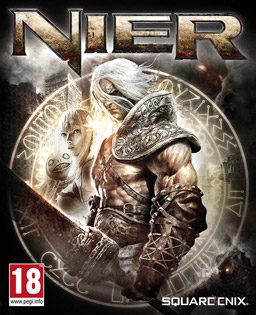
NieR (PlayStation 3 and Xbox 360, 2010) was developer Cavia's last game and director Yoko Taro's strangest: an action role-playing game set more than a thousand years after the joke ending of Drakengard, in a ruined world where a guardian hunts a cure for the girl Yonah. It drew mixed reviews, sold an estimated 500,000 copies, and then did the thing flops are not supposed to do. It kept gathering believers until the believers were an industry.
Why the game exists in two versions, a brother in Japan and a father in the West, is a full Library question of its own: Why are there two different versions of NieR? This page is the rest of the story.
THE MAKING
Cavia, 2007 to 2010The concept was first proposed after Drakengard 2, as a third entry in that series; as it evolved it became a spin-off, though Yoko has continued to think of it as the third Drakengard game. Including planning, development lasted three years, two of them in full production, at Cavia with support from publisher Square Enix.
What made the game possible was the leash, or the lack of one. Square Enix had minimal input on Yoko's vision for the atmosphere and story, leaving him high creative control, and the localizations into English, French, and German were produced during development so every version could launch together and Western feedback could be gathered while the game was still changeable.
The setting is the far consequence of the first Drakengard's fifth ending: its heroes crossed into modern Tokyo, won their battle, and were shot down, and the magic they brought with them leads, down the centuries, to the disease called the Black Scrawl. The Library traces that chain link by link: How is NieR connected to Drakengard?
THE DESIGN
Genre-hopping as a deliberate homageYoko has stated on record (Tier 1) where the story's engine came from: the September 11 attacks and the war on terror, and specifically the idea of a terrible event in which both sides believed they were doing the right thing. The game is built to show the player multiple perspectives on the same events, which is why its later playthroughs reframe every enemy it asked you to kill.
The combat and action elements were inspired by the God of War series, which Yoko and producer Yosuke Saito both enjoyed; the shifting camera and the genre-hopping, side-scrolling rooms, top-down shooting, a stretch told entirely in text, were included as a homage to earlier styles of games, and to underline the gap between the modern ruins and the fantasy world laid over them. Producer Saito was explicit that the team wanted to depart from menu-based combat.
The music was composed largely apart from the game itself by Keiichi Okabe's studio Monaca, with Takafumi Nishimura of Cavia. Yoko's main request was simple: a lot of vocal work. Singer Emi Evans wrote her own lyrics in imagined future forms of Gaelic, Portuguese, Spanish, Italian, French, English, and Japanese, each language as it might sound after a thousand years of drift, and the resulting soundtrack album reached number 24 on Japan's Oricon chart.
THE EDITIONS
Two heroes, then one, restoredTHE RECEPTION
Mixed reviews, permanent afterlifeThe pattern held everywhere: story, characters, and soundtrack praised; graphics called flavorless and substandard; side quests called monotonous; combat solid and unexceptional. The New York Times' Seth Schiesel made the defense the cult would repeat for a decade, that the game pulled its disparate styles into a coherent, compelling whole. In 2015 Eurogamer's Jeffrey Matulef named what had happened: NieR was the rare game that gets better with age, its cryptic storytelling, genre mashup, and melancholy mood building a cult following out of poor sales and tepid reviews.
THE LEGACY
A guidebook, a sequel, a vindicationThe afterlife started in print. Grimoire Nier, a complete guide with developer interviews and novellas, followed in Japan in May 2010; an updated edition reached English readers for the first time only in 2023, a thirteen-year lag that measures how Japan-first this series began. A drama CD, arranged albums, and piano collections kept the world in print and in record shops while the game itself went out of print.
Cavia did not survive it: NieR was the studio's final game before it was absorbed into AQ Interactive. The vindication came from the sequel the original supposedly made impossible. PlatinumGames' NieR Automata (2017), built by many of the same people, became a phenomenon, and its success sent the audience back to the 2010 original in numbers the original never saw at launch. When the version upgrade shipped a million copies by June 2021, the coverage noted the figure was double the estimates for the original version. The flop had become the foundation.
THE GAME ON THE SHELF
NieR · 2010