
The History of Valkyrie Profile 2: Silmeria
Valkyrie Profile 2: Silmeria is the second game in the series, developed by tri-Ace and published by Square Enix for the PlayStation 2. It was released in Japan on June 22, 2006 and in North America on September 26, 2006, reaching Australia on September 6, 2007 and Europe on September 7, 2007. Takayuki Suguro designed it and Motoi Sakuraba returned to compose.
The story takes place hundreds of years before the original game. Silmeria, a valkyrie who disobeyed Odin, has been reincarnated inside the body of Alicia, Princess of Dipan, and the two share that body: Silmeria awake inside a host who has heard her voice all her life, presumed mad, and exiled by her own father. Together they move to stop a catastrophe that could cause war between the people and the gods.
HOW IT WAS MADE
tri-Ace, 2006The sequel had been intended for most of a decade. Producer Yoshinori Yamagishi has said that tri-Ace had always been planning to make Valkyrie Profile 2 since the completion of Valkyrie Profile in 1999, but that Star Ocean: Till the End of Time and Radiata Stories took the studio's attention first. When the game was finally revealed, it was announced together with the PSP port, Valkyrie Profile: Lenneth, so the series returned on two machines at once.
The design brief was continuity with one change of dimension: a similar battle system to the original, but with players able to move their characters around the battlefield during combat, creating more strategy. Exploration stayed in the series' 2D profile view, now with Alicia shooting photons that freeze enemies and objects in crystal and can swap her place with a crystallized enemy, where Lenneth had shot ice crystals.
Before release, Square Enix sold a special Artifact Box: a copy of the game, ten musical tracks, a keychain, and a figurine. Sakuraba's score was released as two soundtrack sets, Alicia and Silmeria, two discs each, seventy songs in all.
THE TWO COVERS
Two different paintings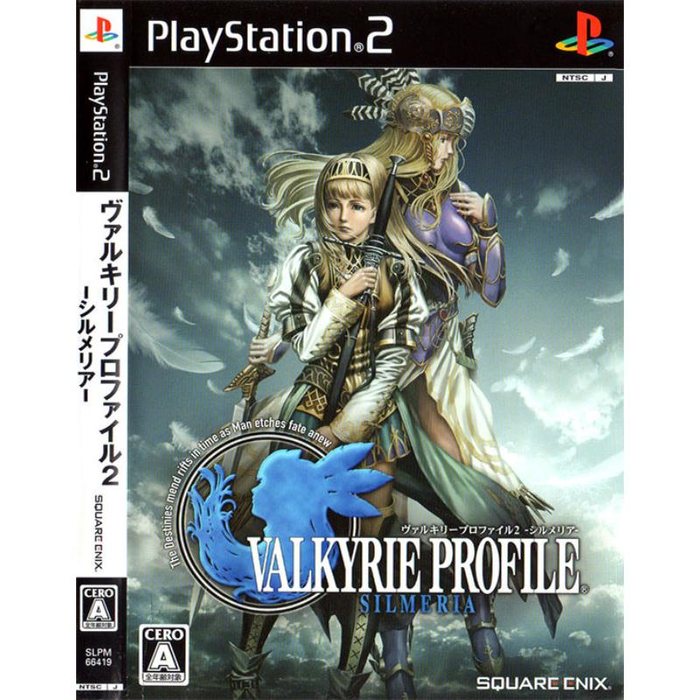
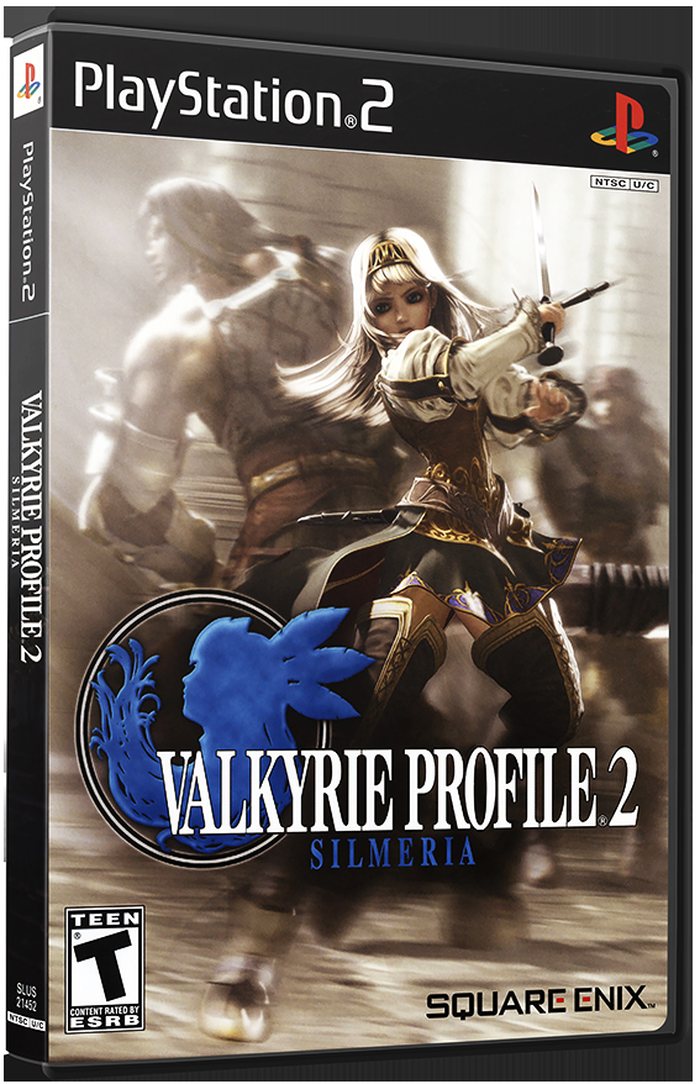
THE GAME ITSELF
No clock this timeThe biggest structural change is an absence: unlike its predecessor, Silmeria lets players spend as much time as they like exploring towns and dungeons. The deadline is gone. In its place stand the sealstones, stones with special effects that sit on daises and in shells inside dungeons and reshape the rules of the ground around them; they have their own page in this archive.
Combat moved into a real time 3D battlefield under the Advanced Tactical Combination system, spending Attack Points to move and strike, with time flowing only while the player moves. Einherjar return differently: Silmeria materializes them from artifacts tied to their lives, up to 40 exist in the game and 20 can be recruited in one run, and a trained einherjar can be released back to the world of the living, leaving rewards behind, instead of being shipped to Valhalla.
ITS PLACE IN THE TIMELINE
A prequel, and then not quiteSilmeria is set hundreds of years before Lenneth's story, and its story is presented as independent of the first game. But the record documents a divergence inside the fiction itself: the game takes place in an alternate timeline. In Valkyrie Profile, Silmeria was imprisoned within a crystal and taken by Brahms; here, Brahms is the one imprisoned within a crystal. The plot names the cause: Lezard Valeth, arriving from another future by way of Dipan's time research, interferes with history, and events that should have happened do not. Lenneth herself arrives from her own future near the end. The prequel is also a sequel, arriving early.
HOW IT WAS RECEIVED
The scoresTHE SALES
Documented figuresSilmeria was the top selling game in Japan in the week of its release, selling 281,510 copies, and it sold over 400,000 copies in Japan by the end of 2006. In March 2007 it joined Sony Computer Entertainment's Ultimate Hits line in Japan. The IGN award tells the other half of the story: in the West, the best reviewed game in its series was the one almost nobody bought.