
From the Library: covers, censuses, and editions, documented. Browse the Library →
SOJ Killer Instinct Gold ยท Vintage Fighting Games
← Back to the Fighting Games Gallery

What Changed from Killer Instinct 2 to Killer Instinct Gold?

The fights stayed. The cinema around them did not.

The verdict in one line: Killer Instinct Gold is faithful to Killer Instinct 2 where the fighting is concerned, and different almost everywhere else. The changes were driven by one documented cause, the data storage restrictions of the Nintendo 64 cartridge, and Rare answered the losses with additions the arcade game never had. Both lists matter, so both are printed here in full.

THE COVER, AND THE MISSING ONE

One box exists. One was never made.
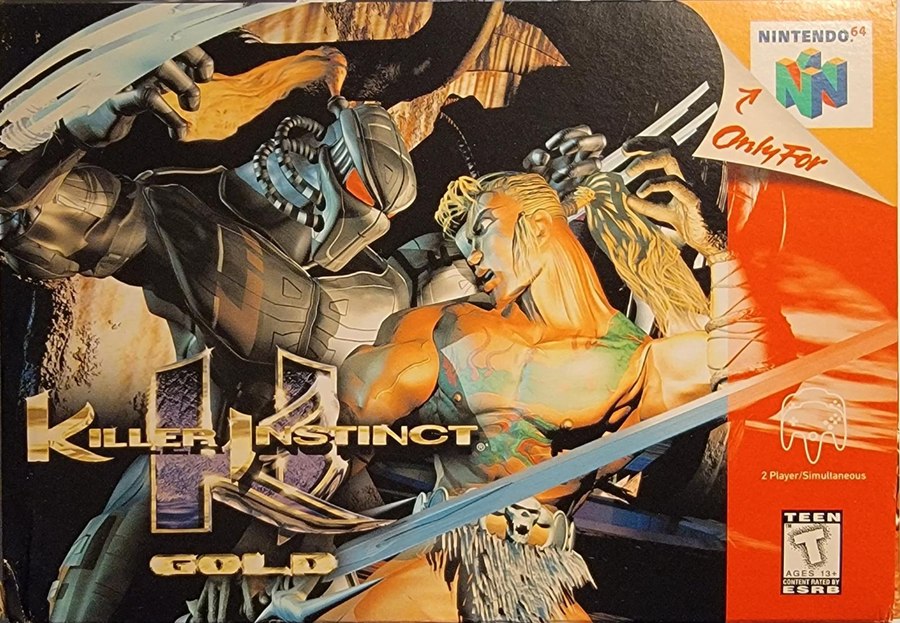

Killer Instinct Gold American Nintendo 64 box art, Fulgore and Tusk
United States
The American box: Fulgore and Tusk locked together behind the gold KI logo, with the red Nintendo 64 sidebar and the Teen rating.
SOJ gold owl
Japan
No Japanese box exists. Killer Instinct Gold was released in North America, Australia and the United Kingdom only, so this shelf holds the owl where the Japanese cover would stand.

WHAT WAS LOST

Cut for the cartridge
Full motion video
The arcade game's FMV sequences were excluded entirely. The animated victory cinematics were replaced with a simple animation: a zoom on the character the player was using.
Endings, plural to singular
In the arcade version, each character had multiple endings that could change. In Gold, each character has one fixed ending, the new endings sometimes combining elements of more than one of the arcade originals.
Voices and frames
Some voice overs were cut, and the character animations have fewer frames than the arcade equivalent, a reduction IGN and Computer and Video Games both noticed in review.

WHAT WAS GAINED

Built for the home
Stages in full 3D
The arcade backgrounds were scaling, distorting FMV. Gold rebuilt the stages in full 3D, which used less memory, allowed more dynamic camera takes at the start of a fight, and added automatic camera zoom framing. Gold's backgrounds animate at a fluid 60 frames per second.
Training mode
A new practice mode lets players rehearse their skills and follow tutorials, the feature reviewers praised most consistently, and the direct answer to the series' memorization heavy combo system.
Team and tournament modes
New team battles let one player fight with a team of up to eleven characters, and a knockout tournament mode cycles players through a preselected team as characters are eliminated. The final boss, Gargos, is playable with a code.
Sound and saving
An upgraded soundtrack, new camera views, and saving through both the Controller Pak and internal cartridge memory.

What they did get, then, was the more complete home game wrapped around a thinner presentation: the same eleven characters, combos and environments, with the film removed and a practice room, a team mode and a tournament bracket added in its place. Reviewers at the time preferred the Nintendo 64 port to the arcade release in several respects, while feeling its graphical upgrades were insufficient. Both halves of that judgment start in the lists above.

The full story: The History of Killer Instinct Gold →
MORE FROM THE FIGHTING GAMES ARCHIVE →
One shelf of eighty-two in the Library. Browse them all →

THE FIRST WORD

New pages and new pieces, first.