
From the Library: covers, censuses, and editions, documented. Browse the Library →
SOJ Street Fighter II · Vintage Fighting Games
← Back to the Fighting Games Gallery

What Did the Genesis Street Fighter II Have to Solve With a Three-Button Pad?

Six attacks, three buttons, and a Start key asked to do a fighter's job.

When Street Fighter II finally reached the Genesis in September 1993 as Special Champion Edition, it arrived with a problem the Super NES version never had. The game is built on six attack buttons. The controller in most Genesis owners' hands had three.

THE PROBLEM

Six attacks, three buttons
The arcade layout
Street Fighter II is played with six attack buttons: light, medium and heavy punches, and light, medium and heavy kicks. The Super NES pad carried six face and shoulder buttons, so the layout crossed over whole. The standard Genesis pad had three action buttons: A, B and C.
Start as a switch
Capcom's solution on the three button pad was to make the Start button a toggle. The three buttons threw punches or kicks depending on the mode, and pressing Start swapped the set mid fight. Every contemporary review that mentions it calls it what it was: playable, and a handicap.
Why it hurt
Fighting games are decided in fractions of a second. An extra button press between wanting a kick and throwing one broke combos and cost rounds, which is why reviewers of the era advised readers, in so many words, not to play this version on the stock pad at all.

THE ANSWER

A new pad, and a delayed game
The six button Arcade Pad
Sega released a six button controller, and Special Champion Edition was its reason to exist. On the six button pad the game maps one to one onto the arcade layout, and reviewers treated the pad as close to required equipment. Nintendo World Report notes the controller itself was very well received.
The delay that bought Turbo
The Genesis game was announced in March 1993 as a port of Champion Edition, and early prototypes did not satisfy Capcom's executives. After the Super NES Turbo was announced, Sega had its version held back so Capcom could add the Turbo content too. The game that shipped in September 1993, on a 24 megabit cartridge, held both Champion Edition and Hyper Fighting modes, and was renamed Special Champion Edition to say so.
The score
Special Champion Edition sold 1.65 million copies, against 4.1 million for the Super NES Turbo. Nintendo World Report attributes the gap to the additional controller requirement and the head start Nintendo had been given.

THE SHAPE OF IT

A cartridge that sold a controller

Most ports adapt a game to the hardware. This one changed the hardware. The three button problem is the cleanest example in the 16 bit war of a single game being important enough to redesign the controller under it, and of a platform holder accepting a delay, a rename and a bigger cartridge rather than ship the lesser version.

It also quietly set the terms for every Genesis fighter after it: six buttons became the assumed layout, and the three button toggle became a cautionary tale told in review after review.

THE GAME ON THE SHELF

Street Fighter II, at home
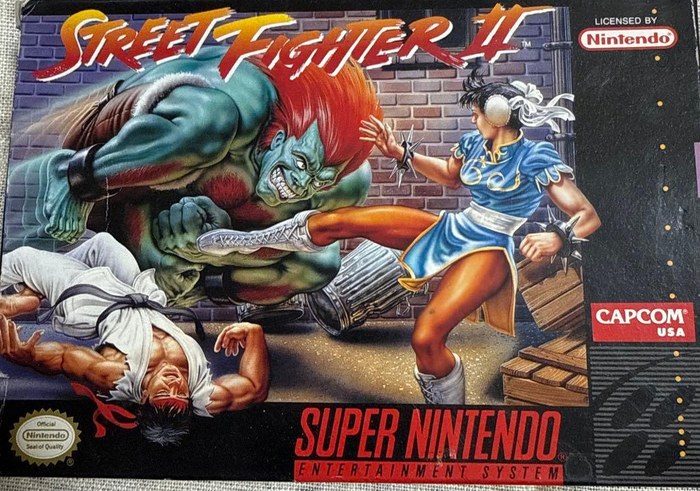
Street Fighter II American Super NES box art, Blanka and Chun-Li
Street Fighter II · America · Super NES
Blanka and Chun-Li on the American Super NES box. The Genesis port this page examines had to solve the same six button game on a three button pad.
The History of Street Fighter II on Home Consoles
MORE FROM THE FIGHTING GAMES ARCHIVE →
One shelf of eighty-two in the Library. Browse them all →

THE FIRST WORD

New pages and new pieces, first.